
5.4.3 Current Distribution On Dipoles And Monopoles
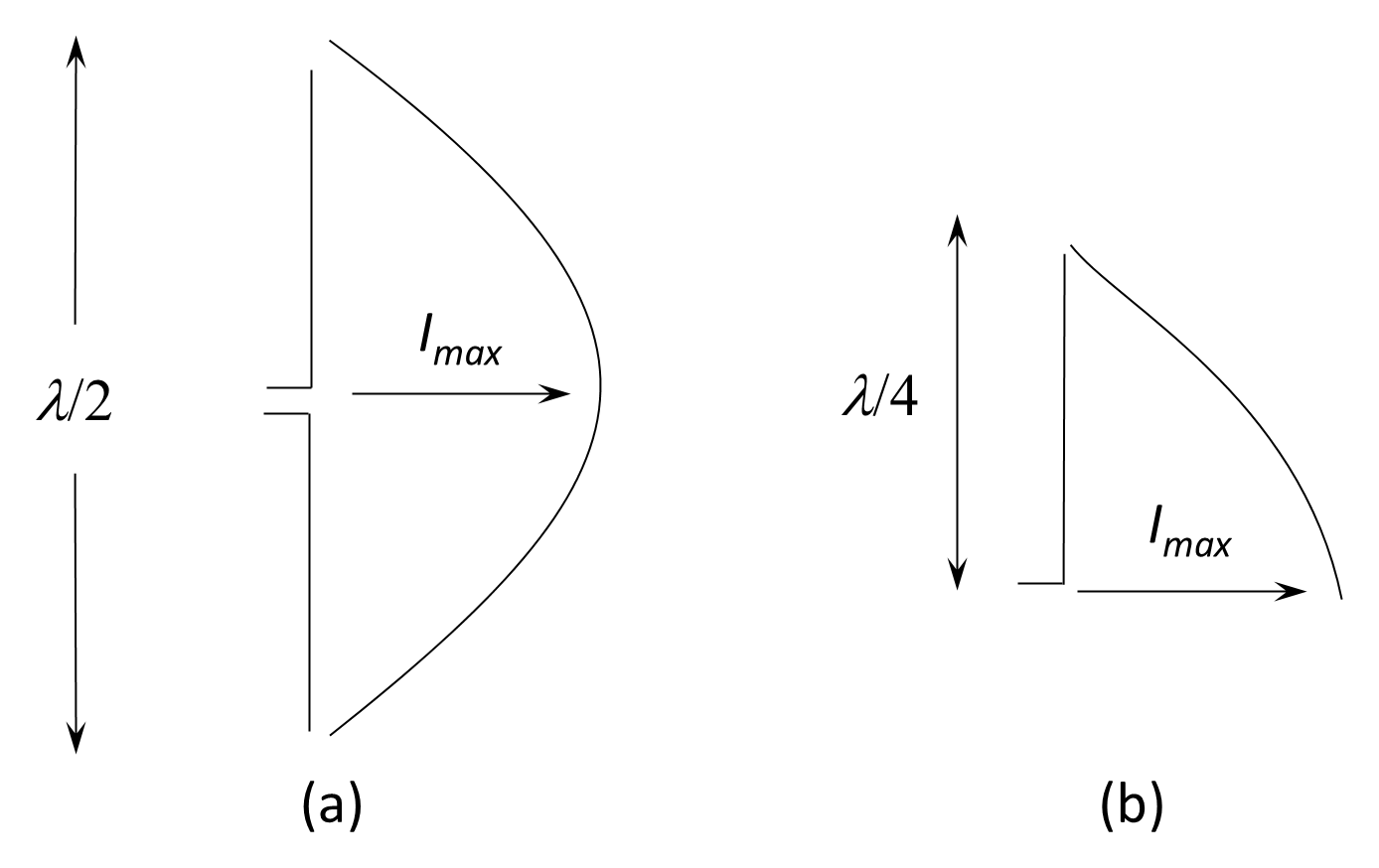
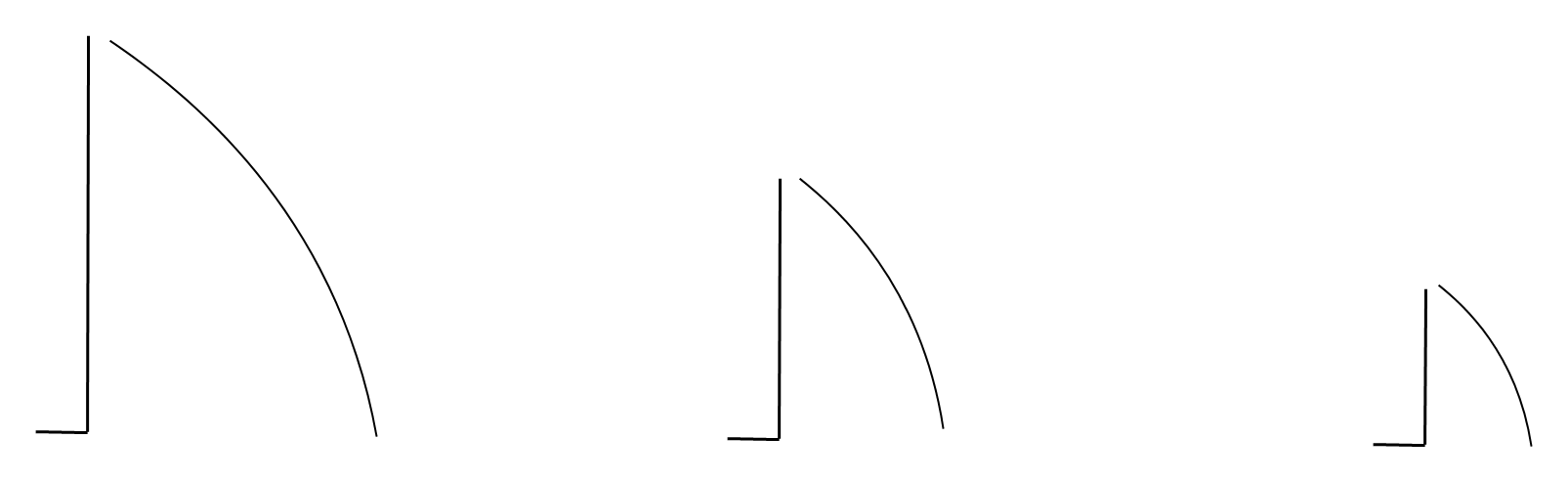
Figure 5.15 illustrates the current distribution for a half-wave dipole and a quarter-wave monopole. The current is maximum at the center (or base, for the monopole) and zero at the ends. Since radiated power is proportional to the square of the current, regions of maximum current contribute most strongly to radiation. As antenna length is reduced (Figure 5.16), the current magnitude decreases. Even with tuning to restore resonance, shortened antennas cannot achieve the same radiation efficiency as full-length elements because the overall current distribution is diminished.
5.4.4 Balanced And Unbalanced Feeders
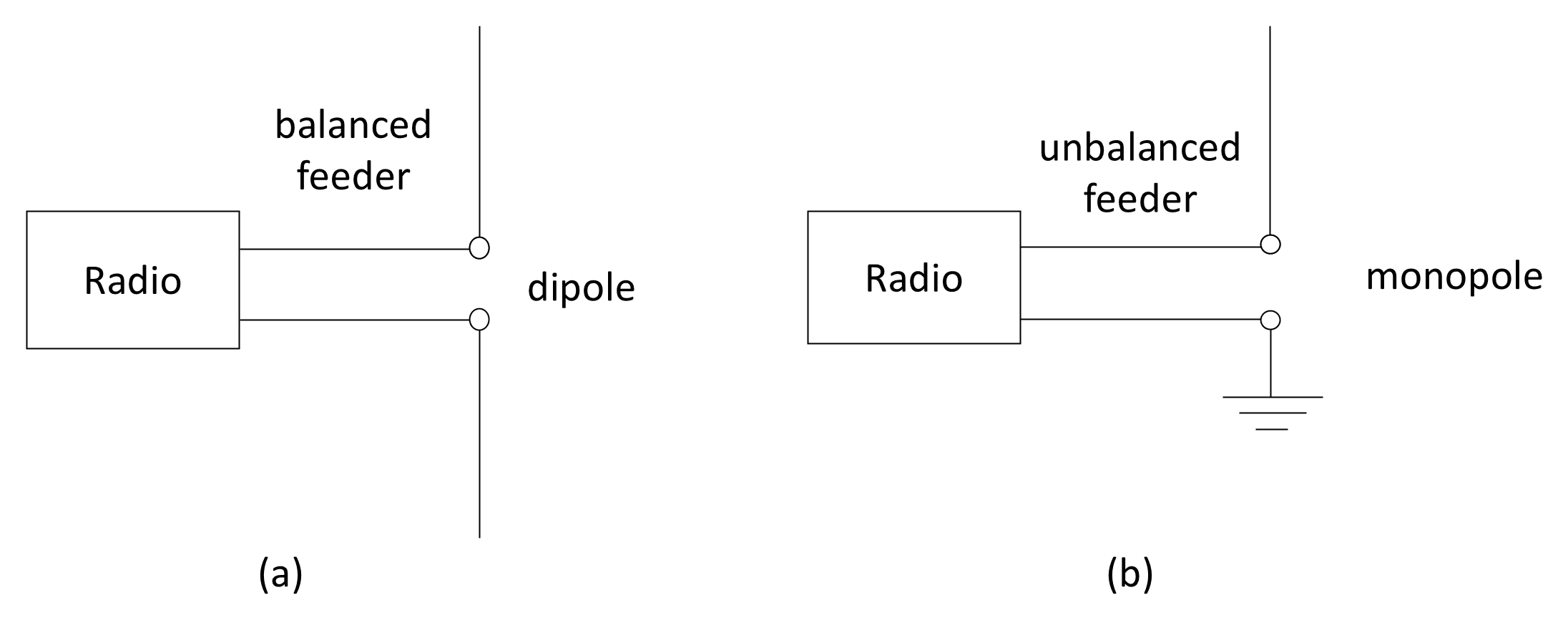
A dipole is a balanced antenna; a monopole is unbalanced. For maximum power transfer, the feeder impedance must match the antenna input impedance.
When an unbalanced transmission line (e.g., coaxial cable) feeds a balanced antenna, common-mode currents may flow on the outer conductor, causing unintended radiation and pattern distortion. These effects are minimized using a balun (balanced-to-unbalanced transformer), which suppresses common-mode currents and may also provide impedance transformation.
As illustrated in Figure 5.17, a balanced antenna should therefore be connected to a balanced feeder and an unbalanced antenna to an unbalanced feeder.
The impedance of the antenna feeder between the radio set and the antenna must be accurately matched to the antenna input impedance for maximum power transfer. This can be achieved by using a feeder of the same impedance as the antenna or by employing one of the many matching devices available. Feeder lines commonly used are the coaxial cable (50–80 Ω) and the two-wire open line (300–700 Ω).