4.2 A SUMMARY OF PROPAGATION TECHNIQUES
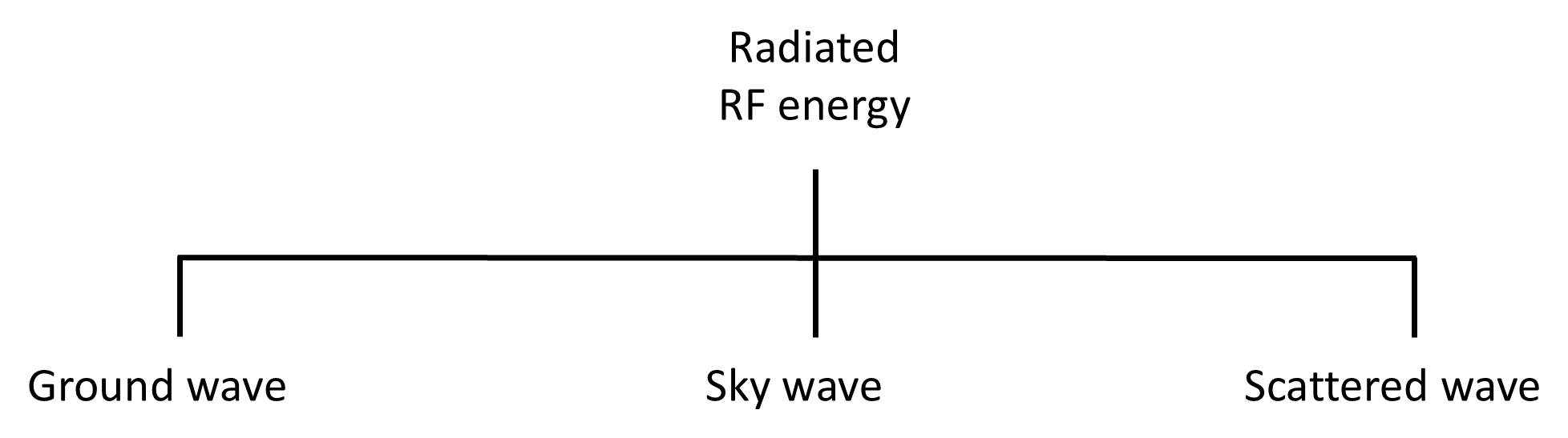
A radio communication system relies on one or more distinct propagation mechanisms by which electromagnetic energy travels from the transmitter to the receiver. These mechanisms are conventionally divided into three broad categories:
- Ground waves, which travel close to the Earth’s surface.
- Sky waves, which depend on refraction or reflection by the ionosphere.
- Scattered waves, which result from irregularities such as atmospheric turbulence or meteor trails.
Figure 4.2 summarizes the primary categories of radiated RF energy.
4.2.1 Ground Waves
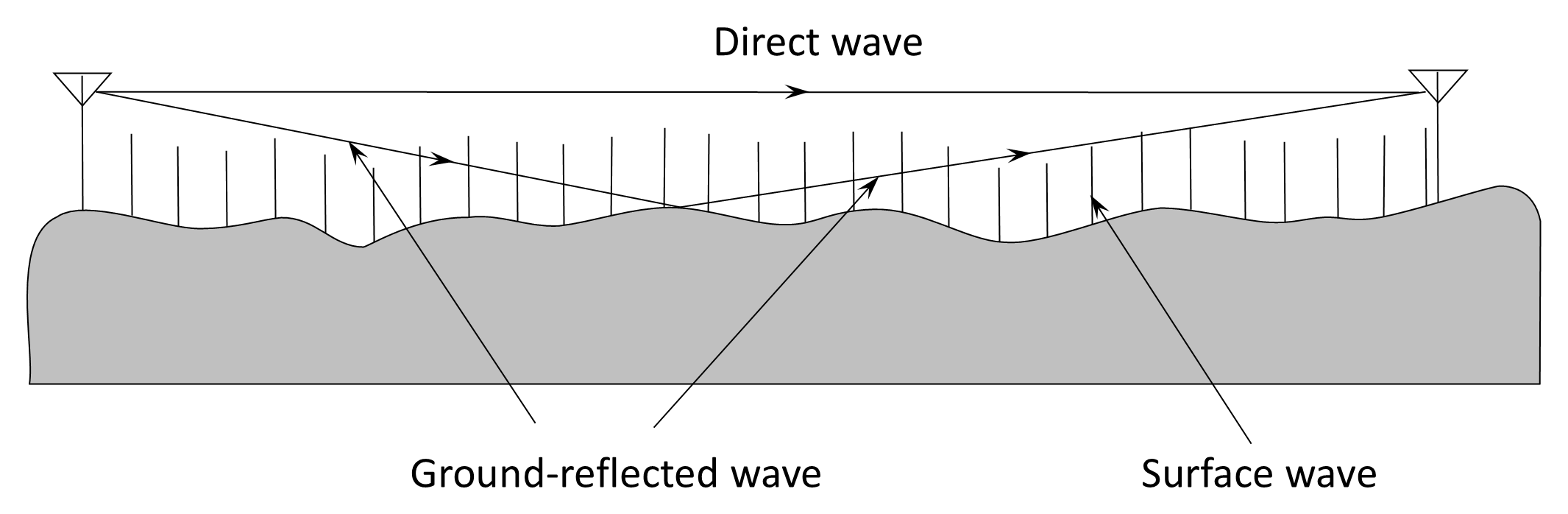
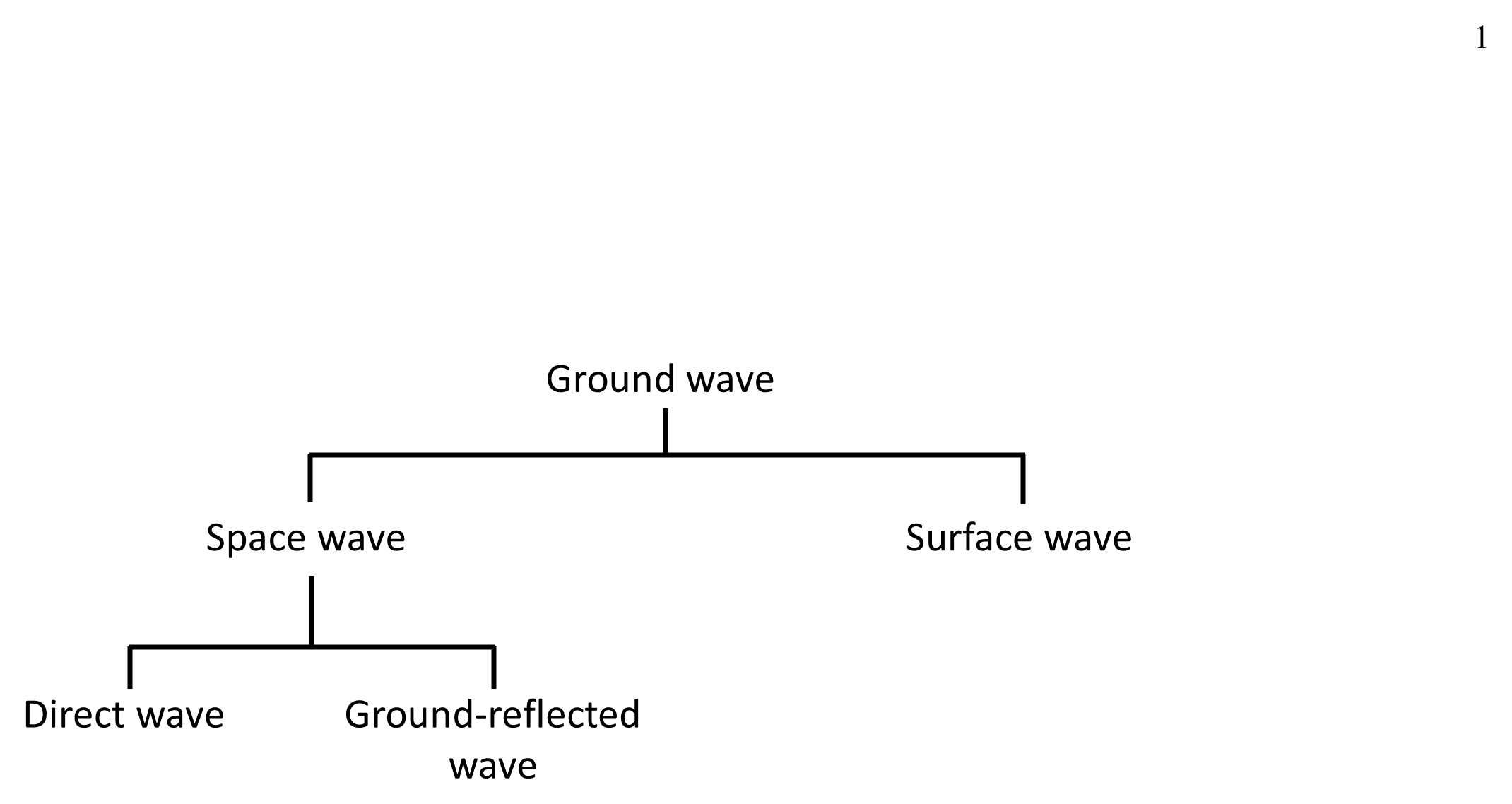
As illustrated in Figure 4.3, ground waves include several components. The direct wave travels in a straight line from the transmitting to the receiving antenna, while the ground-reflected wave is reflected from the Earth’s surface before reaching the receiver. At long wavelengths, part of the radiated energy can be guided by interaction between the ground and the lower atmosphere, forming a surface wave that follows the curvature of the Earth. The combination of the direct and ground-reflected waves is known collectively as the space wave. The space wave is therefore limited to line-of-sight distances. Figure 4.4 shows the various components that make up the ground-wave field.