
D INFLUENCE DIAGRAMS AND STOCK-AND-FLOW DIAGRAMS
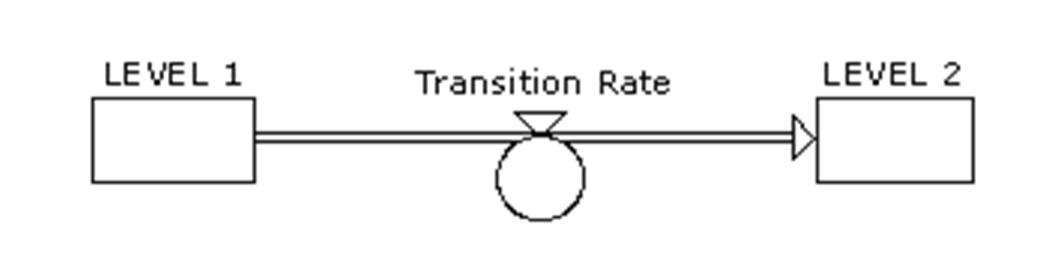
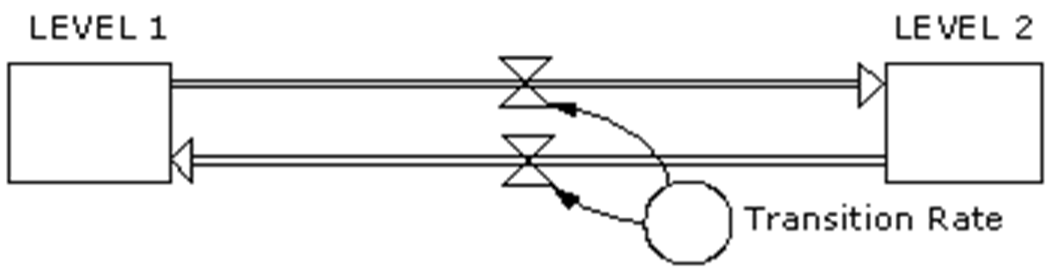
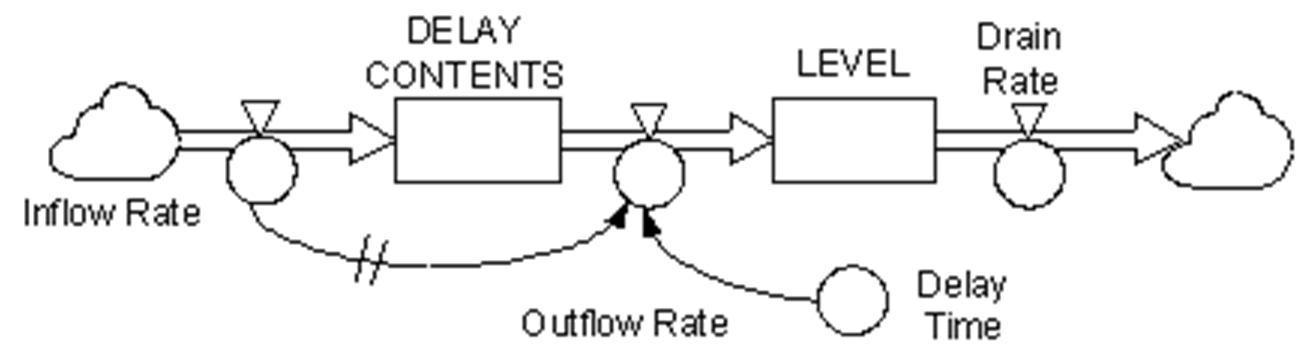
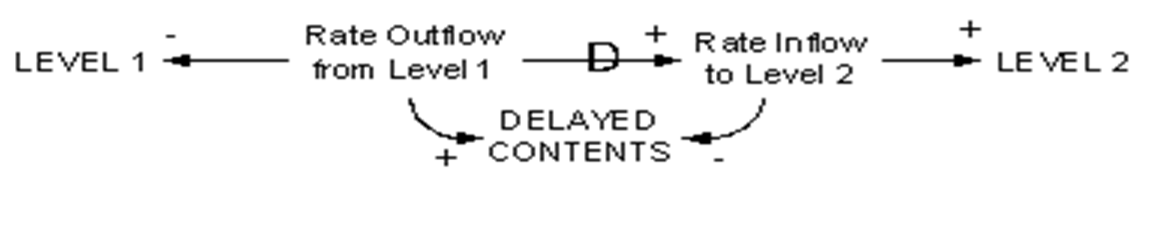
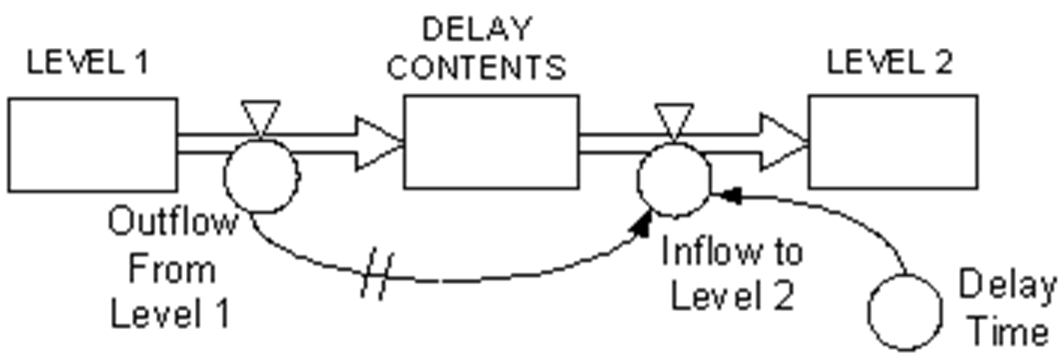
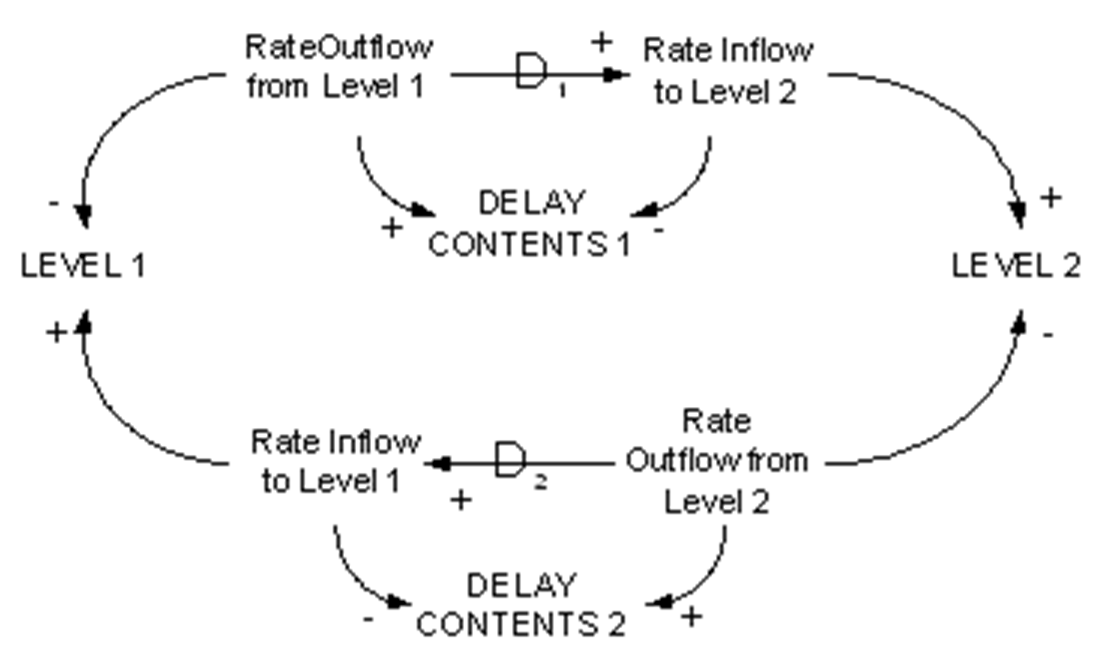
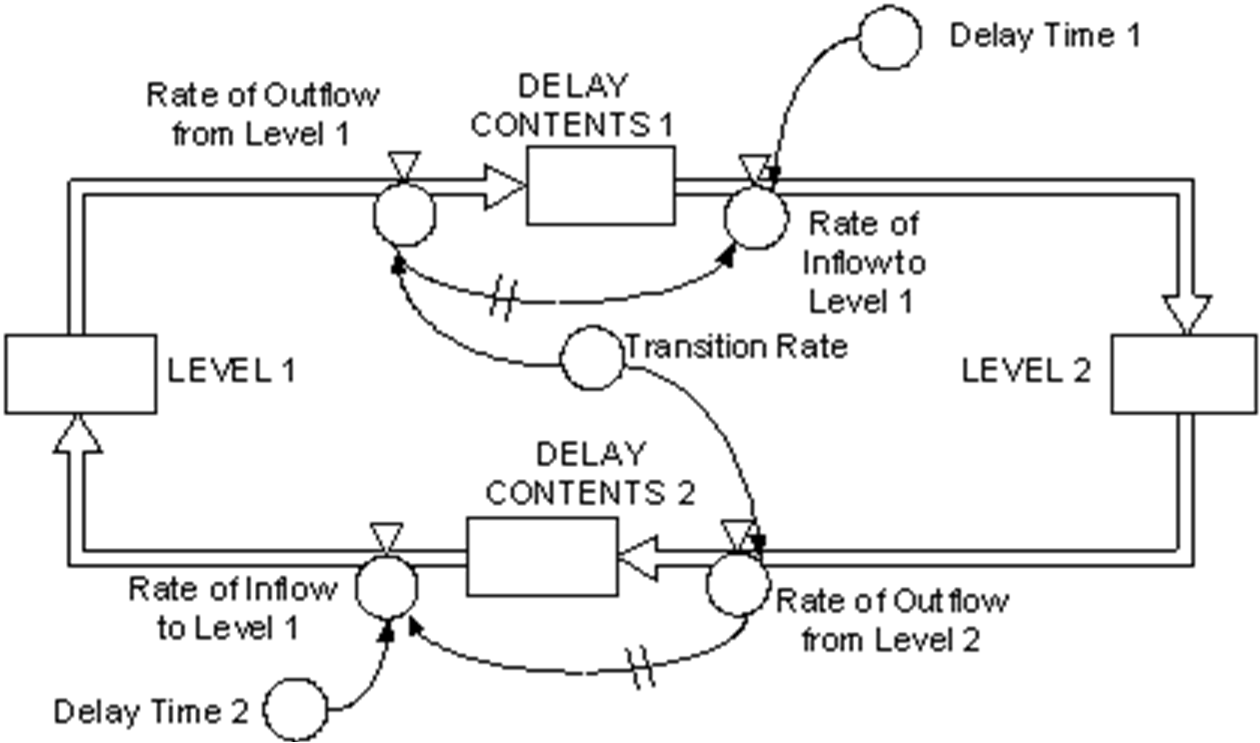
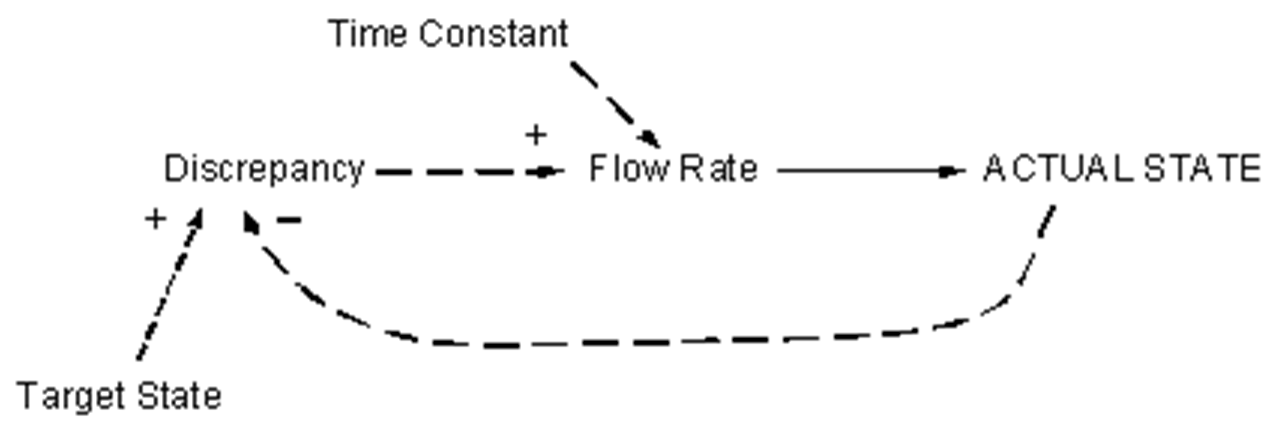
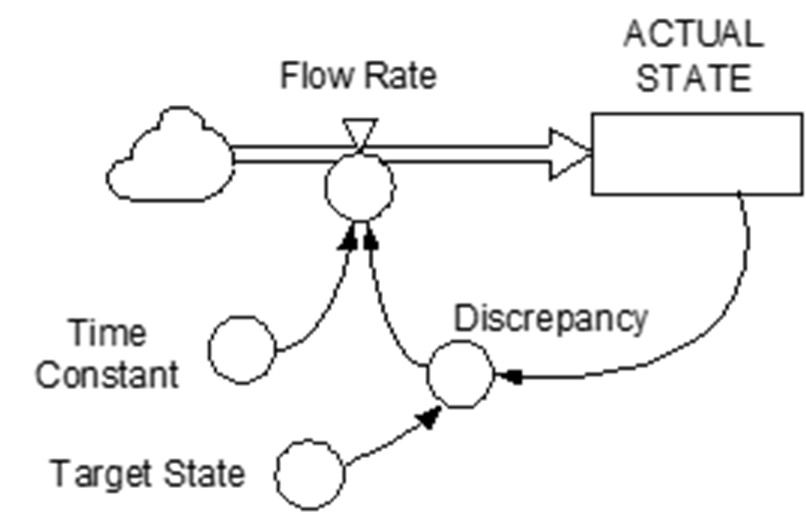
Coyle (1996) identifies certain ‘common’ modules for which he has developed equivalent modules of code. Theses modules, coded in Cosmic™ system dynamics modelling software, perform specific functions, just as the modules of system dynamics structure described in this book do. They can be assembled with other modules, and with purpose-built code to complete the structure: the result is fully functioning models. Selected modules are described in this appendix. Diagrams appear in pairs with the first diagram in each instance being an influence diagram and the second diagram being the stock and flow diagram equivalent. An important point made by Coyle, noting that he uses influence diagrams, rather than causal loop diagrams or stock-and-flow diagrams, to depict causality is that for each of the modules there is equivalence between the influence diagram and the relevant software module in Cosmic™.
In this way, by depicting equivalent influence diagrams and stock-and-flow diagrams, it is relatively simple to take the step of creating modules coded in Powersim™ Studio that are also equivalent. The result is three entities equivalent for each instance of a functional module of system dynamics structure: they are:
- an influence diagram,
- a stock-and-flow diagram, and
- a module coded in Powersim™ Studio.
Each of these then will be re-usable components of our modular approach to building system dynamics models. These will then become valuable aids to fostering dialogue, development of conceptual frameworks and improving communications about dynamic problems, their structure and behaviour.





References
- Coyle, R.G., 1996, System Dynamics Modelling: A Practical Approach, Chapman and Hall, London.