1.1.1 A Physical Example—The Simple Pendulum
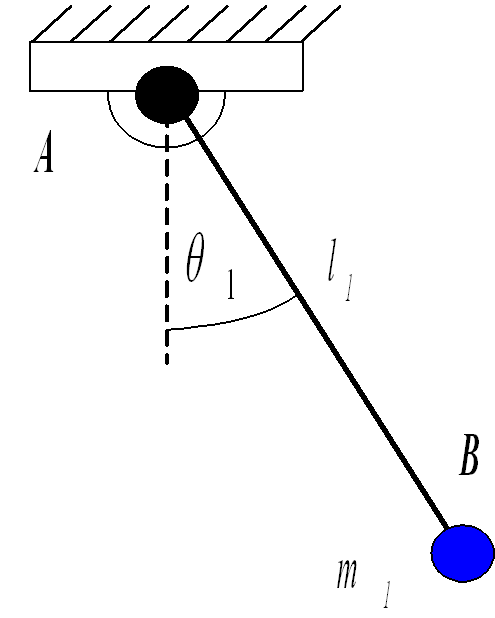
By way of introduction to such complex behaviour, consider a simple physical problem. A pendulum A-B, having a link of length l1, suspended at A, with a mass m1 located at B, is allowed to swing freely. The link A-B is assumed to be very light (ideally having no mass) and rigid. This pendulum is illustrated at Figure 1-1.
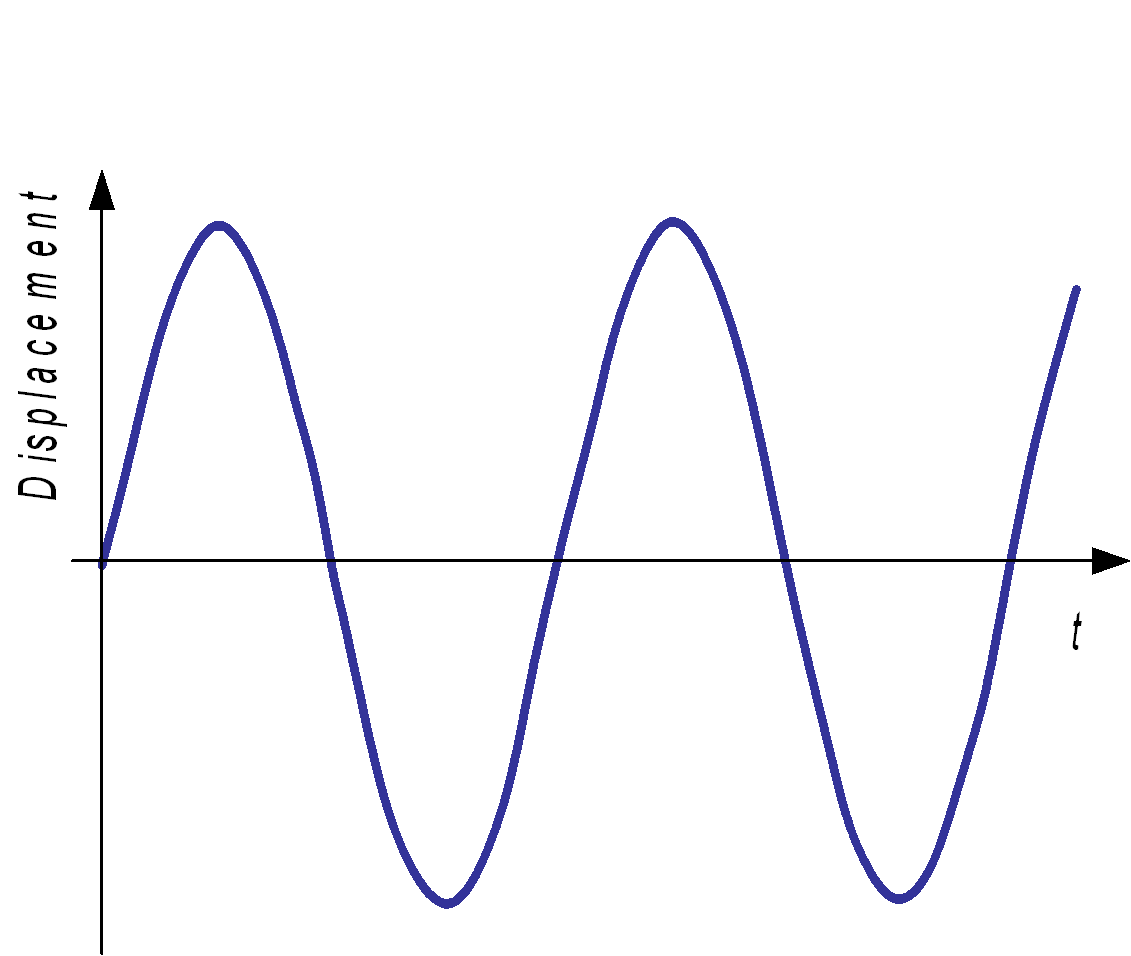
The time-dependent displacement of mass m1 at B would be as shown in Figure 1-2. Undamped motion of this pendulum is simple harmonic motion, following a sinusoidal pattern.
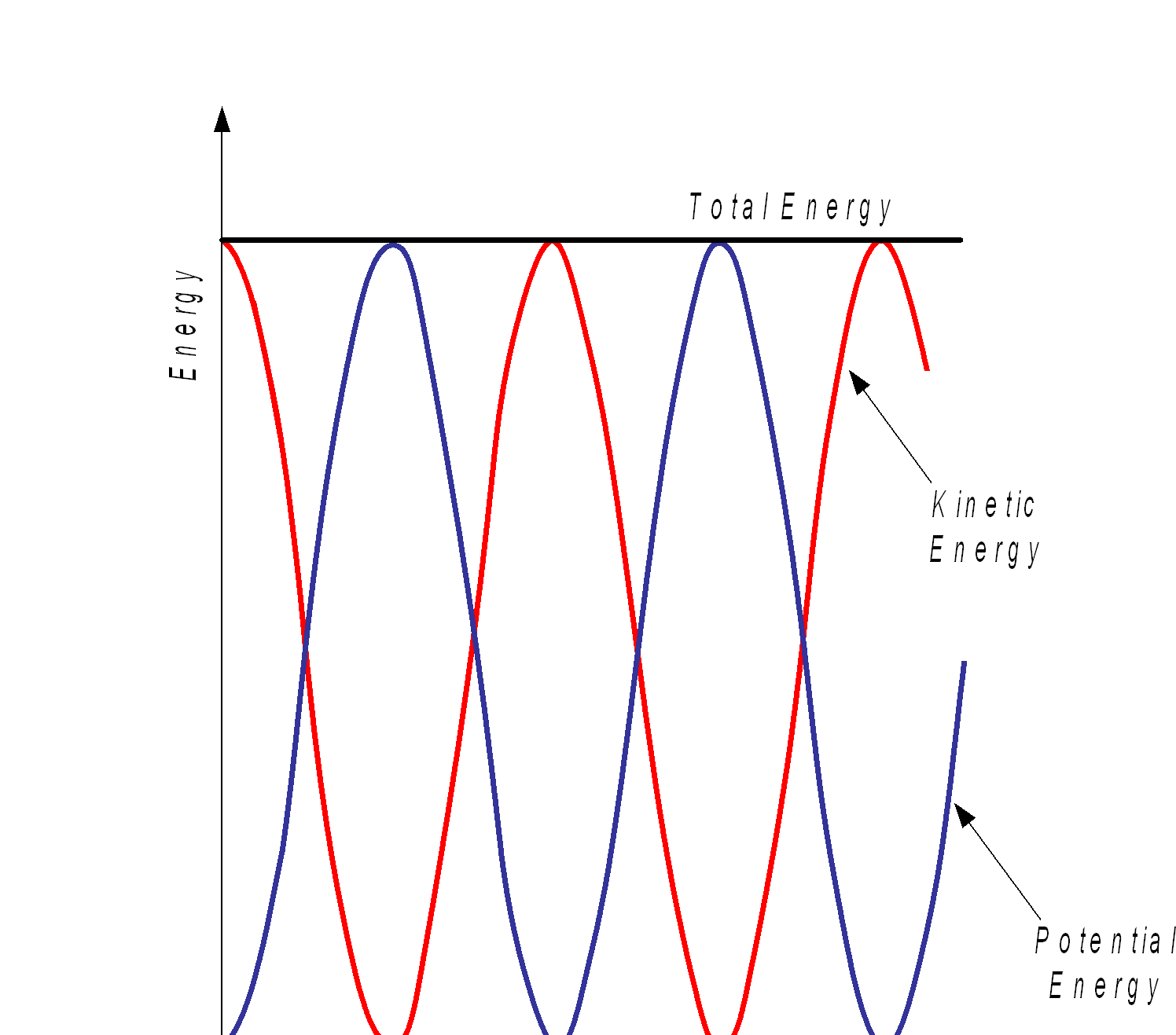
Even in the case of the simple pendulum, it is the continual swapping of energy between potential and kinetic forms (with the total energy being constant), that is of particular interest. The swapping of energy forms occurs predictably because it is directly related to (angular) displacement of the pendulum. See Figure 1-3. In this example, it is assumed that the lowest point of the pendulum’s swing is taken as the datum (zero-valued level) for calculating potential energy.
Potential energy (stored energy) is greatest when the pendulum is at the highest point of the swing, either left or right. At those points the pendulum is stationary for an instant, and kinetic energy (the energy of motion) is zero. At the bottom of the swing, the pendulum is moving fastest and kinetic energy is greatest. At this point potential
energy is least. The two forms of energy, (potential and kinetic), follow a sinusoidal relationship over time and are 180◦ out of phase. The total energy remains constant. This assumes, of course, that there are no losses of energy through wind resistance or other forms of resistance to motion.