
1.7 THE SYSTEM DYNAMICS MODELLING PROCESS
The system dynamics modelling process is illustrated at Figure 1-14 (adapted from Forrester, 1994a: 245):
- Step 1. This step describes a model which proffers a theory of dynamic behaviour. It represents the way in which that part of the real system in which we are interested, works in practice. Here various pieces of information and observations of real-world behaviour are assembled and turned into a coherent and unifying theory about the dynamics of the systemic problem, and how they operate. This is stated as a set of dynamic hypotheses describing how the troubling behaviour is created. These dynamic hypotheses then form the basis for specifying the requirements for building the model.
- Step 2. This step starts with the formulation of the simulation model, from the general and incomplete description of Step 1 through to the explicit details needed to build and verify the model. The specification developed in Step 1 is translated into the stock-and-flow structure and level and rate equations of the system dynamics model.
- Step 3. In this step, simulation can start after model testing and verification and testing is complete. Verification requires logical, extreme-value and mass-balance tests to be completed. Iteration is generally needed. This involves visiting earlier steps and refining both model structure and rate and auxiliary equations to progressively ensure that the model behaves as required. The model developed for simulation must only be just sufficient for its purpose. It may well be necessary to revisit this step and add functionality to the model, especially as policies and strategies are investigated (and the problem re-structured through Step 4).
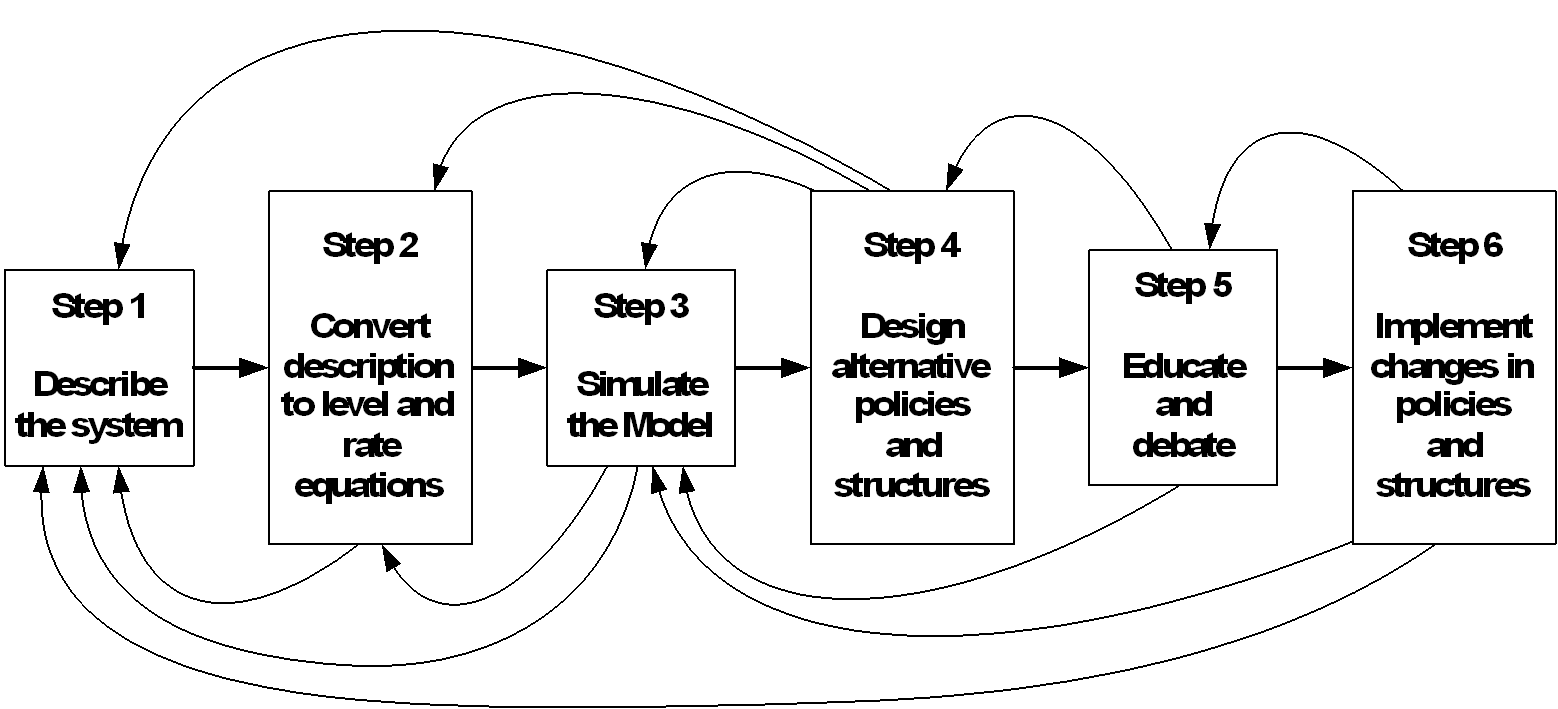
- Step 4. In this step, policy alternatives and remedial strategies are identified and specified for subsequent testing. Through a series of simulations, those policies and strategies which appear to have greatest impact are identified. Alternative policies and strategies are investigated by judicious selection of parametric values. The likely effectiveness of each policy or strategy is measured against the original problematic behaviour.
- Step 5. Dialogue and debate about the effectiveness of each of the policies and strategies and how they might be implemented are essential to processes of gaining consensus for ultimate implementation of the chosen policies and strategies. It is essential that this stage challenges the deeply ingrained views of key stakeholders. Without their intimate support and re-framing of their mental models, successful implementation is unlikely.
- Step 6. In this step the chosen policies and strategies are implemented. The success achieved will depend on the rigour of earlier steps and the support and involvement of those responsible for implementation.
References
- Forrester, J.W., 1994a, “System dynamics, systems thinking, and soft OR”, in: System Dynamics Review, Vol. 10, No. 2-3, (Summer-Fall): 245-256.