
5.2 SYSTEMS THINKING AND SYSTEM DYNAMICS MODELLING PRINCIPLES—KEYS TO UNDERSTANDING
Systems thinking and system dynamics modelling are tools that are highly effective in enabling our thinking about how feedback, delay, shifting feedback loop dominance, and non-linearity contribute to systemic behaviour. System dynamics (as a discipline which embodies systems thinking) is a methodology embedded in the cybernetic or control paradigm, that is the ‘branch of control theory which deals with socio-economic systems’ (Coyle, 1977). Wolstenholme defines system dynamics as:
A rigorous method for qualitative description, exploration and analysis of complex systems in terms of their processes, information, organisational boundaries and strategies; which facilitates quantitative simulation modelling and analysis for the design of system structure and control (Wolstenholme, 1990: 3).
Whilst system dynamics modelling is a highly valuable tool for analysing changes over time, this book addresses only its qualitative form. See Table 5-1. Although the steps of the approach are given as sequential, the method in practice, both within and between phases and stages is an iterative procedure (Wolstenholme, 1990: 4). Quantitative system dynamics modelling is mentioned for the benefit of the reader who might have the need for comprehensive, quantitative rather than qualitative, analysis of dynamic problems. Qualitative system dynamics is considered sufficient for our purposes4.
The goal of a modelling effort [whether qualitative or quantitative] is to improve understandings of the relationships between feedback structure and dynamic behaviour of a system, so that policies for improving problematic behaviour may be developed (Richardson and Pugh, 1981: 38-39). See Figure 5-2.
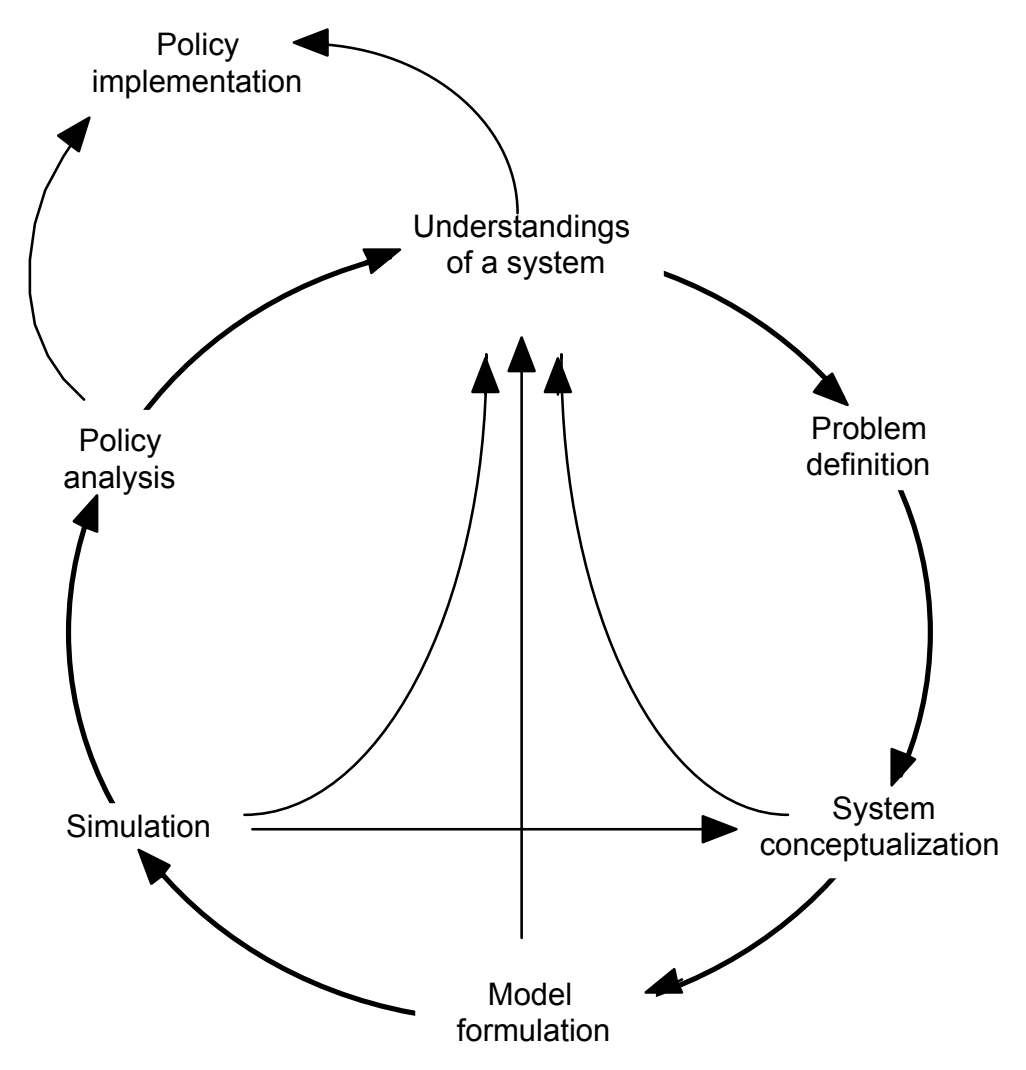
Table 5-1. System Dynamics Modelling—A Subject Summary
Qualitative system dynamics | Quantitative system dynamics | |
|---|---|---|
(Diagram construction and analysis phase) To create and examine feedback loop structure using resource flows, represented by level and rate variables and information flows, represented by auxiliary variables. To provide qualitative assessment of the relationship between system processes (including delays), information, organisational boundaries and strategy. To estimate system behaviour and to postulate strategy design change to improve behaviour. | (Simulation phase) Stage 1 To examine the quantitative behaviour of all system variables over time. To examine the validity and sensitivity of system behaviour to changes in: (i) information structure (ii) strategies (iii) delays / uncertainties. | Stage 2 To design alternative system structures and control strategies based on: (i) intuitive ideas (ii) control theory analogies (iii) control theory algorithms in terms of non-optimising robust policy design. To optimise the behaviour of specific system variables. |
System dynamics modelling allows us to analyse systemic structure, feedback and delay mechanisms that produce counter-intuitive behaviour that often defies our strategic decision-making efforts. Modelling is an iterative process. We build, revise, compare and change, and with each cycle our understanding improves. Simulation provides a graphic vehicle for demonstrating dynamic behaviour of systems that would otherwise be far beyond our ability to visualise; thus modelling and simulation can be powerful tools to aid learning. System dynamics modelling (Coyle, 1996; Morecroft and Sterman, 1994; Sterman, 2000) also provides a vehicle for simulating the effects of changing policy, thereby enhancing learning. It facilitates evaluation of alternate strategies in a benign environment before foisting them upon a world where consequences might be both dire and irreversible.
Recognising symptoms is a crucial part of diagnosing complex systems, and the human brain is particularly strong in pattern recognition. However, recognition is strongly context dependent. When appropriate contexts are created, recognition of patterns is greatly enhanced, and creative ideas are likely to be generated. Creative ideas lead to alternate strategies requiring evaluation. System dynamics (whether qualitative and/or quantitative) is used to discriminate among alternate strategies by exploring model sensitivity, dominant feedback mechanisms, leverage points and pressure points to which we might best apply our efforts to which we might direct our risk mitigation strategies. For example, reflect on the Black Hawk helicopter case—see concepts marked in bold in Figure 2-6. How this is done is explained in detail in subsequent chapters.
Footnotes
- [4] The author’s PhD research focused on the integration of qualitative and quantitative system dynamics modelling. A significant limitation of quantitative system dynamics modelling derives not from limitations with the modelling technology but with the availability of data with which to populate models and the practical difficulties with models frequently being stochastic in nature, and validating the models against data in which there can be high levels of confidence. back
- [5] After Richardson and Pugh (1981: 17). back
References
- Coyle, R.G., 1977, Management System Dynamics, John Wiley and Sons, Chichester, UK.
- Wolstenholme, E.F., 1990, System enquiry: A system dynamics approach, John Wiley and Sons, Chichester. UK.
- Richardson, G.P. and Pugh, A.L.III., 1981, Introduction to system dynamics modelling, MIT Press/Wright-Allen, Portland, Oregon.
- Coyle, R.G., 1996, System Dynamics Modelling: A Practical Approach, Chapman and Hall, London.
- Morecroft, J.D.W. and Sterman, J.D., 1994, Modeling for Learning Organizations, Productivity Press, Portland, Oregon.
- Sterman, J.D., 2000, Business dynamics: Systems thinking and modelling for a complex world, Irwin McGraw-Hill.