
3.4 VALUE OF MAPPING
The metaphor introduced in Chapter 1 is that concept maps can be likened to topographical maps of large cities, where it is easy to identify a central business district (CBD) with numerous arterial links. An industrial area and suburban shopping centres, metaphorical major and minor nodes, are readily identifiable. Major routes can be seen linking them. One map could be Sydney, another London, and yet another San Francisco. However, the same sort of topology exists.
It is not necessary to go through each of these case studies in minute detail to identify the CBD, industrial areas, shopping centres and routes between them. A CBD is readily recognisable; you don’t need the detail of every building in the CBD to recognise that it is the CBD. Relatively cursory systems thinking analysis will reliably reveal where problems are developing. Reflecting on the significance of Figures 3-10, 3-11, and 3-12, it should be clear that even when much of the detail has been removed from the map and the general topology, the structure of the problem, remains evident. This is most evident in Figure 3-12.
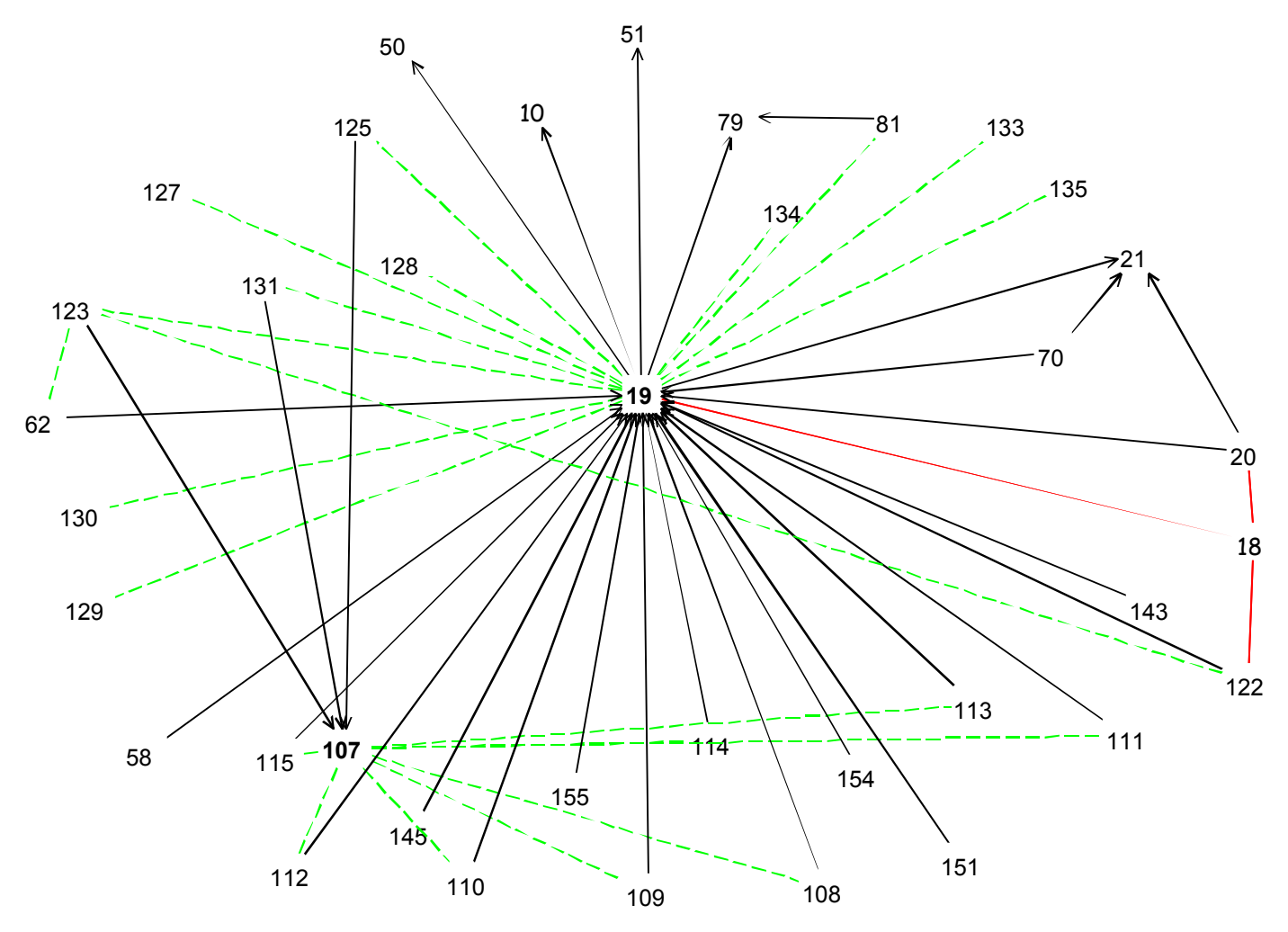
In each of these cases, the analysis has revealed there are a bunch of clearly identifiable and highly important nodes, pressure points or leverage points that might need intensive management.
In the Royal Canberra Hospital case, see Figures 3-10, 3-11, and 3-12, there are two prominent nodes:
- Concept No. 107 refers to the Report by R. Glenn and Associates— Expression of caution about matters that ought to be thoroughly investigated before implosion was used, see Figure 3-3, and
- Concept No. 19— Failure by those involved to understand and manage risks associated with demolition [by implosion], see Figure 3-8.
The Report by R. Glenn and Associates (RGA) outlines a series of concerns about the method of demolition. It advises that if implosion were to be chosen as the method of demolition there would be risks, which would need to be considered. Further investigation would be needed before demolition commenced. In the case of implosion being chosen, RGA advised against implosion at times when spectators might be around, and placed at risk. The RGA Report clearly warned against public exposure to risks associated with the demolition. The cautions expressed in the RGA Report were ignored. There is doubt that anybody in a position of responsibility read the RGA report before Katie Bender was killed. Certainly, the Report’s recommendations were ignored.
The ABC interview with ACT Chief Minister clearly suggests she was not aware of the content of the RGA Report. Promoting public attendance at the implosion is questionable, given that those involved should have known about the content of the RGA Report well beforehand. The Coroner found that the recommendations of the Report were not brought to the attention of Cabinet when a decision regarding proceeding with the demolition was made.
The Coroner found a litany of systemic failures at all levels, from the Chief Minister down. See Figure 3-9, for example. Failure to read, appreciate and implement recommendations of the RGA Report is only one example. The Coroner also found many examples of political meddling and incompetence. Incompetence was also an element in the other cases studied, but none so prominently as in the Royal Canberra Hospital implosion case.
Footnotes
- [2] The purpose of this diagram is similar to context diagrams used in systems engineering. That is, it focuses on a central concept to gauge its influence, or the extent to which it is influenced. A context diagram is valuable in gauging how critical a particular node is. Though not very clear, links 18-19, 18-20 and 18-122 are links involving conflict. back