
6.6.2 Frequency-Shift Keying (FSK)
is the digital analogue of frequency modulation. In binary FSK, two distinct carrier frequencies are used to represent the binary symbols “0” and “1.” These frequencies may be symmetrically spaced about a nominal carrier frequency or may occupy two distinct frequency slots within an assigned channel, as illustrated in Figure 6.22. The time-domain representation of FSK is illustrated in Figure 6.23.
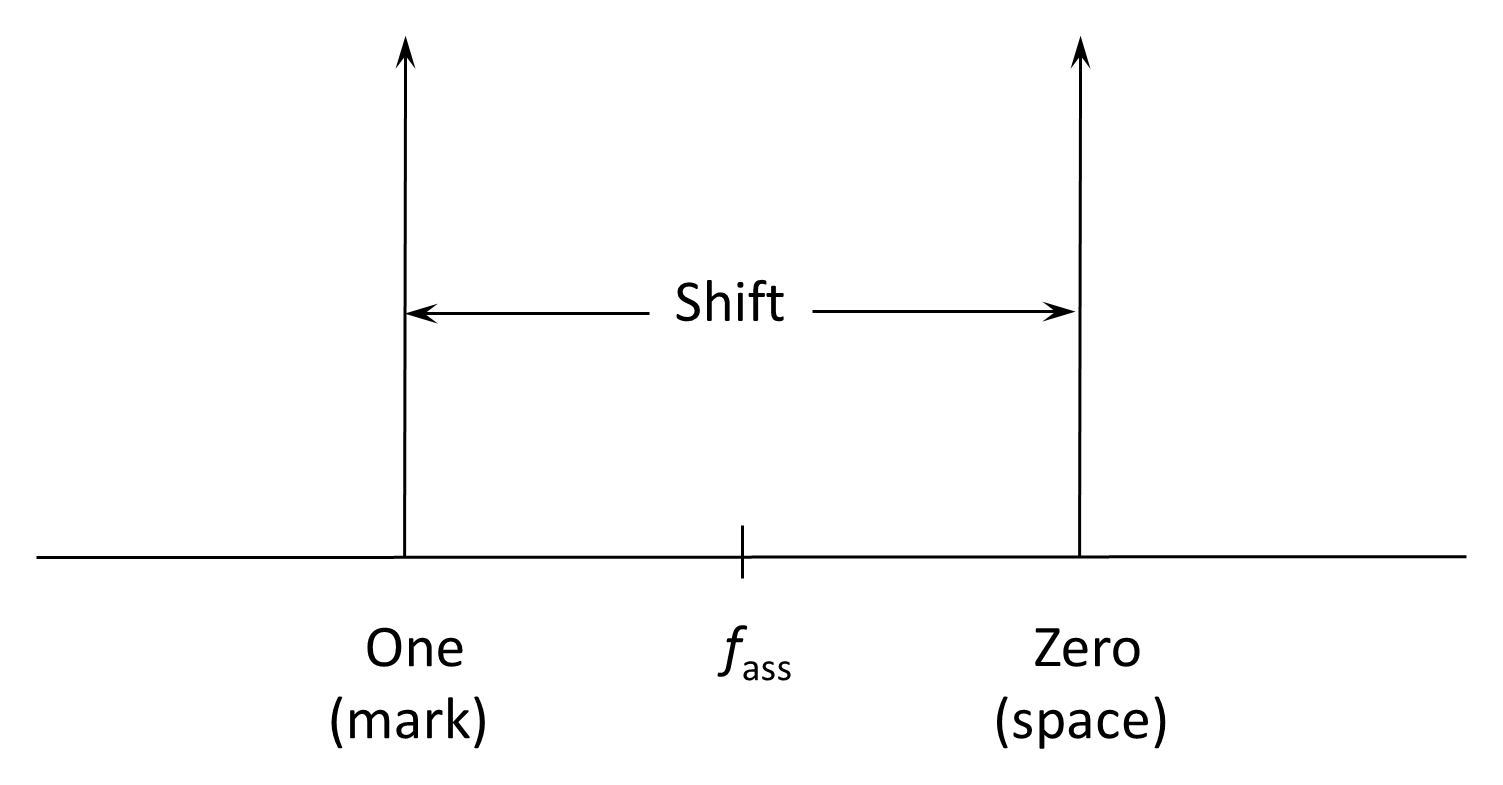
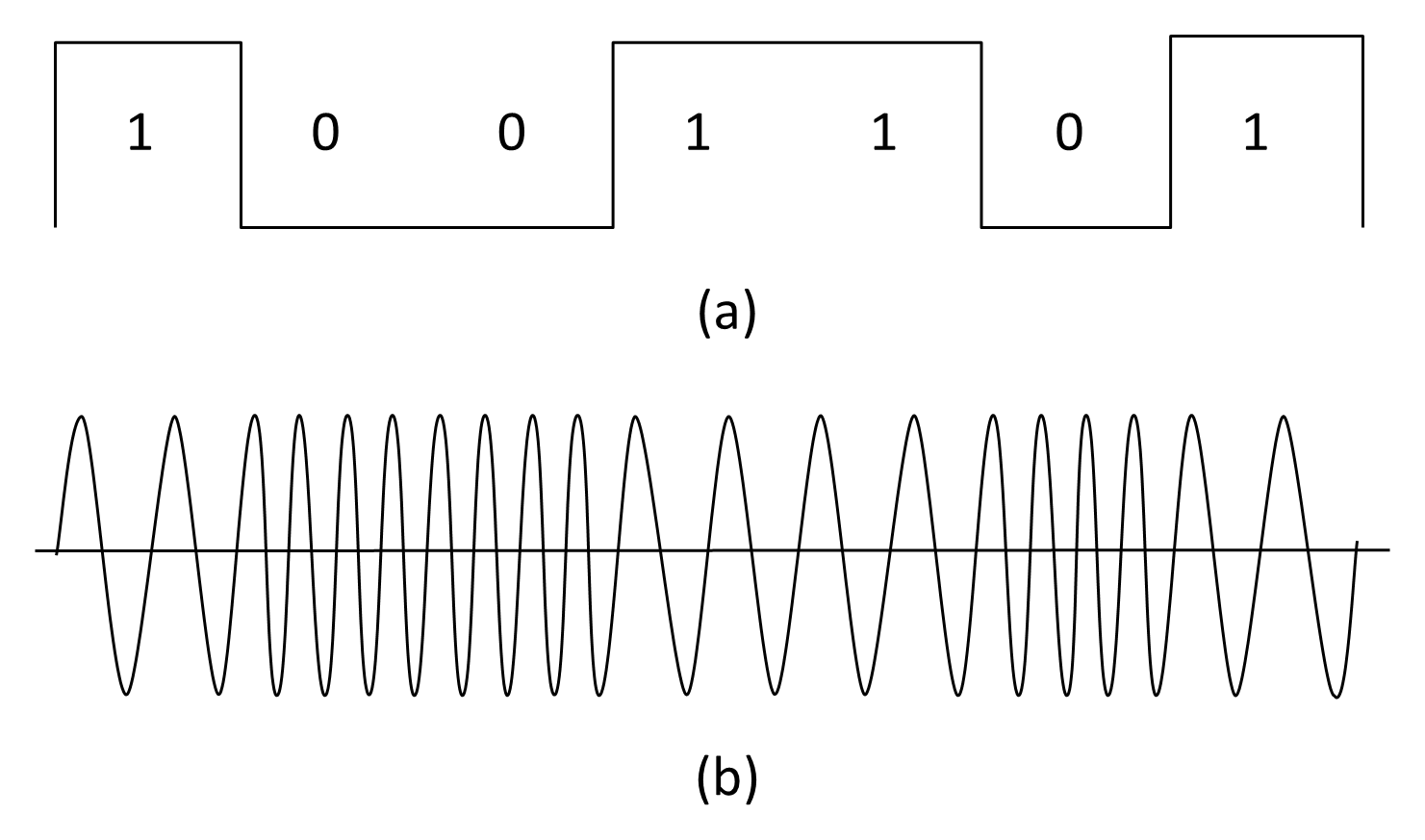
The frequency separation between the two symbol states is called the frequency shift. In traditional telegraph systems, common shift values were 85 Hz (narrow shift) and 850 Hz (wide shift), the latter originally chosen for robust HF radio transmission. Wider shifts improve noise immunity but increase occupied bandwidth; narrower shifts conserve bandwidth but reduce robustness.
FSK is well suited to transmission over legacy analog FM radio systems because data can be conveyed by modulating the audio input of an FM transmitter. More advanced digital radio systems, however, typically employ phase-based modulation techniques, which achieve higher spectral efficiency and improved power efficiency.
Back to reading