10.1.2 Magnetic Field
A conductor carrying an electric current produces a magnetic field (H) that encircles it. When the current varies with time, the associated magnetic field also varies with time. The direction of this field can be determined by the right-hand rule: if the thumb of the right hand points in the direction of conventional current flow, the fingers curl in the direction of the magnetic field lines, as illustrated in Figure 10.8.
Applying this principle to a two-wire transmission line, Figure 10.9 shows the relationship between the current in each conductor and its corresponding magnetic field. The fields from the two conductors combine to form a net magnetic field that is largely confined to the space between them.
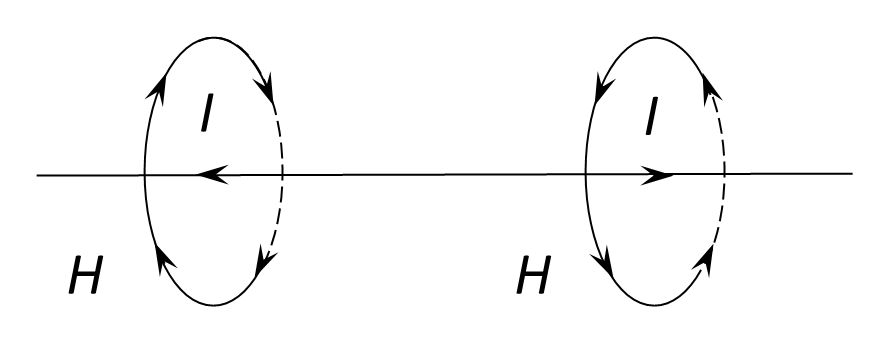
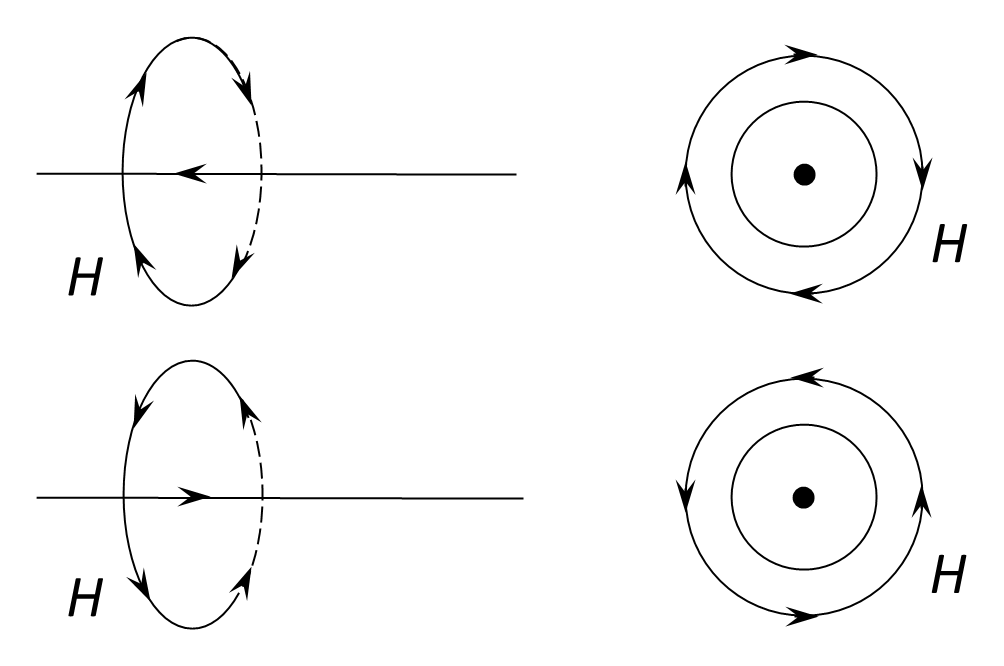
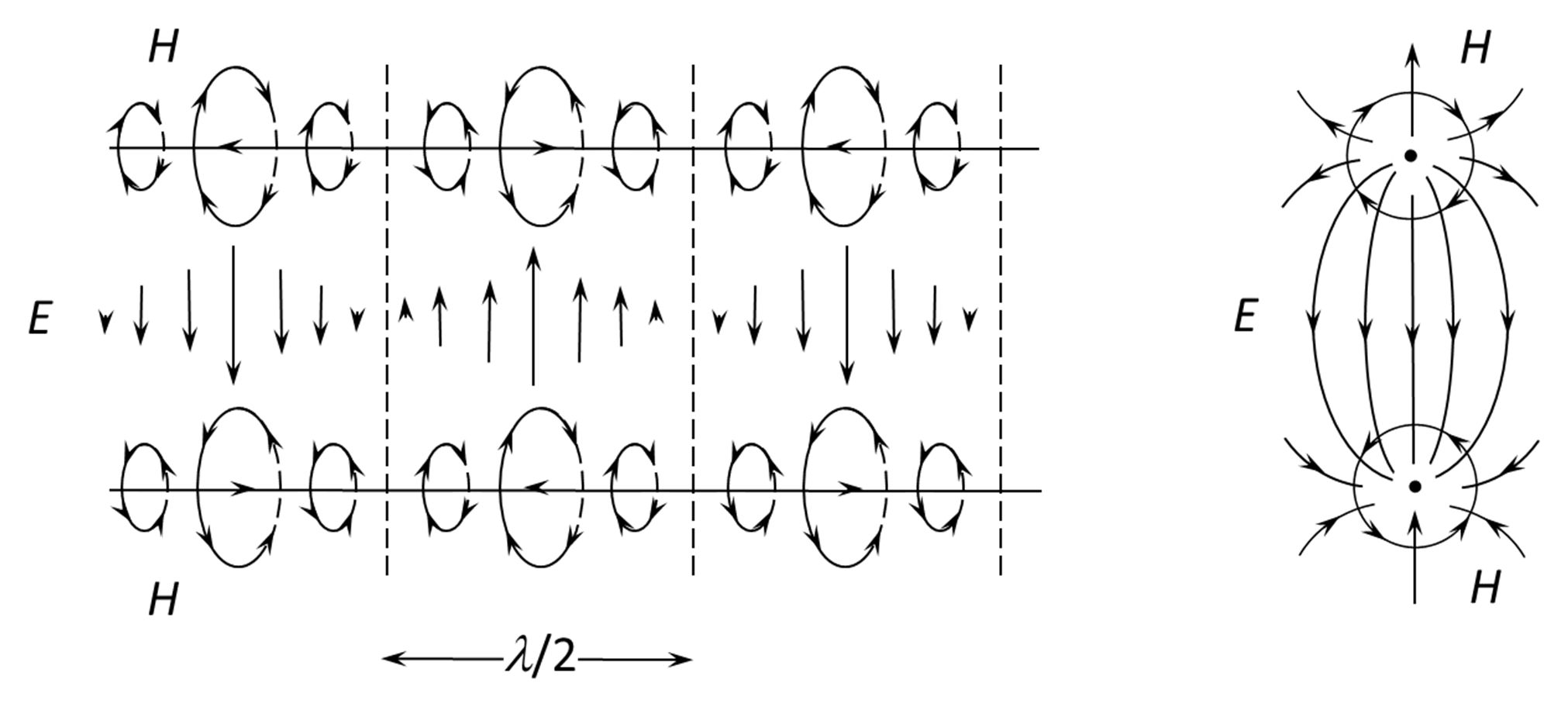
Figure 10.10 presents the complete electromagnetic picture of the transmission line. The electric field (E) and magnetic field (H) are always mutually perpendicular, and both are at right angles to the direction of wave propagation. The energy of the travelling wave is therefore conveyed by these orthogonal fields along the line, not by the physical motion of charge in the conductors.
This composite field structure constitutes an electromagnetic wave (EM wave)—the same fundamental form in which radio energy propagates through free space, a topic discussed further in Chapter 11.