11.3.6 Diffraction Loss
If the path between the transmitter and receiver is obstructed by some form of feature, the energy received at the receiver is distorted by the effect of diffraction. That is, some energy is diffracted over the obstruction. The reduction in the received signal strength below the free-space value, which occurs in the shadow region of an obstruction is known as the diffraction loss. To calculate diffraction loss, we begin by modelling the path in fairly simplistic terms. A single obstacle is represented by a perfectly absorbing knife-edge with the path geometry shown in Figure 11.13 (where the path has been plotted on k=4/3 paper).
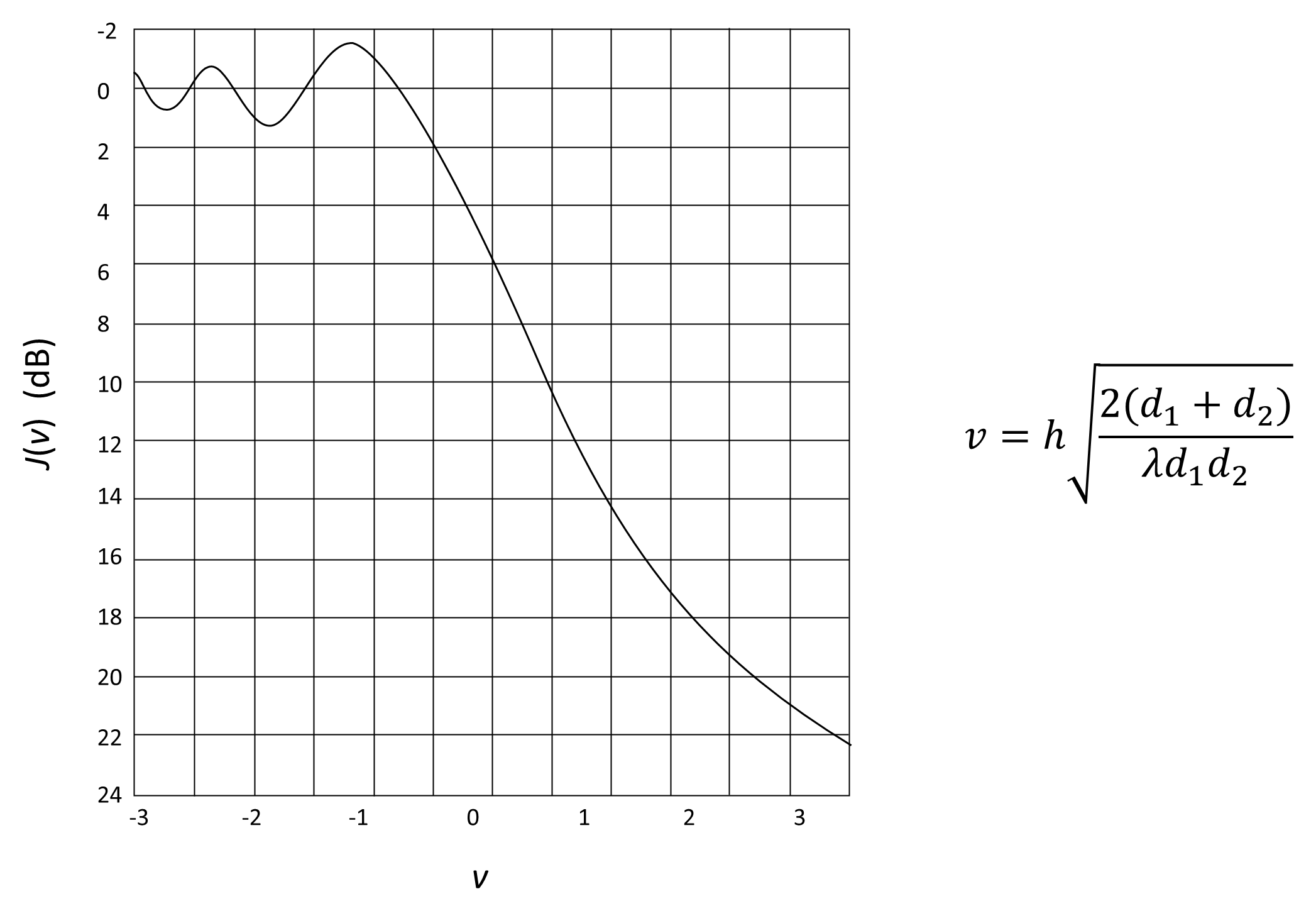
As the radio wave propagates over an obstacle, the dimensionless diffraction coefficient, v, is:
where h, d1, and d2 are in meters and are measured as shown in Figure 11.13.
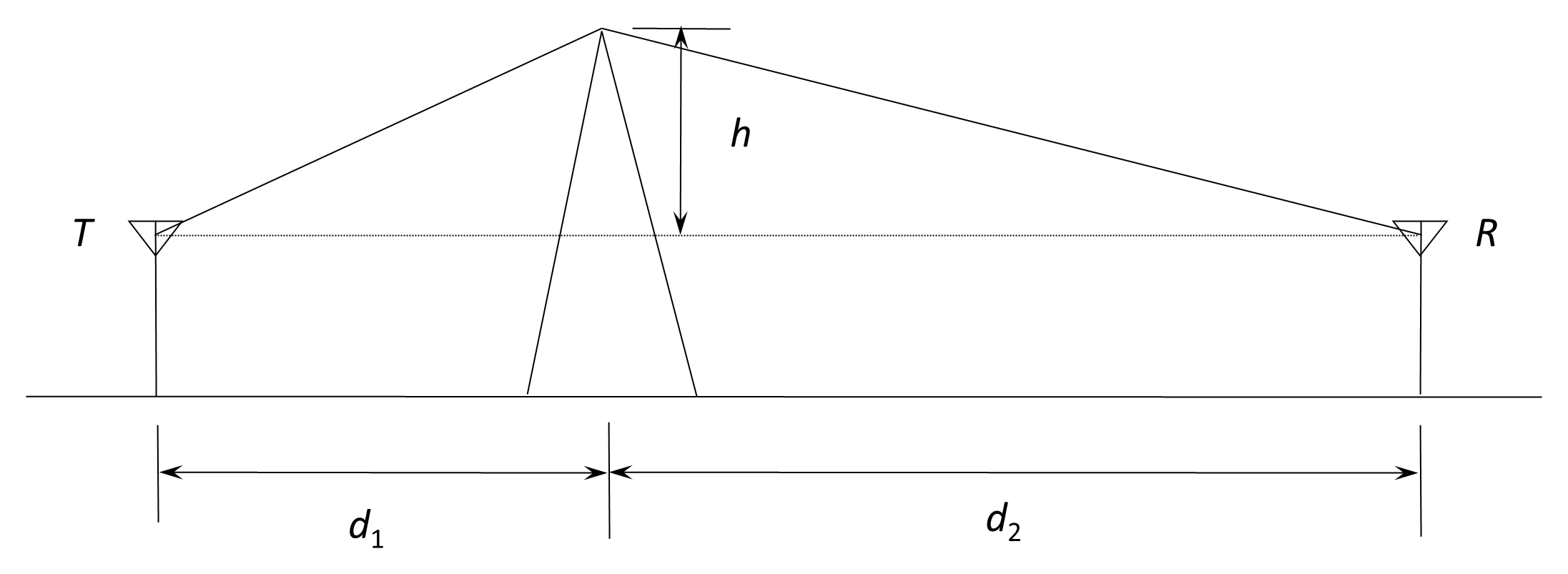
Figure 11.14 plots, as a function of v, the loss in dB, J(v), caused by an obstacle. For v greater than –0.7, an approximate value of J(v) can be obtained from the expression:
For multiple obstacles, the total diffraction loss is the sum of the losses over individual obstacles.