2.2.4 Phase
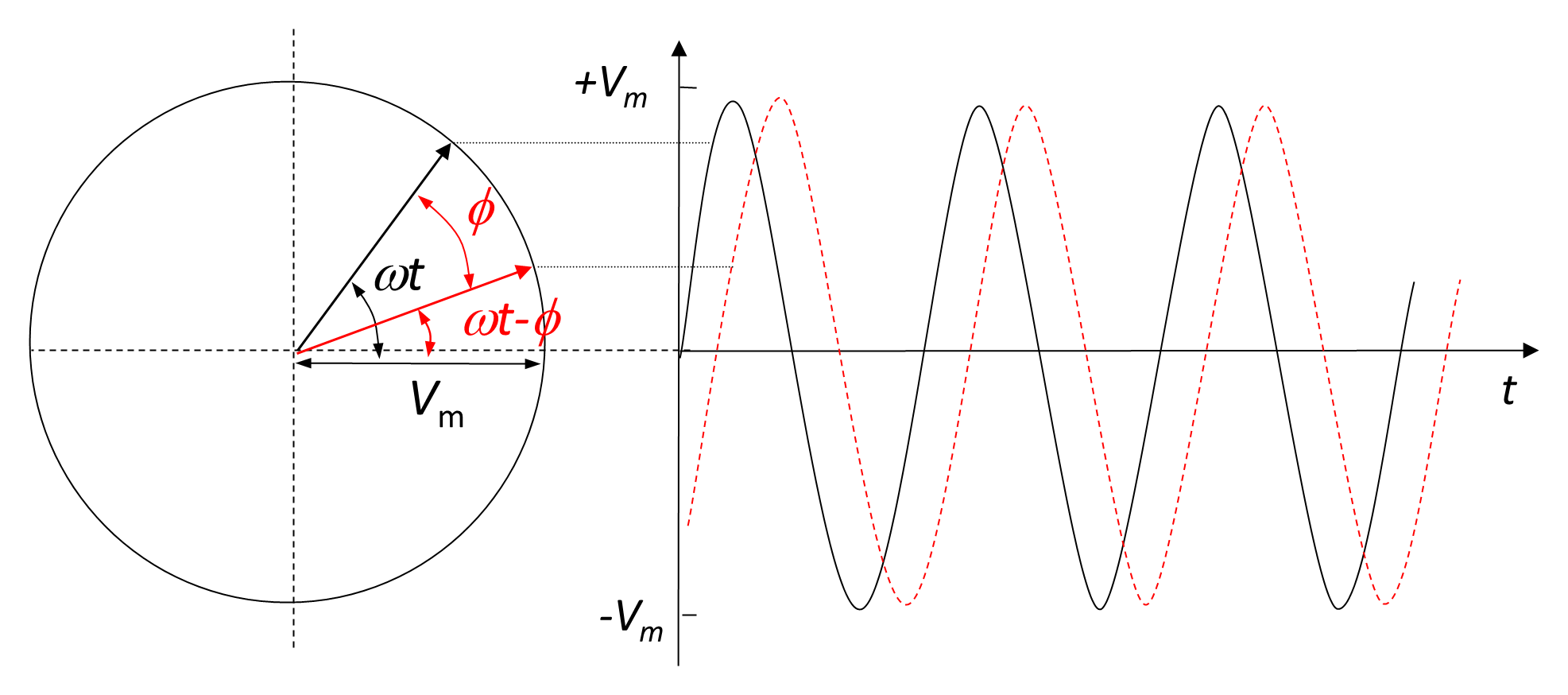
So far, we have seen two properties of a sine wave: its amplitude and its frequency. The third important characteristic of a waveform is its phase, which is normally associated with whether it leads or lags another signal—corresponding respectively to a positive or negative phase difference. Figure 2.16 shows v1(t), the sine wave we have already encountered, generated by a rotating phasor (the solid line in Figure 2.16). A second waveform, v2(t), is created by a phasor (the dashed line in Figure 2.16) that is always ϕ radians behind v1(t). Because the reference point for phase is arbitrary, phase is a relative quantity—in the case of Figure 2.16, we are referring the phase of v2(t) to v1(t) in which case we say v2(t) lags v1(t) by ϕ radians, or we could say v1(t) leads v2(t) by ϕ radians.
Mathematically, the two waveforms are expressed as:
where v1(t) and v2(t) are the instantaneous signal voltages of the two waveforms, Vm is the peak value of the waveforms, ω is the angular frequency of each signal, and ϕ is the phase of v1(t) relative to v2(t).
Phase, along with amplitude and frequency, can be varied to convey information—an idea that forms the basis of phase modulation (PM) and the quadrature modulation schemes discussed in Chapter 6.
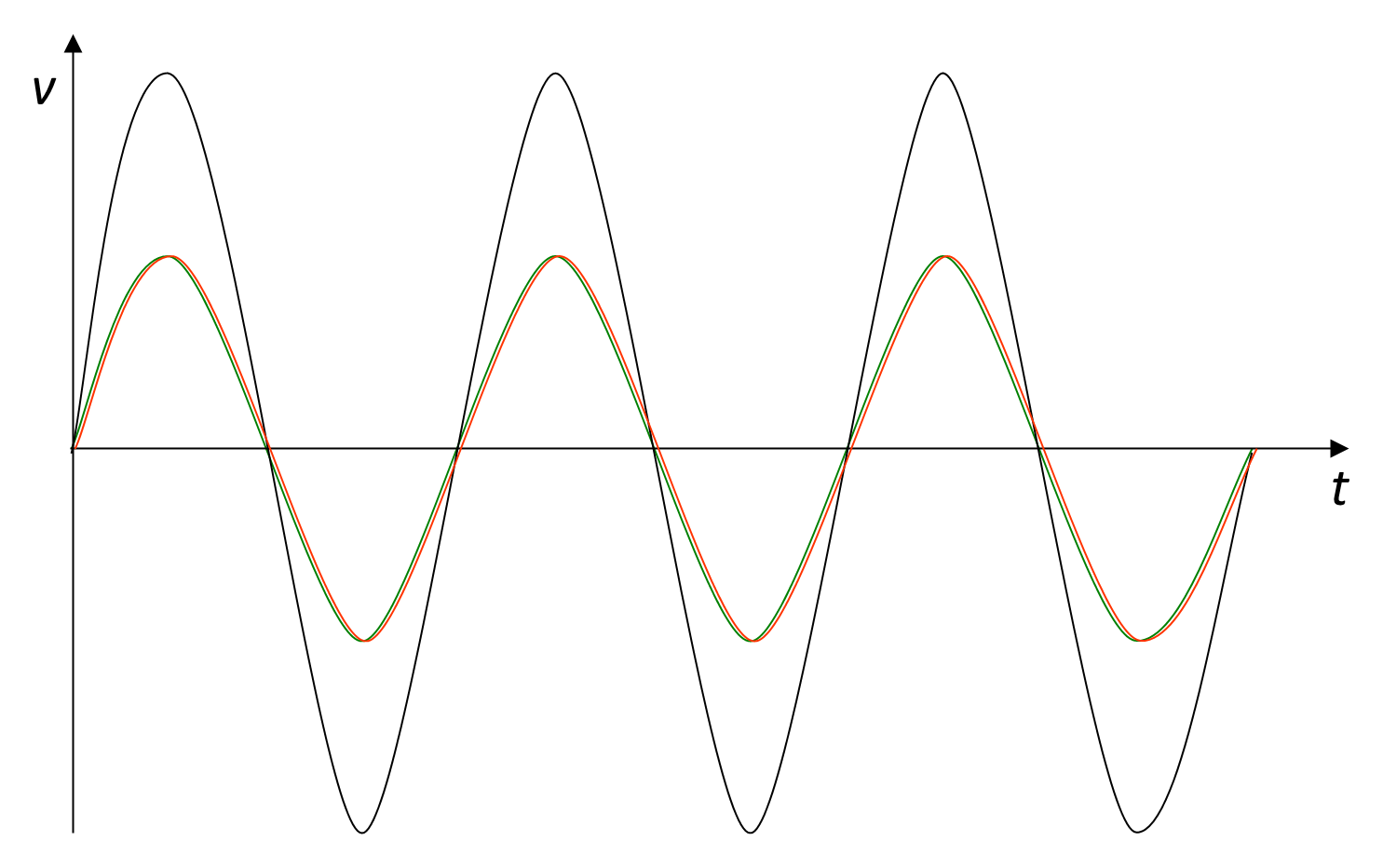
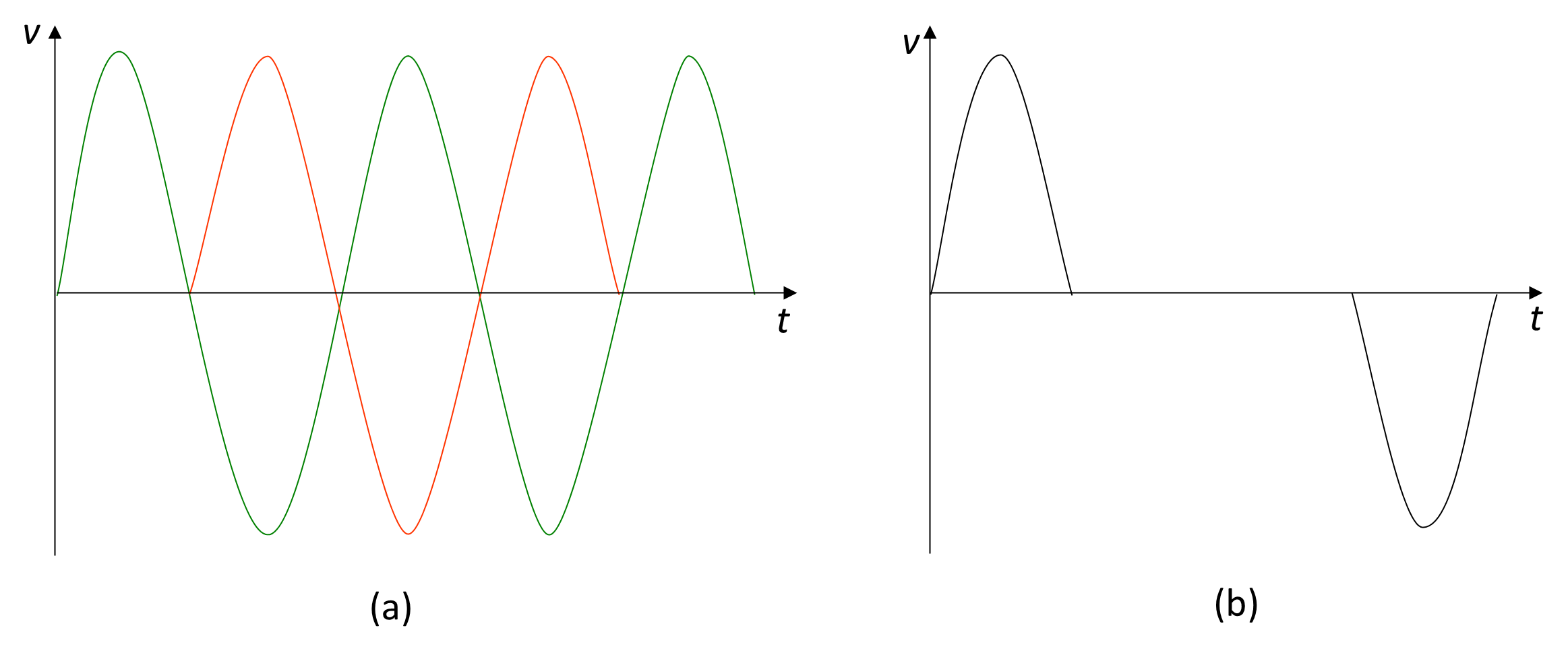
Phase is also important because, as we discuss in Chapter 11, if two signals arriving at a receiver with the same frequency and the same phase will add to produce a larger received signal—see Figure 2.17. Alternatively, two signals arriving at a receiver with the same frequency and the different phase will add to produce a smaller received signal—see Figure 2.19 for the extreme example where the signals have completely opposite phase in which case they completely null each other out.