
Library
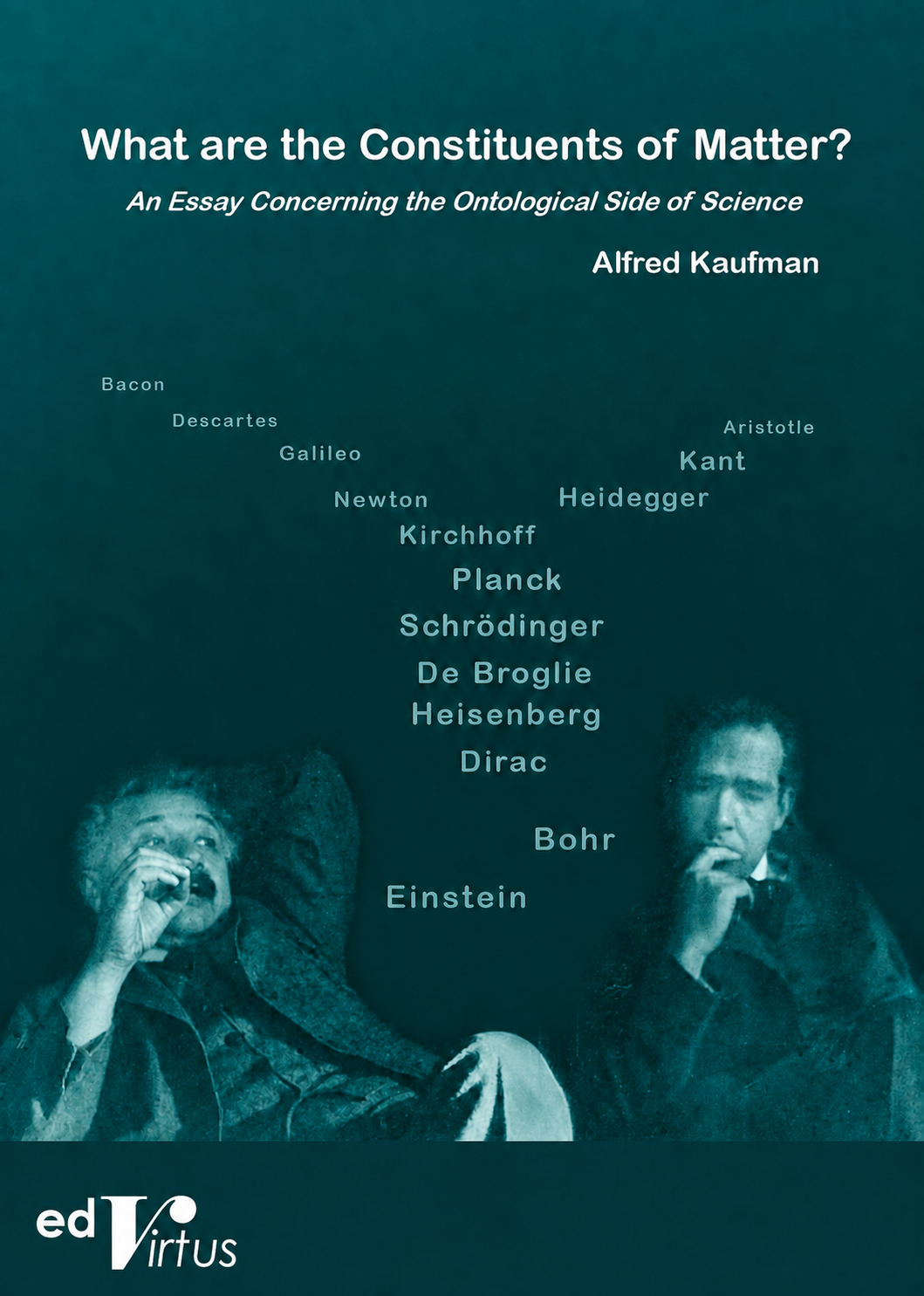
Constituents of Matter cover

What are the Constituents of Matter?

An Essay Concerning the Ontological Side of Science

Alfred Kaufman

This essay examines how modern science's account of nature shifted from a familiar picture of interacting objects governed by intelligible laws to the more obscure and counterintuitive world introduced by quantum theory. It argues that this shift arose from the decision to treat the constituents of matter as experimentally observable objects, despite philosophical and theoretical reasons to doubt that they were objectively real in the ordinary sense. By reconsidering alternative ontologies that were overlooked, the essay suggests that quantum strangeness reflects not simply the nature of reality itself, but the explanatory framework science constructed to preserve coherence in its account of observed phenomena.

Contents

  1. Blurb
  2. Preface
  3. 1 THE PURPOSE OF THIS ESSAY
  4. 2 THE CORPUSCULAR THEORY OF MATTER
    1. 2.1 THE INSIDE OF THINGS
    2. 2.2 GAS LAW AND THE MOLECULE
    3. 2.3 CHEMISTRY AND THE ATOM
    4. 2.4 CONDUCTION OF ELECTRICITY THROUGH RAREFIED GASES AND THE ELECTRON
    5. 2.5 A GATHERING STORM OF FAILURE
      1. 2.5.1 The First Failure: Black Body Radiation
      2. 2.5.2 The Second Failure: Atomic Spectra
      3. 2.5.3 The Third Failure: The Photoelectric Effect
  5. 3 THE CREATION OF QUANTUM MECHANICS
    1. 3.1 EARLY ATTEMPTS TO DEAL WITH THE FAILURES OF THE CORPUSCULAR THEORY
      1. 3.1.1 An Act Of Desperation: The Quantum Object Announces Itself
      2. 3.1.2 The Act Of Desperation Pays Off: Quantum Objects Show Surprising Power To Explain
      3. 3.1.3 Observing A Quantum Object: The Davisson-Germer Experiment
    2. 3.2 A NEW THEORY IS WROUGHT FROM THE CRISIS
    3. 3.3 THE CALCULATIONAL INSTRUCTION BOOK OF THE THEORY
    4. 3.4 ENTANGLEMENT AND THE EPR PAPER
    5. 3.5 THE ONTOLOGICAL QUESTION: WHAT, AFTER ALL, IS AN ELECTRON?
  6. 4 SEARCHING FOR THE BEING OF THE CONSTITUENTS OF MATTER
    1. 4.1 USING THE THINGS WHICH ARE GIVEN TO US
    2. 4.2 CONTEMPLATING THE THINGS WHICH ARE GIVEN TO US
    3. 4.3 EXPLAINING THE CONTEMPLATED WORLD: THE HOW AND THE WHY EXPLANATIONS
    4. 4.4 THE HISTORICAL CHARACTER OF EXPLANATION
    5. 4.5 OBJECTS OF EXPLANATION
    6. 4.6 ARE OBJECTS OF EXPLANATION OBJECTS OF EXPERIENCE?
      1. 4.6.1 Corpuscular Theory Of Boyle’s Law
      2. 4.6.2 Electromagnetic Theory Of Light
    7. 4.7 OBSERVING AN OBJECT OF EXPLANATION
    8. 4.8 TAXONOMY OF SCIENTIFIC MEASUREMENTS
    9. 4.9 THE BEING OF AN OBJECT OF EXPLANATION AS REVEALED IN A PREDICATED MEASUREMENT
      1. 4.9.1 Reference To Explanation
      2. 4.9.2 Persistency Through Modification
      3. 4.9.3 Retaining Previous Modifications
      4. 4.9.4 Was Aristotle Right After All?
    10. 4.10 THE BEING OF AN OBJECT OF EXPLANATION WHEN USED TO EXPLAIN AN ORDINARY MEASUREMENT
  7. 5 THE ONTOLOGICAL CONTENT OF QUANTUM MECHANICS
    1. 5.1 JUMPING OVER ONTOLOGY: THE COPENHAGEN SETTLEMENT
    2. 5.2 THE RESULTING STRANGENESS OF QUANTUM MECHANICS
      1. 5.2.1 Bohr’s Complementarity Principle
      2. 5.2.2 Planck’s Radiation Formula
      3. 5.2.3 Ontological Probabilities
      4. 5.2.4 Quantum Superposition Of States
      5. 5.2.5 Quantum Entanglement
    3. 5.3 THE ACCURACY OF QUANTUM MECHANICS
  8. 6 REFLECTIONS UPON THE STRUCTURE OF THE SCIENTIFIC PROJECT
    1. 6.1 THE STRUCTURE OF MODERN SCIENCE
    2. 6.2 REFLECTIONS UPON THE STRUCTURE OF MODERN SCIENCE
      1. 6.2.1 Are Objects Of Explanation Real?
      2. 6.2.2 Exiled From Science, Where Did MAN Go?
      3. 6.2.3 How Much Truth Is There In Modern Scientific Theories?
  9. Bibliography

Author

Dr Alfred Kaufman graduated from New York University with a doctoral degree in theoretical high energy physics. He has worked in the field of system analysis providing technical and strategic advice to the Defense Department while maintaining an active interest in the foundations, both structural and philosophical, of modern physics.