
Volume 15, Number 1, March 2012
Contemporising The Combat Estimate
- * Faculty of Engineering and the Environment, University of Southampton, UNITED KINGDOM.
- ** Joint Services Command and Staff College, The Defence Academy, UNITED KINGDOM.
Abstract
The aim of this paper is to adapt the Combat Estimate so that it can be used to support Human Terrain Mapping for use in Contemporary Operating Environments, in particular to facilitate the planning and interaction of both soft and hard effects. The planning tools in the present version of the Combat Estimate were developed for hard kinetic effects and are less useful for planning for soft, influence, effects. This paper focuses primarily on identifying how tools from other domains, such as commercial marketing and political campaigning, can help to analyse, and then provide a path to influencing, a target population in a military context. A Contemporised Tool Set was developed and tested at the Joint Services Command Staff College with 186 newly promoted Majors undertaking their compulsory promotion training. The participants were divided into a control group (using the current planning tools associated with the Combat Estimate) and a treatment group (using the Contemporised Tool Set in addition to the current planning tools). The results suggest that the Contemporised Tool Set increased plan quality significantly without increasing workload or decreasing usability of the Combat Estimate.
Introduction
Current Military Assistance to Stabilisation and Development (MASD) operations, such as the current conflict in Afghanistan, has highlighted the need to contemporise the Combat Estimate [1]. The Combat Estimate contains the invariants of mission planning, such as: enemy strength, activity and assumed intentions, the goals of the mission, analysis of the constraints in the environment, the intent of the commander, developing courses of action, choosing a course of action, identifying resource requirements, synchronizing the assets and actions, and identifying control measures [2]. There is much in common with land-based planning for the United States Army [3], Canadian Army [4] and the British Army [5]. The Army Doctrine Publication [6] describes how most conflicts will require concurrent, overlapping or connected military activities, sometimes in adjacent streets, which when represented as a mosaic, present a complex conflict environment. Forces engaged in current operations are confronted with a vacillating mix of military activities, in particular Counter Insurgency (COIN) and Military Assistance to Security and Development (MASD), both of which are population centric. This focus on the population significantly raises the profile of Influence operations [7,8]. In order to properly understand their environment and to have the right tools to hand, tactical planners need to be presented and trained in the use of planning aids which focus primarily on a population, in addition to the more traditional focus on strike operations.
Current training of the Combat Estimate at the Joint Services Command and Staff College (JSCSC) has revealed a number of critiques when applied to formation level Military Assistance to Stabilisation and Development planning problems. Whilst the current planning tools are designed to graphically represent and support the analysis of a conventional enemy; they do not incorporate the interaction and influence of a population on the enemy, or on friendly actions [1]. Most contemporary approaches to the problem tend to rely upon use of specialist personnel and the development of complex computer-aided support systems [9]. Whilst these approaches may be appropriate for higher levels of command they are less practicable at the lower echelons [1]. Rather, it was proposed that an adaptation of the Combat Estimate was required to support the changing nature of operations.
The need to update the supporting tools used in the Combat Estimate in light of the changing operational landscape has been identified [1, 10]; however, the provision of tools has been less fruitful. The aim of this paper is to provide a knowledge base, and identify applicable tools to map onto the existing Combat Estimate, in order to improve the performance of tactical planners in a Contemporary Operating Environments, (COE) which will be congested, cluttered, contested, connected and constrained. This paper will outline literature which focuses on achieving influence from the military, academic research, political and marketing domains. This will allow for the identification of prominent and transferable tools, and metrics, which can be used to develop, and organise, Influence activities in military operations. The aim of the current paper was to test relevant tools and integrate them into a process which can be mapped onto the Combat Estimate.
Contemporised combat estimate
An initial exploration of the political campaigning and commercial marketing domains identified an overlap in the processes undertaken within these domains [11], and a compatibility with the military domain [2,12]. The rationale for adapting tools from other domains was based on the assumption that political campaigns [11,13] and product marketing [14,15] are already well-seasoned in human terrain mapping. A clear example of this overlap is the ‘campaign planning tool’ presented by the change agency [16]. The political and marketing campaign processes are similar to the Combat Estimate planning process as they all undertake an analysis of the current situation (see Table 1). Once an understanding of the domain has been established both the political and marketing campaign processes analyse key stakeholders or market sectors within a geographical area. Subsequent steps of the political and marketing campaign processes involve developing the key aims of the campaign defined as the focus. This stage maps onto question two of the Combat Estimate where the planning team are drawing their focus from the orders of their higher organisational levels. Once a focus is identified the development of more specific objectives and campaign goals is undertaken, following which key tactics are developed. These stages map onto questions three, and four to six of the Combat Estimate [2,12]—the development of Courses of Action (COAs). Once the appropriate strategy has been chosen the team must develop a time line to illustrate when which events will take place. This is similar to question six in the Combat Estimate where the planning team develops the integration of actions and resources [2,12]. The campaign process ends with the identification of risks and contingencies as well as success indicators for the strategies chosen. This is in line with the control measures stage of the Combat Estimate where the team should identify risks inherent in their plan and discuss appropriate counter measures [2,12].
Through the exploration of the processes within the political and marketing domains a deficit was recognised within the current military planning process. The process models from both the marketing and political domains involved an additional phase of identifying one’s own strengths. This is an important area as it enables the choice of strategy to be contingent upon one’s inherent strengths and capabilities. The identification of overlapping processes within the political, marketing and military domain allowed for the recognition of appropriate tools utilised within politics and marketing at each of these phases. Through the review of influence strategies across the political and consumer domains a variety of transferable tools were identified. At the initial stage of analysis 54 tools emerged as holding initial applicability to the military domain and the problem at hand. These 54 tools were evaluated with a SME against the current operational demands in order to ascertain those tools most applicable for integration into the Combat Estimate process. After focus group discussions with SMEs, the tools were mapped onto the Combat Estimate seven questions planning phase as illustrated in Table 1. Examples of the templates for each of the new tools may be found in Appendix A.
The output of this initial stage was a process of plan development, which follows that of the Combat Estimate seven questions, with tools derived for each stage. In order to identify the value attached to fielding the Contemporary Tool Set (that is, those tools in the middle column of table 1) an experiment was undertaken comparing the use of the Contemporary Tool Set and traditional Combat Estimate tools against using only the traditional Combat Estimate tools (that is, the Combat Estmate products in the right hand column of Table 1). The following section outlines the method adopted for this empirical evaluation.
Methods
Design
The trial followed the principles of a between subjects design. The independent variable was whether or not the participants were presented with the Contemporary Tool Set. One division of participants (98 participants) was provided with the Contemporary Tool Set (treatment group) and a second division of participants (88 participants) was not provided with the Contemporary Tool Set (control group). The dependent variables measured included subjective workload, tool usability and plan quality. Workload was measured using the NASA Task Load Index (TLX) questionnaire [23], usability was measured using the SUS usability questionnaire [24]. Data for both were collected at the end of the trail. Plan quality was rated by a panel of Subject Matter Experts (SMEs) post-trial, and a thematic analysis of the content of the plans was undertaken using Leximancer [25].
| Questions from Combat Estimate | New tools to support contemporary operations | Combat Estimate Product |
|---|---|---|
| What are we good at? | Unique Selling Proposition [17,18] | N/A |
| What is the enemy doing and why? | Market Position [19] Power Dynamism Matrix [20] | Terrain Analysis and Battlefield Are Evaluation |
| What have I been told to do and why? | Stakeholder Map [20] | Mission Analysis |
| What effects do I want to have on the enemy? | Spectrum of Allies [16] | Effects Schematic |
| Where can I best accomplish each effect? | Spectrum of Allies [16] | Decision Support Overlay |
| What resources do I need to accomplish each effect? | Power Mapping [22] | Decision Support Matrix |
| Where and when do each of the effects take place in relation to each other? | Power Mapping [22] | Synchronisation Matrix |
| What control measures do I need to impose? | Power Mapping [22] | Control Measures |
Participants
186 military personnel undertook this experimental trial as part of their military training. The participants were divided into two divisions: the control group (88 participants; divided into eight syndicates) and the treatment group (98 participants; divided into nine syndicates). All participants completed informed consent forms before the trial began and the trial was undertaken with the approval of the University of Southampton Ethics and Research Governance Office and permission from Ministry of Defence Research Ethics Committee. The participants in the control and treatment group were matched with regard to age, military rank and years of military experience.
Procedure
Before the trial began those participants using the Contemporary Tool Set (treatment group) were given a two hour tutorial on the tools and the manner in which to apply them. In addition they were also presented with an Aide Memoiré containing an introduction to the tool set, guidance on how to apply the tools and a series of worked examples to illustrate best practice. Immediately before the trial all participants were briefed on the nature of the trial and their right to withdraw. Participants were then asked to complete consent forms and a demographic questionnaire. The participants were then given a two and a half day time period in order to complete a Combat Estimate and produce a set of orders for a military operation requiring the orchestration of Influence Operations. Post trial, an online survey host (provided by the University of Southampton) was utilised to collect participants’ responses on a questionnaire about their workload during the trial and a questionnaire on the usability of the tool set that they used. All products produced by the syndicates were collected in order to enable post-trial analysis and rating by a SME panel.
Experimental scenario
The Cerasia (a fictional area of the world) scenario was used as the basis for the formation planning exercise. It was specifically designed to highlight the differing geo-strategic interests inherent in an unstable but strategically important region. The prevention of the collapse of the only multi-cultural democracy in the region is at the heart of the scenario and is overlaid by a number of competing themes including the prevention of a humanitarian catastrophe, countering state and non-state aggression, and challenging the use of terrorism by radical fundamentalists. Throughout there was a requirement to address the complex security issues via a comprehensive approach in particular the relationships between deterrence, security, stability, reconstruction and development. During the planning exercise the syndicates received updates informing them that the main effort had changed and the priority was to engage four identified insurgent strongholds whilst maintaining the peace in the wider area and supporting the humanitarian aid effort.
Results
Workload
The NASA Task Load index [23] is a popular and well regarded method to measure workload which has been utilised across a variety of domains [26]. The method asks participants to subjectively rate their workload after task performance across a series of six dimensions: Mental exertion; Physical exertion; Temporal pressure; Performance satisfaction; Effort required; and Frustration felt. From these dimensions an overall workload (OWL) score was calculated as the aggregate of these individual dimension scores. The Mann Whitney U Test did not detect a significant difference at the 5% level for the OWL, nor for any of the individual dimensions of which the OWL is composed. These results demonstrate that the use of the CTS did not impact the workload of the mission as rated by the military personnel taking part in the trial.
Usability
Within this trial, usability was measured using the System Usability Scale (SUS) [24]. SUS comprised of 10 items addressing system likeability, complexity, ease of use, support, integrated functions, inconsistency, learnability, cumbersome use, confidence in use and preparation. Each of the items can be examined independently or they may be combined into an overall system usability score. After the exercise participants were asked to rate the usability of the tool set that they used. In the control group the tool set was defined as the current tool set, in the treatment group the tool set was defined as the combination of the current and Contemporary Tool Set (CTS). The Mann Whitney U Test was unable to detect a significant difference at the 5% level between the control and treatment group for the overall system usability score. Analysis of the individual usability dimensions did reveal a significant difference for a number of individual dimensions. The individual dimensions show a significant difference between the groups for four dimensions: Frequency of use (U = 554, p < 0.005); External support required (U = 620.5, p < 0.05); Quick to learn (U = 596.5, p < 0.01) and Confident in Use (U = 363.5, p < 0.001). The results demonstrate that the participants used the CTS less frequently than the standard Combat Estimate tool set. This result is not surprising given the fact that the tools were new. The CTS was also rated as requiring a greater level of support than the current tool set, which demonstrates that the users of the CTS were still in the learning phase. In line with the suggestion of a negative impact on usability from the low level of experience with the CTS, is the result that the control group felt more confident using the current tool set when compared to the confidence felt within the treatment group in using the CTS. Again it is hypothesised that increased exposure to the CTS tools would serve to minimise these differences between the control and treatment group. Contrary to the previous three dimensions, the CTS was rated as significantly quicker to learn that the current tool set. From this it could be concluded that the CTS comprises simple to learn tools that are immediately applicable compared to the current tool set.
Plan quality
In order to analyse the quality of the plan produced by each syndicate the research team and two SMEs developed a set of criteria for rating the quality of the plan. The criteria were based upon the Tactical Functions, chosen as criteria because they provide a comprehensive set of attributes that any military course of action could be compared against. The Tactical Functions were supplemented with the Principles of Stabilisation which were deemed to be relevant as the specific mission was predominantly based on the MASD military activity. This combination allowed for a more mission-specific evaluation alongside the generic evaluation provided by the Tactical Functions. In addition to this, a criterion of Influence was added to receive feedback on the specific Influence aspect of each plan. A panel of four SMEs was given a briefing on the criteria and rating scheme in order to familiarise them with the process. The SMEs were then asked to score each syndicate’s Concept of Operations (CONOPs) brief that had been prepared for GoC 1 (UK) Armoured Division and which outlined the mission plan. The panel discussed the criteria until a consensus was reached. The results are presented in Figure 1.
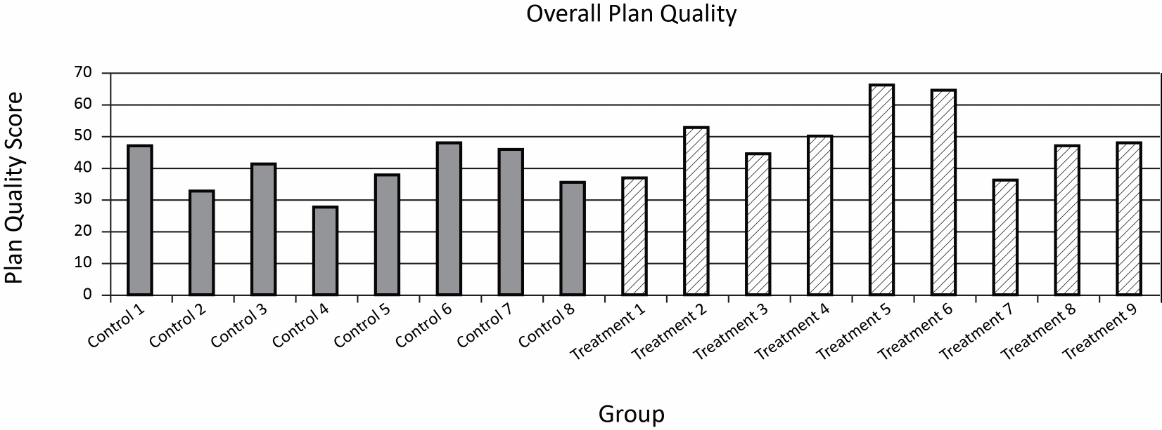
The results indicate that there is a significant difference in the plan quality between the control and treatment groups at the 5% level (U = 15.5, p < 0.05). The treatment group produced significantly higher quality plans compared with the control group. From this it could be concluded that the CTS led to the development of a better quality plan. To better understand these differences in plan quality, a thematic analysis was undertaken for each of the groups. For each syndicate a concept map, displaying the core concepts and their relationship to one another, and a thematic map, a map illustrating the overarching categories of concepts present, were developed. The thematic maps are constructed by combining connected / related concepts into themes.
It is important when interpreting the results to recognise that the themes are constructed from a series of concepts. Each concept is an idea or discreet piece of information or knowledge which has been identified by the Leximancer [25] application or through a manual analyst derived approach.
Examining the control and treatment group there are a number of common themes: Plan, Information, Mission and Tools. It is unsurprising that these themes are common to both groups as the Plan theme represents the overarching aim: to develop a plan the Tools theme is indicative of the tools utilised to guide the planning process and the Information theme is illustrative of the main input for the plan development.
There are also a number of themes that differ between the control and treatment groups; 33% of the treatment group themes are shared with the control group and 38% of the control group themes are shared with the treatment group (a total of 35% of overall themes are shared). Table 2 summarises the themes and their presence, a grey cell indicates that the theme is present. It is important to recognise that the themes are the strongest of a number of identified themes and the interpretation of their individual and combined meaning requires military knowledge and understanding and is therefore subjective.
The control group contains the additional themes of Staff, Brigade, Injects, Time and Direction which are not present in the treatment group. The treatment group contains Analysis, Population, Action, Detail and Effects which are not present as core themes in the control group. Within the treatment group the focus appears to look beyond the Combat Estimate process and on external factors such as analysis of the population and the population’s likely reaction to actions, developing different courses of action, the effect of the enemy’s reaction on courses of action and trying to gather a greater level of detailed information. The theme of detail may refer to the participants wanting a greater level of detail a theme not strongly apparent in the control group participants, suggesting that the treatment group wanted to look at the situation in more depth.
From the thematic analysis it can be concluded that the treatment group had a greater focus on the population and were more centred on the development of courses of action, operations and detailed analysis, whereas the control group focused upon time constraints and integrating with other staff. It may be concluded that the CTS fixed the treatment group’s attention on the population and on the development of appropriate courses of action, whereas the control group, without the CTS, did not have the same focus
Conclusions
The aim of this paper was to present and test a set of tools that could be used to support human terrain mapping and influence operations that could be integrated into a Contemporised Combat Estimate to assist in mission planning. The benefit offered by this approach is that it allows for soft and hard effects planning to be integrated in to the same process, rather than having separate approaches for each. The proposal was to avoid the unnecessary use of technology and specialist skills as this would not be practicable at lower echelons [1]. Although it is accepted that considerable research effort is being expended to develop computerised support and human terrain specialists [9], the emphasis in this paper was on a simple techniques that could be used by the non-specialist. The approach developed took its inspiration from the political [11,13] and marketing [14,15] domains, as they have long traditions of human terrain mapping and influence strategy planning for diverse segments of populations. Seven tools were identified that had the potential to support the seven questions of the Combat Estimate. These were tested in a quasi-experimental paradigm as part of a training task. The results suggest that the provision of these additional tools helped the staff develop more relevant plans, although there was some variability within the control and treatment groups. Examination of the content of the plans showed that those groups using the Contemporised Toolset were more likely to consider the human terrain and contain population-centric themes. It was therefore recommended that the toolset be adopted, although it should be subjected to further study and refinement. It is accepted that this work represented an initial proof of concept study so had some methodological limitations. Further studies are required to establish the efficacy of the Contemporised Combat Estimate in a variety of simulated operational scenarios and situations.
This initial study has identified that the domains of political campaigning and commercial marketing contain tools with potential crossover to the military domain and, in particular, to the planning of, and coordination of, influence operations. This research continues work already undertaken to update the current concepts and doctrine of the British Army. This research has provided a toolset which is capable of supporting the answer of key questions which are encountered during the planning of operations in the COE. The tools represent the next stage in doctrinal adaptation providing additional (simple yet powerful) aids to the planning process.
| Control | Treatment | |
|---|---|---|
| Plan | ||
| Analysis | ||
| Population | ||
| Information | ||
| Tools | ||
| Action | ||
| Detail | ||
| Effects | ||
| Mission | ||
| Staff | ||
| Brigade | ||
| Time | ||
| Direction | ||
| Injects |
Acknowledgements
We are grateful for the support and access provided by Dstl Strategic Analysis Group, specifically to Phil Jones (Strategic Analysis Group Principal Analyst) and Fiona Butcher (Strategic Analysis Group Principal Analyst), for providing a foundational context on which to base the project in terms of current military research into soft effects and Influence Operations. We would also like to thank Darren Lawrence (Director, Information Operations Postgraduate Programme) from the Department of Informatics and Sensors at Cranfield University Defence Academy site for his advice and support in ensuring that the final CTS aligned with current academic research into Influence Operations. We are indebted to the JSCSC, in particular to Brigadier Tickell (D AD JSCSC), for allowing us to conduct the trial. This work from the Human Factors Integration Defence Technology Centre was part-funded by the Human Sciences Domain of the UK Ministry of Defence Scientific Research Programme.
References
[1] M. Forster, Is the Combat Estimate a Suitable Tool for Stabilisation Operation Planning by Intermediate Command and Staff Course (Land) Students?, MSc Leadership and Management: Investigative Project, University of Portsmouth Business School, 2010.
[2] N.A. Stanton, D.P. Jenkins, P.M. Salmon, G.H. Walker, K.M.A. Revell, and L.A. Rafferty, “Ergonomic Challenges for Digitization: Learning from Analog Mission Planning Processes”, The International Command and Control Journal, Vol. 4, No. 3, pp. 1–29, 2010.
[3] J.M. Riley, M.R. Endsley, C.A. Bolstad, and H.M. Cuevas, “Collaborative Planning and Situation Awareness in Army Command and Control”, Ergonomics Vol. 49, No. 12–13, pp. 1139–1153, 2006.
[4] R. Prefontaine, “The Administrative Estimate in the Operation Planning Process: A Tool Not Well Understood”, Army Doctrine and Training Bulletin, Vol. 5, No. 4, pp. 4–13, 2002. http://www.army.forces.gc.ca/caj/documents/vol_05/iss_4/CAJ_vol5.4_04_e.pdf.
[5] U.K. Ministry of Defence, The Combat Estimate, Command and Staff Trainer (CAST) Guide. Land Warfare Centre, Warminster, 2007.
[6] Army Doctrine Publication, Operations in the Land Environment, DCDC, Ministry of Defence, 2010.
[7] B. Connable, “All Our Eggs in a Broken Basket: How the Human Terrain System is Undermining Sustainable Military Cultural Competence”, Military Review, March-April, pp. 57–64, 2009.
[8] J. D. Montgomery McFate and A.V. Jackson, “The Object Beyond War: Counterinsurgency and the Four Tools of Political Competition”, Military Review, January/ February, pp. 13–26, 2006.
[9] R.J. González, “Human Terrain: Past, Present and Future Applications”, Anthropology Today, Vol. 24, No. 1, pp. 21–26, 2008.
[10] DCDC, Strategic Trends Programme, Future Character of Conflict. London: MoD, 2008.
[11] L. Zetter, The Political Campaigning Handbook: Real Life Lessons from the Front Line, Harriman House, 2007.
[12] N.A. Stanton, D.P. Jenkins, P.M. Salmon, G.H. Walker, K.M.A. Revell, and L.A. Rafferty, Digitising Command and Control: A Human Factors and Ergonomics Analysis of Mission Planning and Battlespace Management, Ashgate Publishing Ltd, Aldershot, UK, 2009.
[13] B.I. Newman, Handbook of Political Marketing, California: Sage Publications, 1999.
[14] M. McDonald, Strategic Market Planning, London: Kogan Page, 1992.
[15] P. Norton, The Marketing Strategy Desktop Guide, Thorogood, 2008.
[16] The Change Agency, 2010. Available online at: www.thechangeagency.org.
[17] J. Howard Bear, Develop Your USP: Sell yourself and Your Desktop Publishing Business, 2011. About.com Guide. Available online: http://desktoppub.about.com/cs/ freelance/ a/usp.htm.
[18] Mind Tools Ltd, 2010. Available online: www.mindtools.com.
[19] J.B. O’Day, Political Campaign Planning Manual: A Step by Step Guide to Winning Elections. National Democratic Institute for International Affairs, 2003. Available online: http://www.ndi.org/files/1541_ru_election.pdf.
[20] 12 Manage—The Executive Fast Track, 2010. Available online: www.12manage.com.
[21] D.R. Meyer, First movers use materiality analysis to link sustainability, supply chain management and CSR, 2011. Value Streaming Blog. Available online: http://valuestream2009.wordpress.com/tag/dodd-frank/
[22] L. Fithian, Organising for Power, Organising for Change: Resources and Trainings, 2010. Available online: http://organizingforpower.wordpress.com/strategy/tools/
[23] S.G. Hart and L.E.Staveland, “Development of NASA-TLX (Task Load Index): Results of Empirical and Theoretical Research”, in P.A. Hancock and N. Meshkati (eds), Human Mental Workload, Amsterdam: Elsevier Science Publishers, 1988.
[24] J. Brooke, “SUS: A ‘Quick and Dirty’ Usability Scale”, in P.W. Jordan, B. Thomas, B.A. Weerdmeester, and A.L. McClelland, Usability Evaluation in Industry, London: Taylor and Francis, 1996. http://www.usabilitynet.org/trump/ documents/Suschapt.doc.
[25] Leximancer, Leximancer Manual version 3.1, Leximancer Pty, Ltd, 2009.
[26] N.A. Stanton, P.M. Salmon, G.H. Walker, C. Baber, and D.P. Jenkins, Human Factors: A Practical Guide for Engineering and Design, Ashgate Publishing Ltd, Aldershot, UK, 2005.