
Volume 3, Number 3, November 2000
Rectifying Failure To Learn In Complex Environments
Abstract
Study of a number of accident cases provided valuable insights into the behaviour of people and the complex, dynamic systems-of-systems of which they are an integral part. Various decision-makers failed to understand what was happening around them; they failed to learn from incidents that occurred along the way, and then made errors of judgement or errors in their assessments and management of risks. When a number of non-accident cases were studied in the same way it was found that managers also lacked understanding of the complexity they faced. They were often found lacking when making decisions or when developing strategies involving significant risks. The research suggests there is scope to build management interventions designed to correct these failures to understand, to learn and to manage risks. A critical step is to set the context that enables recognition of patterns of behaviour. This leads to surfacing the underlying systemic structures typical of these complex, dynamic problems.
Introduction
Background
Initially, the impetus for the research described in this article came from a desire to understand better what lay behind a number of highly publicised accidents. Research revealed that, although the accidents differed in their final tragic outcomes, their pre-cursors were frighteningly similar to the complexity that we see around us every day, if we are inclined to look for it, or are able to recognise its patterns. Research also provided insights into the behaviour of people and the complex, dynamic systems-of-systems of which they, and we, are an integral part. A recurrent theme was that people involved failed to understand what was happening around them, they failed to learn from more minor incidents that occurred along the way. They then made errors of judgement, or errors in their assessments and management of risks. The research suggests that when designing interventions that might be highly effective in obviating the failure to learn in complex environments, we need to focus on the recognition of patterns of behaviour that are the ‘tip of the iceberg’. Below the surface lurk important systemic structures. It is these we must reveal, understand and, if possible, manage.
Black Hawk helicopter crash
On the evening of 12 June 1996, during a routine training exercise near Townsville in Queensland, two Australian Army Black Hawk helicopters collided and crashed to the ground in a massive fireball. 18 soldiers died and 12 were injured [1]. Many similar exercises had been practised, why did this one go horribly wrong?
Fire aboard HMAS Westralia
On 5 May 1998, a fire in the engine room of HMAS WESTRALIA resulted in the deaths of four Naval personnel. The fire was caused by diesel fuel from a burst flexible hose spraying onto a hot engine component. Flexible hoses of an unapproved type had been recently fitted to replace rigid metal ones that continually seeped small amounts of fuel [2]. A minor problem was fixed only to replace it with a much more serious one, with death of several sailors being the consequence.
Business Process Re-engineering of Defence Acquisition
In 1997, Business Process Re-engineering (BPR) of Defence Acquisition practices of the Australian Defence Organisation (ADO) was undertaken as part of the Defence Reform Program conducted by the Defence Acquisition Organisation (DAO). BPR did not produce reforms to the DAO and its processes to the extent predicted. Many major capital acquisition projects are still under the spotlight for continued cost and schedule over-runs and under-achievement of performance.
Nearly three years later, another review of the DAO threatens a cut of some 500 personnel in a major reorganisation, and a further overhaul of acquisition management practices.
Defence preparedness resource modelling
In 1998, following Federal Government direction based on a report by the Australian National Audit Office [3], the ADO launched into one of the largest reviews of Defence preparedness management ever. Nearly two years of building computer models ensued. These models were designed to help identify the costs associated with achieving quantified levels of preparedness for war.
The models built have since been scrapped and the ADO has reverted to calculating costs and resource implications of preparedness strategies using traditional ‘spreadsheet’ methods [4]. Some success has been achieved in developing Activity-Based Management (ABM). But, like spreadsheet estimating, this provides almost no capacity for dynamic ‘what if’ analysis. When taking over his new role as Departmental Secretary, Dr Allan Hawke acknowledged that Defence still does not have ability to determine costs or to estimate the knock-on effects of changing preparedness priorities. The ADO should be able, for example, to determine the costs and resource implications of changing the preparedness of an infantry brigade group from 28 to 14 days for a lodgement 500 km from their base. It can’t [4].
Decision-making in complex environments
From the outset, it is assumed the reader accepts decision-making in large organisations can be vexing for a myriad of reasons, complexity being a critical one. Others include:
games executive decision-makers play—‘systems of knowledge-power’ [5];
assignment of different meaning to events by different individuals—‘systems of meaning’ [5];
political pressures;
bounded rationality—when decision-makers appear to make analytically-based, rational decisions when, in fact, they can be far from rational [6]; and
incompetence.
Nutt [7] adds that decision-making can be further confounded by uncertainty, ambiguity, and conflict between those with a stakeholding in a decision, including the decision-makers themselves.
Morecroft and Sterman observe that the source of individual poor performance and organisational failure in decision-making is often found in the limited cognitive skills and capabilities of individuals compared to the complexity of the systems they are called upon to manage [8–12].
The problems managers have to contend with can be massively complex. Here, there are two aspects of complexity we need to consider in combination. They are detail and dynamic complexity. What is meant by detail complexity should be intuitively obvious. Problems involving detail complexity are characterised by sheer volume. They contain just too many things to consider at any one time.
Dynamic complexity requires greater explanation. It involves situations where cause and effect are subtle, and where effects over time are not obvious. Conventional forecasting, planning and analysing methods are not equipped to deal with dynamic complexity [13]. Conventional wisdom is built around analysing organisational problems via series of static snapshots. For example, current and future organisations are described to senior executives in briefings regarding organisational change. The dynamic nature of the transition between the two states, the stresses and pressure to resist change, or retain the status quo, are often ignored. Dynamic complexity is characterised by feedback and delay mechanisms capable of producing counter-intuitive behaviour or response [12]. Dynamic complexity has the potential to bring organisational change completely undone or render the most logical strategies ineffective.
Further, the combination of detail and dynamic complexity needs to be appreciated. To this end Kline [14] defined a metric he calls a Complexity Index, C. From a holistic viewpoint, managers in socio-technical organisations are faced by complexity where C ≈ 1013, whilst their individual problem-solving capability is limited to reliably solving problems where C ≈ 5. Kline leaves little doubt that complexity confronting managers exceeds their problem-solving capacity by a huge margin.
A major concern which appears to go largely unrecognised is that decision-makers repeatedly fail to predict dynamic behaviour. There is a vast body of experimental work that demonstrates individuals make significant, systematic errors in diverse problems of judgement and choice [15–19]. Morecroft and Sterman [8] stress dynamic decision making is particularly difficult, especially when decisions have indirect, delayed, non-linear and multiple feedback effects.
To gain greater insights into the nature of the complex problems facing ADO decision-makers, a set of tools suited to the analysis of detail and dynamic complexity are used. These tools are systems thinking, concept mapping and system dynamics.
The research methodology in brief
The research methodology described here employs systems thinking, concept mapping and system dynamics modelling in an integrated way. Where reports regarding accidents were the subject of research, the methodology applied involved analysing full sequences of events and prevailing circumstances then winding the clock back weeks, months or even years to reveal the pre-cursor situations. Even in the early history so revealed, detail and dynamic complexity and high levels of interrelatedness were found to exist, as the foregoing discussion about the nature of decision-making in complex environments suggested.
Elsewhere, the general research methodology was one of action learning or action research, where the findings were continually or regularly reported back to clients or subjects of the research.
Analytical Techniques Employed
Systems thinking
Systems thinking takes seriously the idea of a whole entity which may exhibit properties as a single whole [20,21]. In Systems thinking, the “structure” is the pattern of interrelationships among key components of the system. That might include the hierarchy and process flows, but it also includes attitudes and perceptions, the ways in which decisions are made and many other factors [22].
System dynamics
The system dynamics approach to modelling and analysing dynamic systems was developed by Forrester in response to the finding that many of the existing problem-solving methods did not provide enough insight to the strategic problems associated with complex systems [22]. Forrester combined ideas from three areas that were relatively new at the time:
- Control theory; the concepts of feedback and self-regulation.
- Cybernetics; the nature of information and the role of information in control systems.
- Organisation theory; the structure of organisations and the ways of decision-making.
Wolstenholme describes system dynamics as … ‘a rigorous method for qualitative description, exploration, and analysis of complex systems in terms of their processes, information, organisational boundaries and strategies; which facilitates quantitative simulation, modelling and analysis for the design of system structure and control.’ [23].
Concept mapping
The concept (cognitive) mapping methodology used throughout follows that of Eden [24,25]. It derives from the Psychology of Personal Constructs developed by Kelly, [26]. A concept map is a personal mind map or a consolidation of the mind maps of several individuals.
It may be helpful to use a metaphor to liken the concept map of a vexing organisational or strategic problem to an aerial view of a city landscape. The various features and landmarks in our purview are akin to the ideas or notions captured by, or contained in, a concept map.
Our aerial view lets us identify how each landmark or feature can be accessed via the ground-based transport infrastructure with which we are more familiar through our daily commuting. An increasing number of alternate links between destinations of interest become clear to us as we view the whole landscape. We quickly become aware not only of alternate links or routes between landmarks or features of interest, but we develop a heightened awareness of broader aspects of the topology. This is further enhanced as we zoom in, or out, as we view the scene with, or without, binoculars.
During daily commuting we are primarily interested in particular links such as the shortest available route. Having experienced an aerial view, when we next commute, we are very likely to carry with us a new mental picture of the world around us.
In a similar way, concept mapping is intended to help us develop an appreciation of the nature of problems of interest. Systems thinking and concept mapping in combination can help create awareness of the landmarks or features in a problem’s landscape (concepts, ideas or notions) and routes between them (interrelationships or links).
In order to build a complete aerial view of a problem, we need to identify the concepts and then build the map through a step-by-step process. This involves thinking in detail about the nature of the links between pairs of concepts. How this is done is explained below.
Personal constructs involving fuzzy logic
Unlike digital computers that are programmed to operate using classical logic, human thought and, hence, our personal constructs are built around ‘fuzzy logic’. Pinker explains fuzzy logic by highlighting that in many domains, people do not have all-or-none convictions whether something is true [or false] [27].
Life and how we view it is not black and white. We do not all agree, even when we see the same thing. As Kosko points out, one person sees a glass of water as half full, another sees it as half empty [28]. Kosko goes on to ask, whether after a further sip is taken, is this same glass still half full, half empty, or best described in some other way? To accommodate many shades of grey we think and build our personal constructs, or mental models, using fuzzy logic. Concept maps described in this paper exploit fuzzy logic. This is the logic of debate, dialogue and discourse about the real world.
Fuzzy logic links between concepts
To get started in building and analysing concept maps, we only need three types of fuzzy logic links:
- Causal. Causal relationships are represented by arrows, where each arrow means ‘leads to …’ , such as is expressed in the statement ‘smoking leads to heart disease’. This does not mean all smokers will suffer from heart disease but suggests there is strong evidence to this effect, noting all people who smoke will be affected, at least to some extent. In our statement, there are two concepts where the first is expressed as a call to action in positive terms, in turn, affecting the latter concept in a positive way.
- Connotative. Connotative relationships are depicted by lines without arrowheads. In this paper, dotted lines are used to depict connotation. Here, causality may act in either direction at different times or under varying circumstances. This type of link suggests causality is ill-defined, open to interpretation, or requiring further investigation.
- Conflict. Conflicting relationships are a special case of the connotative, but where the concepts at the ends of each line cannot co-exist without conflict, or a state of stress being created. In this paper, a solid line without arrowheads is used to depict conflict.
Discussion—case studies
Black Hawk helicopter crash
The findings of the Board of Inquiry of the Black Hawk helicopter crash were analysed using concept mapping. Space precludes the inclusion of a complete concept map depicting all the factors contributing to the crash, noting that the complete Report of the Board Of Inquiry comprised 17 volumes.
It is not unusual for complete maps to contain more than 200 concepts [29]. However, maps of 40–70 concepts are a manageable size. Such maps are created by carefully selecting the appropriate level of aggregation at which to work [30–32].
Figure 1 provides interesting insights into where management effort might have been applied months or years before the accident occurred. Had this been done, it is highly likely that the tragedy would have been routinely, but unknowingly, averted [30,33].
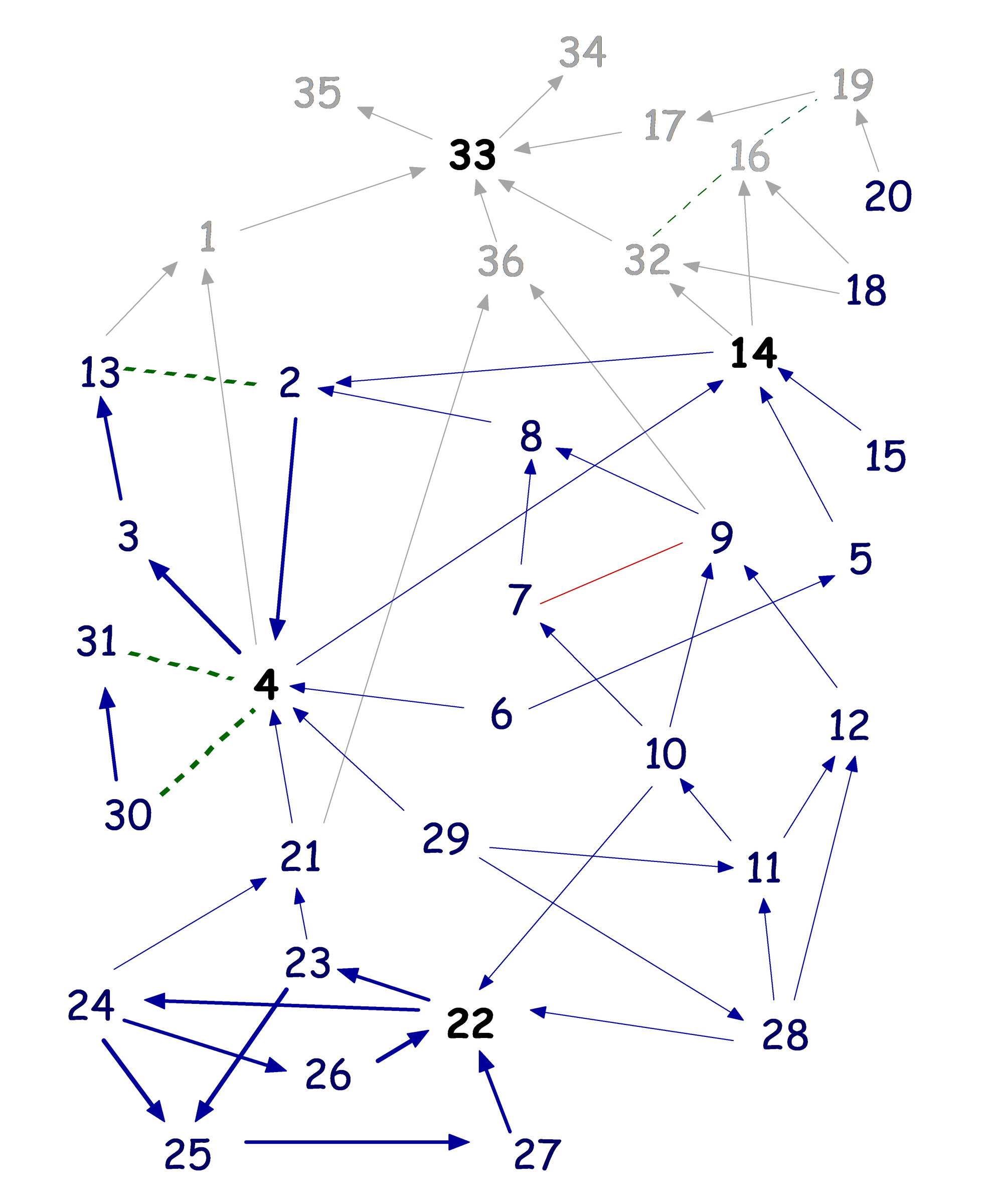
The concepts and links in hidden detail at the top of the map are those identified as directly causal to the ultimate accident, noting Concept No. 33 was collision and destruction of two Black Hawk helicopters during CT/SRO training. When the clock was wound back to a ‘normal’ period well before the accident, what was found to exist was that part of the map shown in black and white.
In that portion of the map, the highlighted concepts are those to which intensive, but routine, management effort might have been applied, with the probable outcome of preventing the accident. Management effort should have been focused particularly on correcting the following, not necessarily in this order:
- Concept 14 – inadequate oversight and control of this combined arms activity (CT/SRO training exercise)
- Concept 4 – failure to inform the judgement of those responsible for combined arms training and associated safety
- Concept 22 – declining morale [amongst pilots and qualified flying instructors].
This choice is made largely, but certainly not exclusively, on the basis of the numbers of connected concepts [29,33]. The significance of this map is that in the preceding weeks, months or even years, management effort applied to the concepts identified should have obviated the creation of circumstances that led to the final catastrophic culmination of events.
It is important to note that this did not happen for a variety of organisational, cultural, and political reasons. There also existed a culture of denial, that is, no-one was prepared to admit there was a problem requiring the suggested level of management effort be applied.
In Figure 1, the most influential concept is Concept 4. This could be alternatively stated as failure to understand, failure to learn and, hence, failure to manage risks. Such failures were found during the analysis of all five accident cases studied during this research [29,30].
Concept maps of findings of Royal Commissions, Coroner’s Inquests and Boards of Inquiry can contain very large numbers of concepts. Whilst they can become unworkable as they grow in size, concept maps can be powerful tools in revealing the true nature of complex problems.
The ab initio development of concept maps during interviews or in a workshop environment with a group of stakeholders is not discussed in detail, but they are the normal ways of building concept maps. Under workshop conditions, a group can produce a map such as Figure 1 in 40-90 minutes with a minimum of preparatory work. Such maps, whilst described as ‘quick and dirty’ are very powerful in uncovering the nature of focal problems [34].
Fire aboard HMAS Westralia
Analysis similar to that applied to the Black Hawk helicopter crash was applied to reveal the precursor events to the fire aboard HMAS WESTRALIA. Similar failures were found to exist both individually and at the organisational level.
The Naval Board of Inquiry found that there was no competent authority either within the Royal Australian Navy or the Project Manager, Australian Defence Industries, which ‘critically examined the wisdom of the intended course of action [to fit flexible fuel pipes of the unapproved type]’ [2].
Business process re-engineering of defence acquisition
As part of the Business Process Re-engineering (BPR) of DAO, a review was undertaken of the efficacy of management of capital acquisition projects. A Performance Reporting and Evaluation (PR&E) initiative, within BPR, set out to identify what Key Performance Indicators (KPIs) best informed executive managers about the achievements of project management teams and their projects.
Regardless of the nature of the project, managers always need to know where the project stands in relation to the schedule and the cost as compared to the original project schedule, or project’s schedule baseline. The baseline normally takes the form of a Gantt chart or time-based bar chart depicting the major activities to be undertaken to complete the project. The Cost Schedule Control Systems (CS2) methodology has been developed to track two KPIs, Cost Variance (CV) and Schedule Variance (SV). CS2 is a robust methodology but its weakness is in its implementation.
PR&E of an acquisition project involving the upgrade of maritime surveillance aircraft was critically reviewed as a research task. The focus was to investigate the capture and reporting of cost and schedule performance information. It was found that whilst CS2 had been implemented by the Prime Contractor and Cost Schedule Status Reporting (CSSR) had been adopted by Sub-Contractors, the way information was being aggregated and reported placed the veracity of that information at risk. Information had to be captured in several countries where the various Sub-Contractors were working on this project, aggregated and passed to the Prime Contractor’s parent company also overseas who, in turn, provided additional information and passed the reports to the Australian-based Prime Contractor who went through a similar process.
On final delivery of the CS2 reports to DAO, accounting staff reviewed the reports and presented them in a consolidated form to the DAO executives reviewing the project. The mechanical process of compiling the reports was being undertaken in accordance with the implementation guides [35,36].
A system dynamics (stock/flow) model was constructed, it was readily demonstrated that when delays in data collection and reporting occurred CV and SV, as reported to DAO executives reviewing the project, bore little resemblance to actual progress. This is depicted in Figure 2 where the reported CV and SV are compared to the actual CVact and SVact. The head of each arrow depicts the performance, reported or actual, at the end of each reporting period.
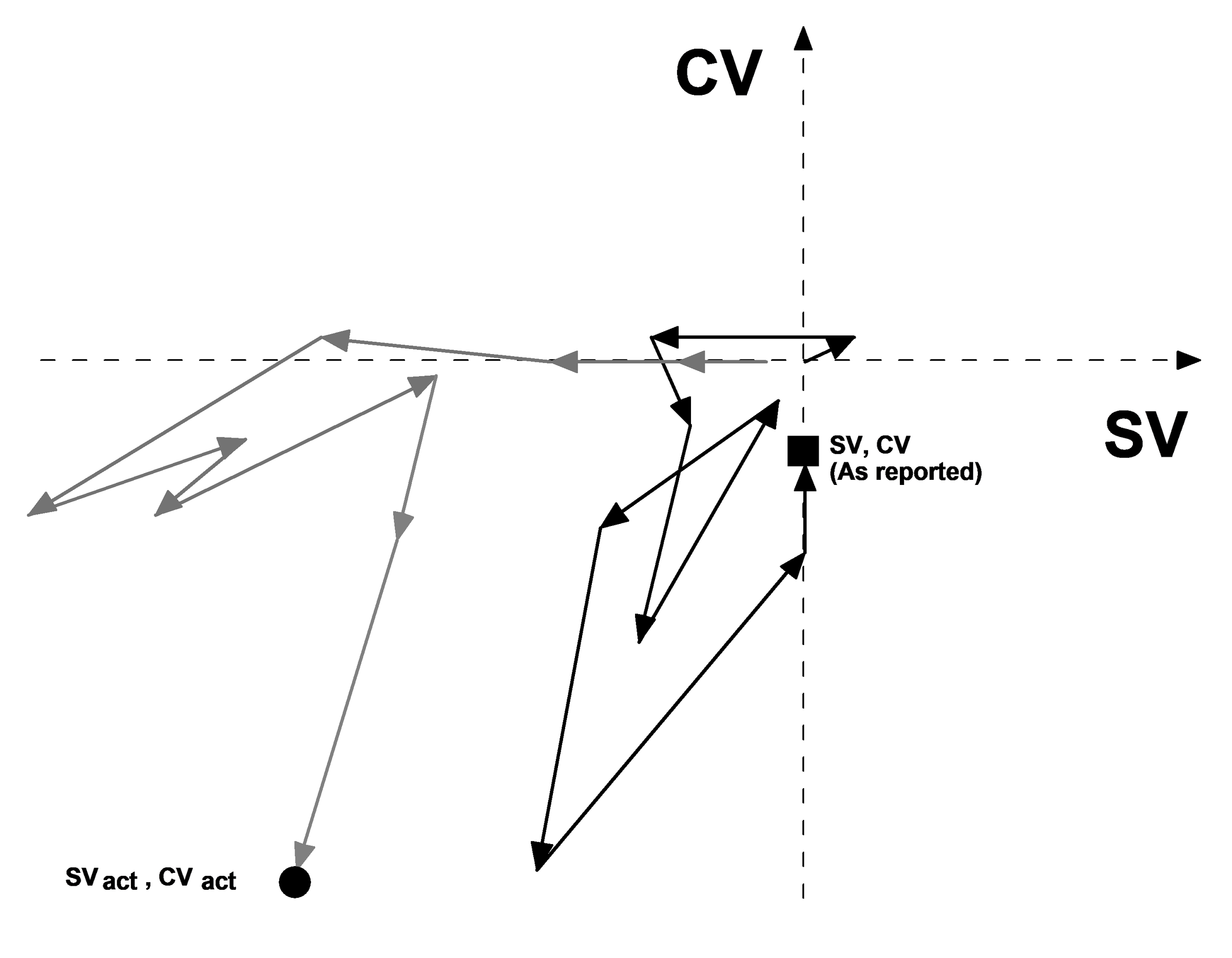
At the end of the last period, where the black square is used to indicate reported progress and the black circle to indicate actual progress, the project was reported as being on schedule but slightly behind on cost, when in reality it was significantly behind in terms of both schedule and cost.
When the computer model was demonstrated to those involved in BPR, they denied that what was being shown in a dynamic way could possibly be the case. In their view what really mattered was that all reports received from the Prime Contractor by DAO were processed within 14 days of the end of the previous reporting period.
Given timely processing by Prime Contractor and DAO was occurring, and that CS2 and CSSR implementation had been audited, those involved in the PR&E process claimed that, there could not possibly be a problem. Exxon had completed a safety audit of Esso’s Longford plant and given it a clean bill of health only months before an explosion and fire there claimed the lives of workers and disrupted gas supplied to the whole of Victoria [37]. Despite an earlier accident at an Exxon owned plant in South East Asia, both Exxon and Esso executives denied there was a problem.
Whilst nowhere as serious in its consequences, the observation here that the existence of a problem was denied by DAO executives despite evidence to the contrary is still characteristic of a ‘culture of denial’ [33,38,39]. This was found to be a recurring thread.
An important issue here is that implementation of CS2 and CSSR did not cater for dynamics involved such as the various delays in the information gathering process and the associated feedback mechanisms between various stages in the PR&E process. In part, the misinformation situation was the legacy of staffing problems being experienced by sub-contractors. This was unknown to DAO executives reviewing project performance.
The net result was that information several days old was being aggregated with information that was months old. As a consequence there were times when the endorsed PR&E methodology produced totally misleading results. In this project at this time, it would have been better to have no progress reports at all. Reverting to complete reliance on anecdotal evidence produced by the Project Director would have been more reliable.
Defence preparedness resource modelling
Revisiting the nature of the defence preparedness problem
Executive decision-makers, financial planners, force element and force element group commanders need answers to the following questions: What does it actually cost to achieve set levels of preparedness? How much will it cost to raise a force from its current preparedness, to a higher level in, say, three months? What factors might preclude achieving a specified level of preparedness? What premium might have to be paid to meet this level of preparedness a week earlier if strategic circumstances dictate? The inability of the ADO to answer such questions prompted the commissioning of the Australian National Audit Office (ANAO) investigation into defence preparedness and later, the DPRM project.
Management of resources associated with Defence preparedness requires more than a simple accounting approach. ‘Preparedness’ is not just aggregation of people and equipment. ‘Preparedness’ does not simply mean readiness to do a single specified task, but readiness to undertake any of a wide variety of possible tasks. Thus preparedness involves personnel who have recently undertaken individual and collective training for diverse scenarios, with diverse equipment and weapons platforms. As they move from one training scenario to another, there is decay in skills gained through previous training. Further, some of the training may involve unfamiliar combinations of force elements. Hence, new skill-sets have to be developed.
An attempt to model the complexity of preparedness
Recognition of the complex web of interactions and the detail and dynamic complexity of managing preparedness led to a serious attempt to use system dynamics modelling techniques to build a set of decision-support tools to inform development of strategy regarding defence preparedness [4].
System dynamics modelling had been used with significant success within the ADO to address specific problems for more than a decade. Problem areas addressed span manpower modelling, management of training, maintenance scheduling and operational issues arising out of the operation of fleets of fixed wing aircraft, rotary wing aircraft, wheeled vehicles, and submarines.
In each case the problem space was bounded in fairly clear terms. Consequently, in each case the solution space, within which the model might reside, was also bounded with reasonable clarity. The cross-organisational impacts were limited.
The application of system dynamics modelling to the full gambit of preparedness resource management issues involved a quantum step in terms of complexity of task. The problem space was ill-defined. Undertaking this modelling task involved major risks both to the delivery of effective project management and to the delivery of the modelling products. To a much greater extent than previously, there was unwelcomed exposure to organisational cultural pressures, for which those managing the project were ill-prepared. Some pressure emanated from those who were keen to bring about the downfall of this modelling initiative. Whilst the problem-solving approach was appropriate, it was poorly managed [4].
Concept mapping to provide insights into complexity of preparedness management
- Some months after the modelling of Defence Preparedness commenced, a separate research activity focusing on the nature of preparedness and preparedness management commenced. Concept mapping was used to “provide insights into the nature of a range of preparedness issues” including:
- Systematic analysis of stakeholder views of their role in Defence preparedness.
- Stakeholder understanding of preparedness.
- Objective measures of preparedness.
- How preparedness data might be used to inform executive decision-making.
- How preparedness data might be best used in formulating advice to Government.
The concept mapping methodology involved two 1-hour structured interviews with seven of the key stakeholders. Each initial interview was taped and transcripts made. From interview notes and transcripts, concept maps were built in Banxia® Decision Explorer.
The next step involved a debriefing session to confirm that the respondents’ views had been properly captured. In some cases a subsequent set of interviews was undertaken after several months. The insights from all interviews were fed back to individual interviewees and summarised to the Preparedness Working Group. The system dynamics modelling consultant was also briefed.
The cognitive mapping process revealed the complexity of the project and the difficulty of managing it with the Preparedness Working Group representing diverse stakeholders. More significantly, the cognitive mapping highlighted:
- Significantly different ‘mental models’ regarding ‘preparedness’ by the members of the Working Group.
- Significantly different ‘mental models’ regarding the role that the DPRM would play in the strategic guidance process.
Observations from case studies
The case studies discussed above highlight that:
- Concept mapping helped reveal the complexity inherent in each of the cases, be they accident or non-accident cases.
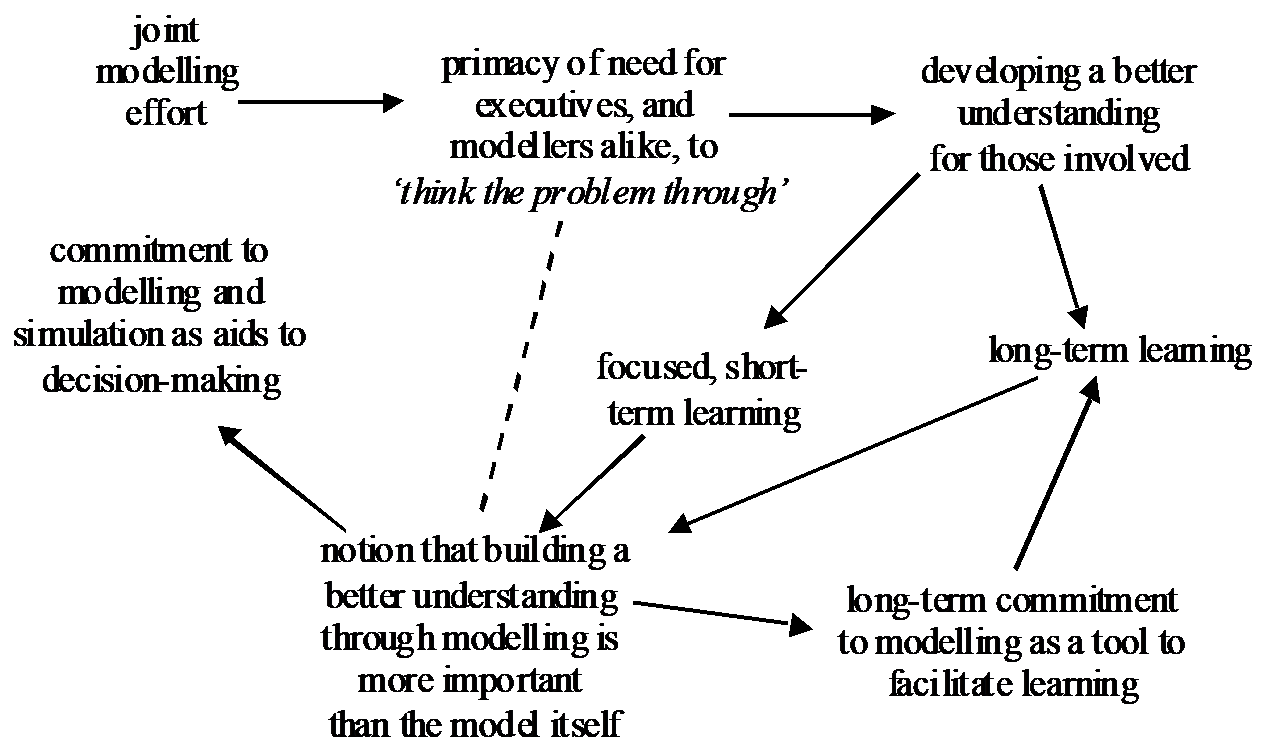
- Revealed that the end-products of the intervention are not as important as learning by being involved in the intervention process. In the case of DPRM where the intervention involved system dynamics modelling, this is depicted in the map Figure 3.
- Stakeholders need to be closely and continually involved in a process where they have to ‘think the problem through’ rather than think about the problem. This is a form of double-loop learning [40,41].
- Before analytical techniques are applied, what they will address must be soundly based on requirements elicited from and validated by the client.
Design of management interventions
The real issue here is to be able to really understand, regardless of the type of intervention used is to be able to reveal the complexity being faced, to learn (and then to manage the risks). In each of the cases studied, there were emerging patterns of behaviour and interrelatedness between myriad factors. Decision-makers were found to have underdeveloped appreciations of the nature of complexity with which they were expected to deal. They were often unaware of emergent patterns of events and behaviour that suggest underlying systemic structures.
Any intervention we might develop has to set the context. Establishing the context:
- enables the recognition of emergent patterns—recognition is context-dependent, then
- makes it easier to discover the underlying systemic structures.
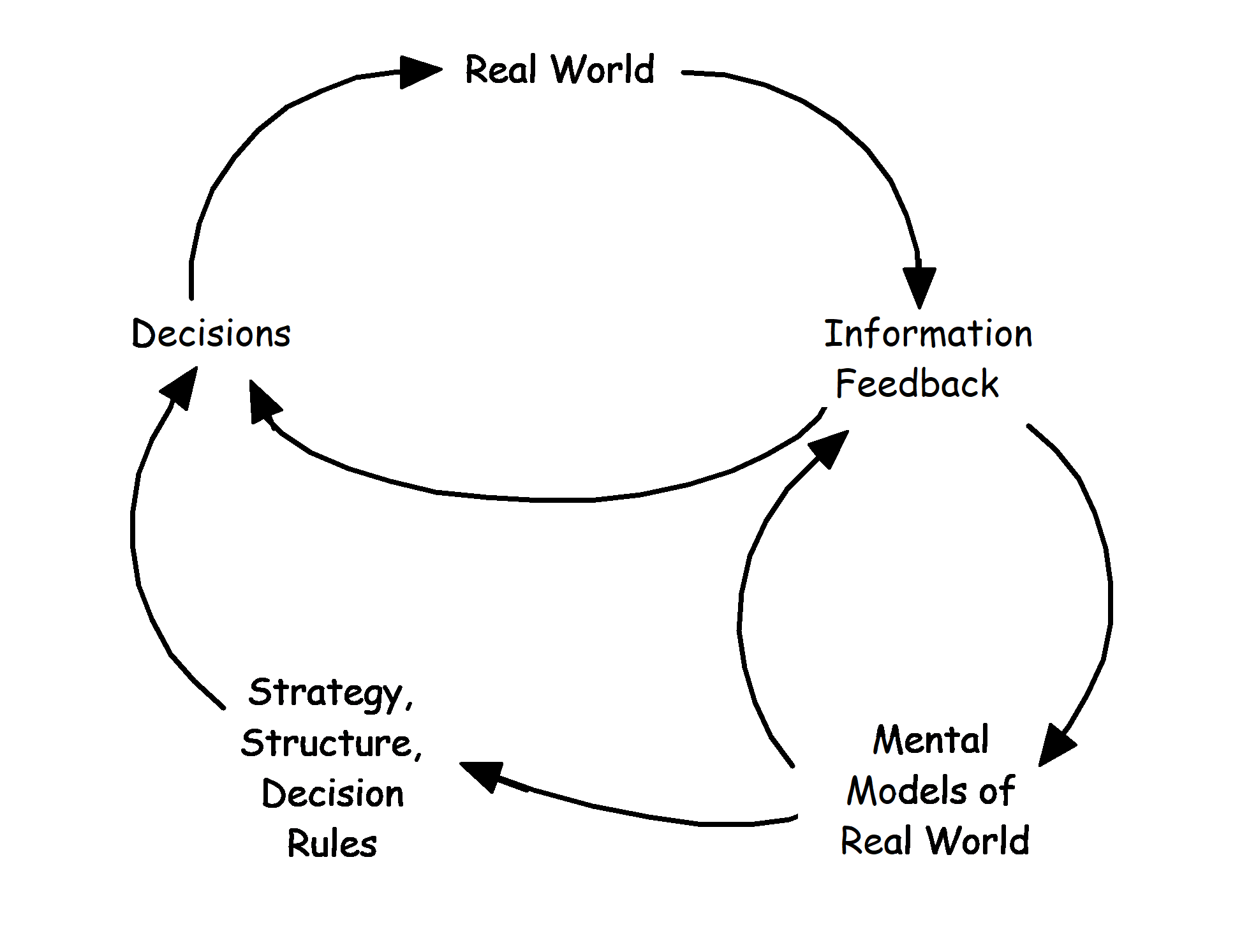
Modelling and double loop learning
Morecroft and Sterman argue a compelling case for learning and understanding complexity through modelling. This learning does not have to be derived from system dynamics modelling, per se. What is important is that ‘double loop’ learning is experienced by those involved in decision-making and strategy development in the organisation [8,40]. Unfortunately, evidence from this research suggests learning about detail complexity and dynamism is frequently stifled. Critical pre-cursors to effective decision-making are awareness and understanding. Effective management involves corrective action derived from this awareness and understanding, followed by ongoing cycles of double loop learning [4] and adjustment of mental models [8,13,26]. System dynamics modelling can be very helpful here, but:
Factors militating against management of complexity
Factors militating against effectiveness of interventions
Reasons for failure of system dynamics modelling efforts derived from the following:
- Lack of clearly enunciated and agreed requirements.
- Socio-technical organisations and their problems are massively complex. Executives who are needed to provide support, critical to the success of system dynamics modelling efforts, often do not appreciate the detail complexity and dynamism. Consequently, they do not see a need for tools such as system dynamics modelling.
- Executive decision-makers, generally amongst the busiest in the organisation, prefer to avoid impositions on their time, and the extensive delays that often accompany the application of analytical techniques.
- There is often over-simplification of what are really messy problems. This leads to the practice of seeking a single ‘golden nugget’ as the cause of current problems. This is probably the most widespread problematic assumption in the current industrial paradigm: one cause produces one effect, find the cause and fix the problem [43].
- Decision support is often untimely. It takes time to build models, gather data and conduct analysis. These time-consuming activities do not fit easily within decision cycles. Integrating decision-support and the decision cycle of specific decision-makers is a challenge infrequently met. Consequently, decision-support systems are often circumvented and decision-makers rely on their own sources of intelligence and advisers, and revert to using intuition and judgement.
- Executive decision-makers, who are often intimidated by the complicated appearance of analytical methods, fail to appreciate their value, mistrust them along with the ‘witch doctors’ in the organisation who advocate their use [7].
- There is a strong aversion by decision-makers to have their deeply ingrained assumptions, their mental models [13], psychological constructs [26], schemata and sysreps [14], ‘systems of meaning’ [5] surfaced and critically analysed [44]. Their assumptions, however valid or inappropriate, need to be analysed in the context of business rules needed to make the models work. In turn, models need to be verified and validated against the mental models of executive decision-makers in an iterative process. This is essential to gauge the extent of understanding of dynamics involved.
- Strategic decision-makers are also political players, frequently more concerned about the impact particular decisions have on their careers in the short-term. They would be better served by investigating the underlying systemic structures and cycles, and using that knowledge to inform their decisions and strategies.
- Information is compartmentalised within organisations. Compartments can be sealed by organisational hierarchies and politics. The ‘need-to-know’ principle also militates against sharing information. Essential information can be withheld from those building models.
- ‘Systems of knowledge - power’, in which executive decision-makers are central players, militate against the sharing and flow of information [5]. Davenport and Prusak, 1998, explain that … ‘understanding that there are knowledge markets and that they operate similarly to other markets is essential to managing knowledge successfully in organisations. Many knowledge initiatives have been based on the Utopian assumption that knowledge moves without friction or motivating force, that people will share knowledge with no concern for what they may gain or lose by doing so … people rarely give away valuable possessions (including knowledge) without expecting something in return [45].’
- Reward systems in organisations, are rarely centred on rewarding the sharing of knowledge, experience and information for long term strategic gains, rather they reward performance measured against short-term political and profit-centric indicators.
- In the worst cases there can be a strong sense, or even a culture, of denial that problems exist despite strong evidence that serious problems really do exist.
Conclusions
The problems decision-makers and managers face are complex both in detail and dynamic terms. The organisational environments are also complex. Human decision-making capability is outmatched by this complexity. Further, there are many forces that militate against effective decision-making, strategy development and implementation. These can be cultural, organisational, political, involve bounded rationality, and the way information is handled within organisations.
Perhaps the most valuable capacity our brains have is exceptional ability to recognise patterns. This includes static patterns of detail and patterns of dynamic behaviour. However, to harness this capability, we need to be able to set the context in such a way that enables pattern recognition [46].
Only once we are aware of the existence of these patterns and the underlying structures they suggest, can we build management interventions that will enhance our understanding. Understanding must lead, via double loop learning, to learning within the complexity we face. Whilst tools and techniques such as system dynamics modelling are valuable here, they can be misapplied and learning can be stifled.
Regardless of the way problems are addressed, the formulation of interventions must be predicated on sound requirements. Those requirements need to be carefully and thoughtfully elicited, documented and validated. The focus must then be directed at modifying the mental models of decision-makers in such a way that enables informed risk assessments and development of strategies to mitigate those risks. It is these mental models or personal constructs that individual decision-makers will rely on when making their judgements. They also comprise the belief systems that will ultimately determine what actions will be taken.
References
[1] Australian Army, Report of the Board of Inquiry into the Mid-Air Collision of Black Hawk Helicopters A25-209 (Black 1) and A25-113 (Black 2) at Fire Support Base Barbara, High Range Training Area, North Queensland on 12 June 1996, 1996.
[2] Department of Defence, Australia, DPUBS: 32871/98, Report of the Board of Inquiry into the Fire in HMAS WESTRALIA in 5 May 1998, 1998.
[3] Australian National Audit Office, Audit Report No. 17, 1995-96, Preliminary Report Management of Australian Defence Force Preparedness: Department of Defence, 1996.
[4] A. McLucas and K. Linard, “System Dynamics Practice in a Non-Ideal World: Modelling Defence Preparedness”, In Proceedings of System Dynamics 2000, International System Dynamics Conference, Bergen, Norway. The System Dynamics Society. August 2000.
[5] R. Flood, Rethinking the Fifth Discipline: Learning Within the Unknowable, Routledge, London, 1999.
[6] C. Argyris, On Organisational Learning, Blackwell, Cambridge, Massachusetts, 1994.
[7] P. Nutt, Making Tough Decisions: Tactics for Improving Managerial Decision Making, Jossey-Bass, San Francisco, 1989.
[8] D. Morecroft and J. Sterman (eds.), Modelling for Learning Organisations, Productivity Press, Portland Oregon, 1994.
[9] H. Simon. “Rational Decision-Making in Business Organisations, American Economic Review, 69, 493-513, 1979.
[10] H. Simon, Models of Bounded Rationality, Cambridge: MIT Press, 1982.
[11] C. Perrow, Normal Accidents: Living with High Risk Technologies, New York: Basic Books, 1984.
[12] J. Forrester, Industrial Dynamics, Productivity Press, Portland, Oregon, 1961.
[13] P. Senge, The Fifth Discipline: The Art and Practice of the Learning Organisation, Doubleday, New York, 1990.
[14] S. Kline, Conceptual Foundations for Multi-disciplinary Thinking, Stanford University Press, Stanford University, 1995.
[15] J. Sterman, “Misperceptions of Feedback in Dynamic Decision Making”, Organisational Behaviour and Human Decision Processes, Vol. 43, No. 3, pp. 301-35, 1989.
[16] J. Sterman, “Modeling Managerial Behaviour: Misperceptions of Feedback in a Dynamic Decision Making Experiment”, Management Science, Vol. 35, No. 3, pp. 321-339, 1989.
[17] D. Klienmuntz, “Cognitive Heuristics and Feedback in Dynamics Decision Environment”, Management Science, Vol. 31, No. 6: pp. 680-702. 1985.
[18] D. Dörner, “Managing a Simple Ecological System”, Working Paper, Lehrstuhle Psychologie II, University of Bamberg, 1989.
[19] R. Kluwe, C. Misiak, and H. Haider, “Modelling the Process of Complex System Control” in P. Milling and E. Zahn (eds), Computer Based Management of Complex Systems, Berlin, Springer-Verlag, pp. 335-342. 1989.
[20] R. Ackoff, Creating the Corporate Future, Wiley, New York. 1981.
[21] P. Checkland, Systems Thinking, Systems Practice, John Wiley, Chichester, UK, 1981.
[22] A. Sage and W. Rouse (eds.), Handbook of Systems Engineering and Management, Wiley, New York, p. 1049, 1999.
[23] E. Wolstenholme, System Enquiry: A System Dynamics Approach, John Wiley & Sons, Chichester, UK, p. 3, 1990.
[24] C. Eden, “Cognitive Mapping”, European Journal of Operational Research, Vol. 36, No. 1, pp. 1-13, 1988.
[25] C. Eden, “Cognitive Mapping and Problem Structuring for System Dynamics Model Building”, System Dynamics Review, Vol. 10, No. 2-3, pp. 257-276, 1994.
[26] G. Kelly, The Psychology of Personal Constructs: A Theory of Personality, Norton, New York, 1956.
[27] S. Pinker, How the Mind Works, Penguin, London, 1997.
[28] B. Kosko, Fuzzy Thinking: The New Science of Fuzzy Logic, Harper Collins, London, 1993.
[29] A. McLucas, An Investigation Into the Integration of Qualitative and Quantitative Techniques for Addressing Systemic Complexity in the Context of Organisational Decision-Making, PhD Dissertation, University of New South Wales, November 2000.
[30] A. McLucas. “When to Use Qualitative or Quantitative System Dynamics Techniques: Guidelines Derived From Analysis of Recent Man-made Catastrophes”. In Proceedings of System Dynamics 2000, International System Dynamics Conference, Bergen, Norway. The System Dynamics Society. 2000.
[31] R. Coyle, System Dynamics Modelling: A Practical Approach, Chapman and Hall, London, p. 44, 1996.
[32] G. Coyle and D. Exelby, “Validation of Commercial System Dynamics Models”, System Dynamics Review, Vol. 16, No.1 Spring 2000, p. 34. 2000
[33] A. McLucas. “The Worst Failure—Repeated Failure to Learn”, Proceedings of International Conference of Systems Thinking in Management Conference, Deakin University, Australia, November 2000.
[34] C. Eden and F. Ackerman, Making Strategy: The Journey of Strategic Management, Sage, London, pp. 285-340, 1998.
[35] Department of Defence DEF(AUST) 5657, Australian Cost Schedule Control Systems Criteria; Implementation Guide, 1994.
[36] Department of Defence DEF(AUST) 5656, Cost Schedule Status Reporting; Implementation Guide; Standard, 1994.
[37] Parliament of Victoria, “The Esso Longford Gas Plant Accident Report of the Longford Royal Commission.” 1999.
[38] A. Hopkins, Managing Major Hazards: the Lessons of the Moura mine Disaster, Allen and Unwin, Sydney, 1999.
[39] A. Hopkins, Lessons From Longford – The Esso Gas Plant Explosion. CCH, Sydney 2000.
[40] C. Argyris, “How Learning and Reasoning Processes Affect Organisational Change”, in Paul S. Goodman and Associates (eds.), Change in Organisations: New Perspectives on Theory, Research and Practice, Jossey-Bass, 1982.
[41] J.D. Sterman, Business Dynamics: Systems Thinking and Modeling for a Complex World, Irwin McGraw-Hill, Boston, 2000.
[42] J. Forrester, “Lessons from System Dynamics Modelling”, System Dynamics Review, Vol. 3. No. 2, Summer 1987.
[43] D. Meadows, “System Dynamics Meets the Press”, System Dynamics Review, Vol. 5 No. 1, p. 71, Winter 1989.
[44] R. Mason and I. Mitroff, Challenging Strategic Assumptions: Theory, Cases and Techniques, Wiley-Interscience, New York, 1981.
[45] T. Davenport and L. Prusak, Working Knowledge, Harvard Business School Press, p. 26, 1998.
[46] J.S. Carroll and E.J. Johnson, Decision Research: A Field Guide, Sage, London, 1990.