
B.2 DIRECT AND ALTERNATING CURRENT
The term direct current (DC) is used to describe the constant current supplied by a source such as a battery, such as the battery in Figure B.1. This constant current is shown in Figure B.2(a). Ohm’s law tells us that a constant voltage across a constant resistance must always lead to a constant current.
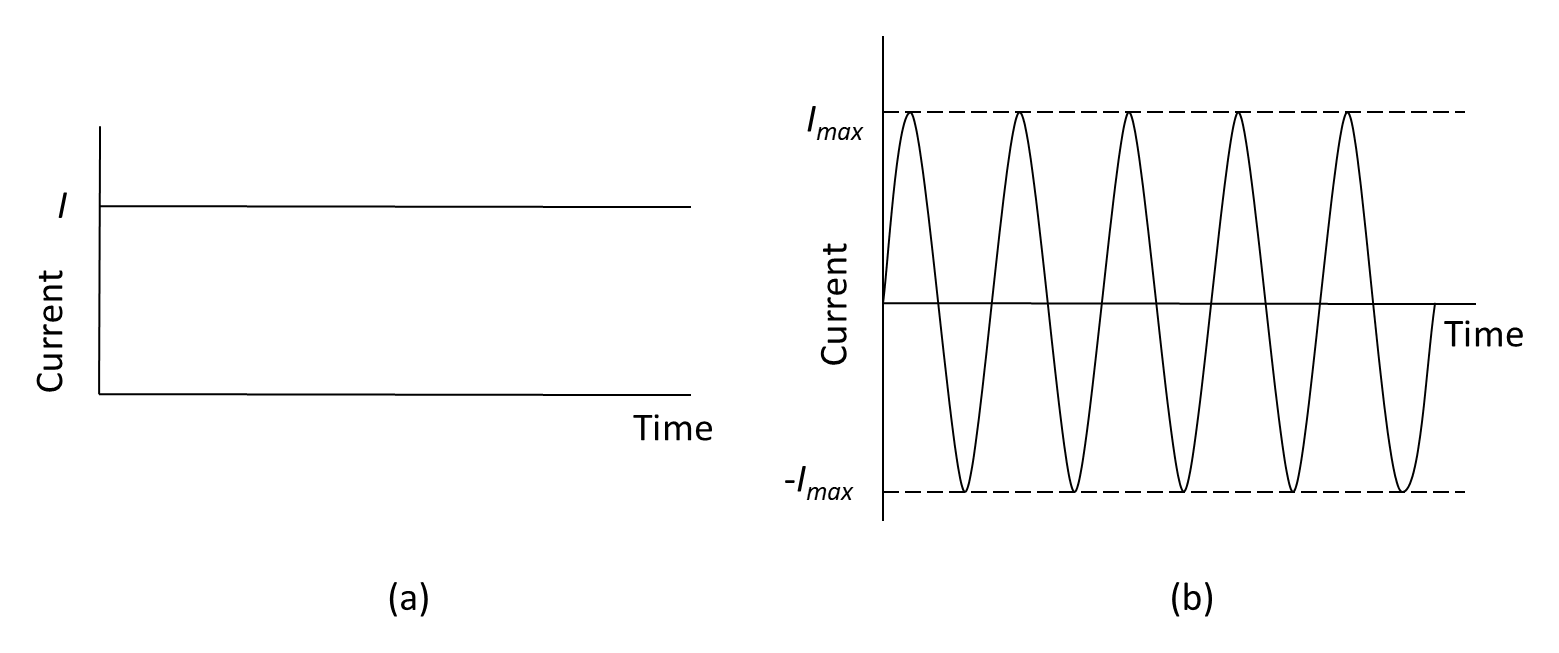
If the voltage generated by the voltage source varies over time and the resistance remains constant, the current must vary in proportion to the voltage. The term alternating current is used to describe a current that varies sinusoidally, as shown in Figure B.2(b).
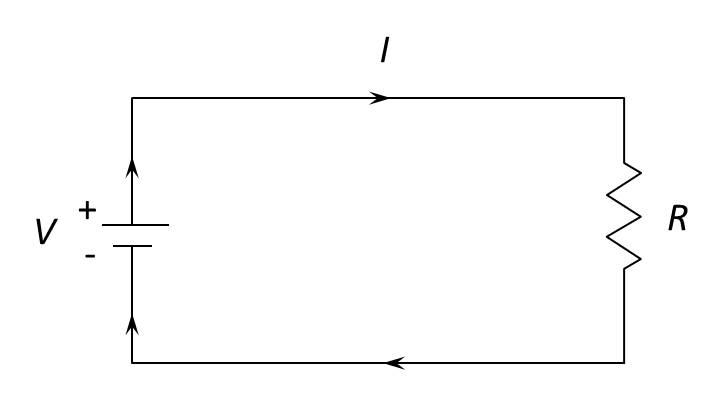
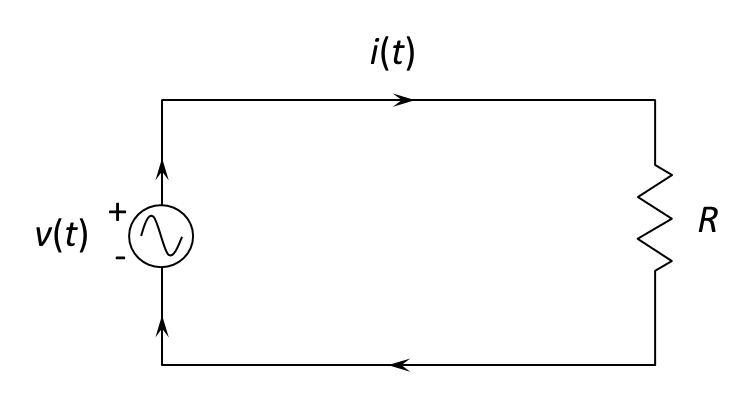
A circuit containing an alternating voltage source is shown in Figure B.3. The relationship between the time-varying voltage and the time-varying current is described by Ohm’s law:
Frequency and angular frequency. For a sinusoidal voltage:
where is the frequency in hertz (named after Heinrich Hertz) and is the angular frequency in radians per second. More detail is discussed in Chapter 2.
Back to reading