
Volume 15, Number 2, July 2012
Blast Wave Transmission Through Transparent Armour Materials
- * BTG Research, PO Box 62541, Colorado Springs, CO 80962, USA.
- ** United States Air Force Academy, 2354 Fairchild Drive, USAF Academy, CO 80840, USA.
Abstract
Face shields and goggles used by personnel at risk of exposure to explosions are designed to protect from projectiles. However, exposure to the primary blast wave itself can lead to eye and brain injuries, yet little is reported about the ability of transparent armor materials to attenuate a blast wave. In this study, a 79 mm diameter, oxy-acetylene driven shock tube was used to generate a blast-like wave with a peak pressure of 1173 kPa, and the pressure wave transmitted through six transparent armor materials was measured. With the exception of window glass (which shattered), the peak pressure was reduced by more than 20 dB by a 6.35 mm thickness of each material: cast acrylic, –22.63 dB; polycarbonate, –23.13 dB; tempered glass, –29.98 dB; laminated glass, –30.14; and aluminum oxynitride (ALON), –30.99 dB. The results show that different transparent armor materials have different abilities to attenuate a blast wave. Measurements like those in this study would be a useful part of design processes. Although ALON, a transparent ceramic, attenuated the blast wave the most, its current high cost may make tempered glass or laminated glass better value for many applications, since they performed similarly.
Introduction
Transparent armour may be used in windows, lenses, face shields, and goggles and is commonly used to protect personnel and sensitive optical equipment. Face shields and goggles used by explosive ordinance (EOD) personnel and others at risk of blast injuries are designed to protect the wearer from being injured by projectiles while maintaining the ability to see and complete tasks.
The blast wave from an explosion can cause injuries, separately from projectiles or impacts, and these have been called primary blast injuries [1]. With regard to the head, primary blast waves can cause injuries to ears, eyes, and the brain. One possible mechanism of traumatic brain injury (TBI) is direct exposure of the head to blast waves. The physical mechanism of blast induced TBI remains uncertain. Hypotheses include direct transmission of the blast wave through the cranium, acceleration of the head, and a thoracic mechanism [2]. Also, secondary causes, such as blunt force impacts caused by an explosion, can lead to TBI. Makris et al [3] recently used automated test devices (test dummies) in EOD suits to compare the effectiveness of various face shields in reducing head acceleration due to mine blasts.
As the use of improvised explosive devices (IEDs) has greatly increased in recent conflicts, more non-EOD military personnel are also being exposed to explosions. For example, more than 220,000 U.S. military personnel have been diagnosed with traumatic brain injury (TBI) since 2000, and less than 2% of those were from penetrating injuries [4]. Personnel at risk for exposure to explosions might benefit from transparent armour as part of their personal protection.
The current US military specification for the protection provided by face shields is for resistance against projectile penetration but not blast waves [5]. Moreover, little data is available on the ability of transparent armor materials to attenuate a blast wave. When any material is exposed to a blast wave, some of the pressure is reflected, some is absorbed by the material, and the rest is transmitted through the material. In the case of a face shield or goggles, the eyes and face are directly exposed to the transmitted part of the blast wave, which may in turn be transmitted to the brain. Measuring how much a transparent armour material attenuates a blast wave would be helpful in designing better protection.
Shock tubes have been in regular use in the United States since World War II to study shock physics, aerodynamics and the chemistry of combustion [6]. More recently, the value of using shock tubes to apply blast-like waves to test objects, including simulations of the human head and helmets, has been demonstrated [7]. In the present study, a shock tube was used to compare the attenuation of a blast-like pressure wave by six different candidate transparent armour materials.
Methods
An oxy-acetylene driven, 79 mm diameter shock tube was used to simulate the blast waves. The shock tube was a 305 cm long piece of steel pipe. The driving section, which was filled with the fuel-oxygen mixture, was 30.5 cm long [8]. A piezoelectric pressure sensor (PCB 102B18), sensor 1, was mounted near the opening of the shock tube with its face parallel to the direction of the blast wave. Pressure sensor 2 (PCB 102B18) was placed behind the test sample with its face perpendicular to the direction of the blast wave. It was used to measure the attenuated blast wave (Figure 1). Sensor 2 was placed so that the total distance between it and the shock tube opening was 40 mm, with the sample centred in between.
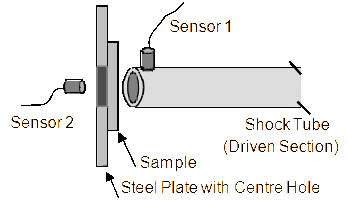
The test samples were 152.4 mm square by 6.35 mm thick pieces of cast acrylic, polycarbonate, aluminium oxynitride (ALON, [9]), laminated glass, and window glass and a 304.8 mm square by 6.35 mm thick piece of tempered glass. Each test sample was placed in front of the shock tube and mounted on a 304.8 mm square by 6.35 mm thick mild steel plate with a 76.2 mm diameter hole in the centre. The steel plate was used to minimise any influence on the pressure measurements of components of the blast wave that may have diffracted around the samples [7] (Figure 2).
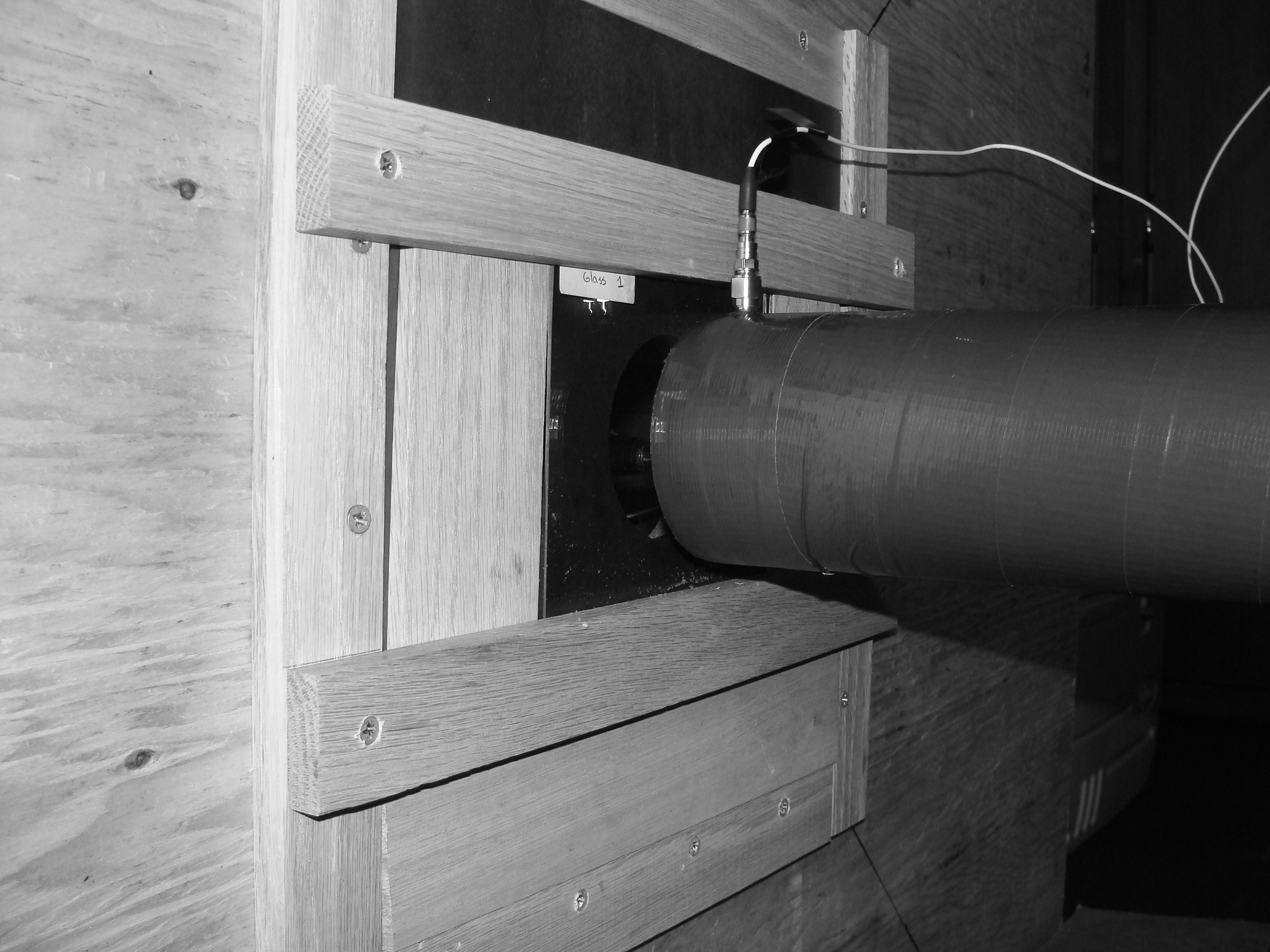
Pressure data was recorded at a sample rate of 1MHz via cables connecting each pressure transducer to a signal conditioning unit (PCB 842C) which produced a calibrated voltage output, which was then digitized with a National Instruments USB-5132 fast analogue-to-digital converter. The voltage values were converted to units of pressure using the unique calibration determined by the manufacturer for each pressure sensor.
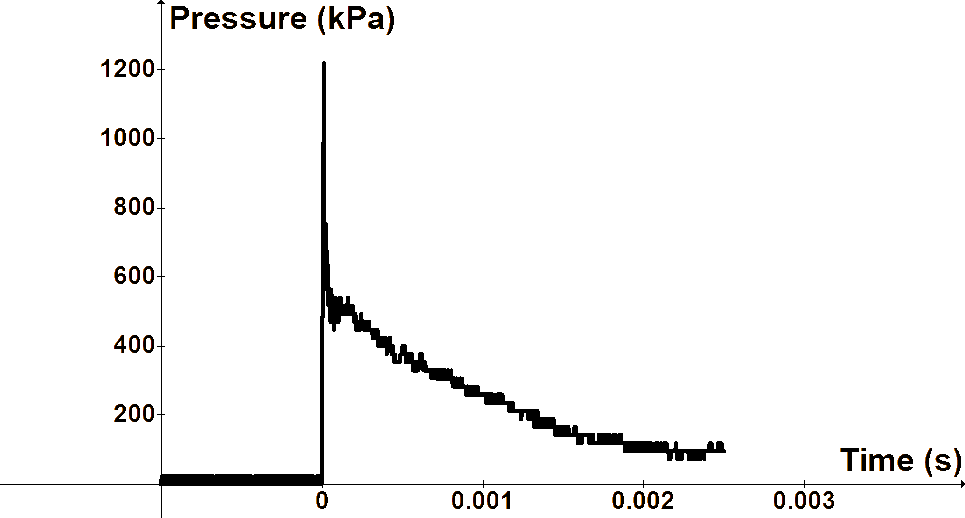
Peak transmitted pressures were recorded and pressure-time profiles were plotted for each trial. Since the peak pressure decreases with distance from the shock tube opening, the transmission ratio was calculated as the peak transmitted pressure divided by the peak unobstructed pressure at the face of the sensor, which was measured in separate trials [8]. Measurements from the sensor mounted near the end of the shock tube showed that the pressure profiles in trials without armour samples were comparable to those measuring blast transmission, so that this calculation is valid. The blast waves coming from the shock tube have a steep shock front, a near exponential decay, and a positive pulse duration of about 2 ms. Five trials were conducted for each sample tested; mean peak transmitted pressure and standard error of the mean (SEM) were computed for each sample. The attenuation of the peak pressure was also computed for each trial in decibels as: attenuation = 10log10 (peak transmitted pressure/peak unobstructed pressure). The mean attenuation and standard error of the mean were computed for each sample.
Results
A representative pressure-time curve for the unobstructed blast wave is shown in Figure 3. A representative pressure-time curve for the attenuated blast wave through ALON is shown in Figure 4. The general characteristics of the transmitted blast wave were similar for other materials, though the peak transmitted pressures were different.
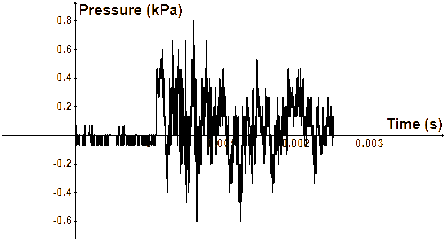
Except for window glass, the peak pressure transmitted through each of the transparent armour samples was reduced by 20 dB or more compared to the peak pressure for the unobstructed blast wave (Table 1). However, some materials were more effective than others at reducing the peak pressure. The peak pressure transmitted through the ALON was approximately 30.99 dB less than the peak pressure for the unobstructed blast wave. The laminated glass reduced the peak pressure by 30.14 dB. The tempered glass reduced the peak pressure by approximately 29.98 dB. The polycarbonate reduced the peak pressure by approximately 23.29 dB. The cast acrylic reduced the peak pressure by approximately 22.63 dB. The window glass shattered when exposed to the blast wave. The conclusion from this test was that window glass should not be considered a transparent armour material.
| Peak Transmitted Pressure in kPa | Ratio of Peak Transmitted to Peak Unobstructed Pressure | Attenuation of Peak Pressure in dB | |
|---|---|---|---|
| (uncertainties shown in parentheses) | |||
| Cast Acrylic (CA) | 7.83 (0.08) | 0.00668 (0.00007) | –22.63 (0.08) |
| Poly-carbonate (PC) | 5.52 (0.19) | 0.00471 (0.00017) | –23.13 (0.15) |
| Tempered Glass (TG) | 1.60 (0.06) | 0.00167 (0.00002) | –29.98 (0.08) |
| Laminated Glass (LG) | 1.14 (0.02) | 0.00097 (0.00002) | –30.14 (0.08) |
| ALON | 0.95 (0.07) | 0.00081 (0.00006) | –30.99 (0.33) |
*Window Glass (WG) is omitted because it shattered when exposed to the blast wave.
| Peak Transmitted Pressure (kPa) | Density (g/cm3) | Us (km/s)** | Z (kg/sm2 x 106) | |
|---|---|---|---|---|
| WG | - | 2.45 | 4.5 | 11.0 |
| CA | 7.83 | 1.186 | 2.2 | 2.6 |
| PC | 5.52 | 1.193 | 1.9 | 2.3 |
| TG | 1.60 | 2.22 | 5.7 | 12.7 |
| LG | 1.14 | n/a | ||
| ALON | 0.95 | 3.62 | 10.3 | 37.3 |
**published values [12–14]
Discussion
The oxy-acetylene driven shock tube applied a realistic shock wave comparable to relevant blast waves. The results summarised in Table 1 showed differences in the ability of different transparent armour materials to attenuate a blast wave. Of the six materials tested, ALON showed the best performance, and the plain window glass shattered, providing no protection at all and introducing additional danger due to glass fragments. A strength of this experiment is the high degree of repeatability. The peak pressure produced by the shock tube had an uncertainty of less than two percent. For each sample, the peak transmitted pressure varied by less than five percent between the five trials.
A potential limitation of the experimental method is that the amount of fuel initially in the driving section was not precisely measured. An oxy-acetylene torch is adjusted for a neutral flame (indicating a stoichiometric mixture) and then snuffed out before filling the driving section for two minutes. However, since the peak pressure and pressure-time curve produced were so consistent from shot to shot, that did not seem to be an important limitation. Another potential limitation is the possible introduction of hysteresis (permanent changes caused by previous blasts on the sample) on the samples being used. However, no consistent changes in attenuation were observed with additional exposures at the pressure levels used in this study. Thirdly, the results are limited to the single thickness tested for the different samples. It is likely that materials that attenuate blast waves best at this thickness also attenuate best at other thicknesses, but this was not directly tested.
Having a face shield on a helmet has been shown to reduce the amount of head acceleration caused by a blast [3] because the curved shield deflects some of the blast wave. Materials have been tested to see what kind of projectile and velocity face shield materials can withstand—this would also apply to projectiles such as pieces of an exploded bomb. To our knowledge, no information about the actual blast wave transmission properties of transparent armour materials has been published.
As a shock wave passes through a medium, there are changes in pressure, wave velocity, density and other features. The reduction in peak pressure of a blast wave as it travels through a material is called attenuation. Attenuation across the boundary of two materials is thought to depend on the relative impedances of the two media [10]. The shock impedance (Z) is the product of the initial density and the shock wave velocity (Us), which is sometimes approximated by the speed of sound in the medium (C0). While the acoustic impedance model was not directly tested in the present study, Table 2 shows the shock impedances for the materials tested based on published values. In each case the medium on either side of the test material was air. In this study, the peak transmitted pressure tended to be lower when the impedance of the sample material was higher. While the acoustic impedance of laminated glass was not available, other experimental and modelling work on the attenuation of sound through a similar thickness of laminated glass found a similar reduction in amplitude of about 30 dB for sound waves with a frequency of 500 Hz [11].
Currently, most face shields to protect from explosions are made of polycarbonate or hardened acrylic/polyethylene. For example, Tamiami International Equipment [15] makes two versions from hardened polyethylene that are each either 17.6 mm or 22 mm thick. Face shields made for other protective helmets, such as for use by police, tend to be made from a single layer of thinner (2 or 3 mm thick) polycarbonate. The results from this study suggest that tempered glass and laminated glass do better than these materials at reducing the transmission of a blast wave; however, they are heavier and designers might not want to use them due to weight.
The protection against blast waves that face shields can achieve might be improved by having two layers, even of the same material, with a layer of adhesive in between. This is the way laminated glass and most bullet-resistant transparent armour products are made. In the present study, the attenuation of the blast wave was the same for the tempered glass and laminated glass. However, it has been shown that having layers of materials with different acoustic impedances can be an effective way to attenuate blast waves in personal body armour [16]. It is not known how thick the layers need to be to realise this benefit. The acoustic impedance model assumes semi-infinite layers of materials and predicts what will happen at an interface.
The results of this experiment should inform the design of face shield prototypes which could then be tested in a similar manner. Future work could test the dependence of the attenuation on the thickness of the sample as well as the thicknesses in a layered sample. Future work could also investigate more rigorously whether the acoustic impedance model is sufficient to estimate the attenuation of a blast wave through a material. This information would be helpful in the design and initial selection of materials for their blast attenuating properties.
References
[1] Cernak, I., and L.J. Noble-Haeusslein, “Traumatic Brain Injury: An Overview of Pathobiology with Emphasis on Military Populations”, Journal of Cerebral Blood Flow and Metabolism, Vol. 30, pp. 255–266, 2010.
[2] Courtney, M., and A. Courtney, “Working Toward Exposure Thresholds for Blast-Induced Traumatic Brain Injury: Thoracic and Acceleration Mechanisms”, NeuroImage, Vol. 54, No. S1, pp. S55–S61, 2011.
[3] Makris, A., J. Nerenberg, J.P. Dionne, C.R. Bass, and C. Chichester, Reduction of Blast Induced Head Acceleration in the Field of Anti-Personnel Mine Clearance, Defense Technical Information Center No. ADA458451, 2006 http://www.dtic.mil/cgi-bin/GetTRDoc?Location=U2&doc =GetTRDoc.pdf&AD=ADA458451, Accessed 6 October, 2011.
[4] Armed Forces Health Surveillance Center, DoD Numbers for Traumatic Brain Injury, ‘00 – ‘11Q2 Totals, 15 August, 2011, http://www.dvbic.org/TBI-Numbers.aspx, Accessed 4 June, 2012.
[5] MIL DTL 43511D, Detail Specification: Visors, Flyer’s Helmet, Polycarbonate, 2006. http://www.everyspec.com/ MIL-SPECS/MIL-SPECS-MIL-DTL/MIL-DTL-43511D_15101/, Accessed 4 June, 2012.
[6] Henshall, B.D., Some Aspects of the Use of Shock Tubes in Aerodynamic Research, Aeronautical Research Council Reports and Memoranda, R&M No. 3044, London, Her Majesty’s Stationery Office, 1957.
[7] Alley, M., Explosive Blast Loading Experiments for TBI Scenarios: Characterization and Mitigation, Purdue University, UMI Microform 1470126, 2009.
[8] Courtney, A., L. Andrusiv and M. Courtney, “Oxy-Acetylene Driven Laboratory Scale Shock Tubes for Studying Blast Wave Effects”, Review of Scientific Instruments Vol. 83, pp. 045111-1 – 045111-7, 2012.
[9] Goldman, L., S. Balasubramanian, N. Nagendra, and M. Smith, ALON® Optical Ceramic Transparencies for Sensor and Armor Applications, Surmet Company. http://www.surmet.com/pdfs/news-and-media/Surmet_ALON _Paper_for_2010_EMWS%20final.pdf, Accessed 4 June, 2012.
[10] Meyers, M.A., “Shock Wave Attenuation, Interaction and Reflection”, Dynamic Behavior of Materials. John Wiley & Sons, pp. 179–201, 1994.
[11] Baenas, T., J. Ramis, J. Vera, and J. Alba, “Influence of the Polymeric Interlayer Shear Modulus in the Laminated Glass Panels Transmission Loss”, Transactions of Glass Performance Days, pp. 633–638, 2007.
[12] Marsh, S.P., ed., LASL Shock Hugoniot Data, Los Alamos Series on Dynamic Material Properties, University of California Press, 1980.
[13] Kanel, G.I., A.A. Bogatch, S.V. Razorenov, and A.S. Savinykh, A Systematic Study of the Failure Wave Phenomenon in Brittle Materials, Defense Technology Information Center, OMB No 074-0188, 2003.
[14] Dandekar, D.P., B.A.M. Vaughan, and W.G. Proud, “Shear Strength of Aluminum Oxynitride”, in Elert, M., Furnish, M.D., Chau, R., Holmes, N. and Nguyen, J. (eds), Shock Compression of Condensed Matter, American Institute of Physics, pp. 505–508, 2007.
[15] Tamiami International Equipment, Inc., Miami, Florida, USA http://www.tamiamiarmor.com/Helmets.htm Accessed 4 June, 2012.
[16] Cooper, G., “Protection of the Lung from Blast Overpressure by Thoracic Stress Wave Decouplers”, Journal of Trauma Vol. 40, No. 3, pp. S105–S110, 1996.