
Volume 13, Number 3, November 2010
Differential Absorption Lidar For Stand-Off Detection Of Chemical Warfare Agents: Simulation Studies
- 1 Both authors are with: Laser Science and Technology Centre, Metcalfe House, Delhi-54, India.
Abstract
Remote detection of chemical warfare agents and toxic gases in the atmosphere is of current interest to both military and civilian agencies. Differential Absorption Lidar (DIAL) is a powerful technique for remote detection of such toxic agents in the atmosphere. This system uses two wavelengths—one corresponding to strong absorption characteristics of a toxic agent, and the other to weak absorption of that agent/gas molecule for detection at stand-off distances. In this paper, we present a theoretical estimation of design parameters of a DIAL system for detection of potential nerve and blister agents. A TEA CO2 laser-based system is considered as a transmitter and 500 mm cassegrain telescope as a receiver along with an MCT detection module. Our results reveal that a 100 mJ laser source is capable of detecting a few ppm concentrations of chemical warfare agents present anywhere between the ranges from a few metres to 1.5 km (range resolved measurements) to 5 km (co-operative target). The influence of interfering molecules of trace gases present in the atmosphere and the effect of the extinction coefficient on the maximum detectable range is also studied. The results show a significant reduction in the maximum detectable range.
Introduction
The use of chemical and biological warfare (CBW) agents against civilian and military targets by terrorists and rogue countries is frequent [1,2]. The Sarin attack by the Aum Shinrikyo cult in early 1995 in a Tokyo subway, the hydrogen cyanide, mustard gas attack by Iraq in its Anfal Campaign against the Kurds, and most notably in the Halabja in 1988, are a few recent examples [3]. These incidents have increased worldwide awareness of the early detection of chemical warfare agents. Nerve (organophosphonate compounds) and blister agents (mustard compounds) have been identified as the major threat chemical warfare agents because of their acute toxicity [4,5]. Nerve agents have chemical structures similar to the common organophosphate pesticide Malathion. These agents initially stimulate and then paralyse certain nerve transmissions throughout the body and cause other toxic effects such as seizure. Under temperate conditions, all nerve agents are volatile liquids, which mean they can evaporate quickly. The most volatile agent, sarin, evaporates at about the same rate as water. The least volatile agent, Vx, has the consistency of motor oil, which makes it 100–150 times more toxic than Sarin when the victim’s skin is exposed. A 10 mg dose applied to the skin may cause death to half of unprotected people. All nerve agents rapidly penetrate skin and clothing. Nerve agent vapours are heavier than air and tend to sink into low places (for example, trenches or basements). Blister agents (Lewisite, Sulphur mustard and Nitrogen mustard) exist in an oily liquid that is vaporized during attacks. They may have a characteristic odour (for example, mustard-like) or no odour (as in the case with lewisite). Since these liquids have relatively low volatility, they may persist for more than a week, depending on environmental conditions. It has been realized that early detection of these compounds after release into the atmosphere is required to take counter measure actions. There are quite a few techniques for the detection of CW agents, which are not stand-off techniques. Techniques for the detection of CW agents using methods such as point detection include calorimetric and electro mechanical detection depending upon the chemical composition. There are other methods of detection widely used such as ion mobility spectrometry, infrared spectrometry, Raman spectrometry, gas chromatography, mass spectrometry, and flame photometry. Most of these techniques are point-sampling techniques: requiring the sensor to be placed in the environment of the CW agents.
On the other hand, active remote sensing techniques employing pulsed lasers are highly sensitive, and can detect extremely low concentrations of CW agents, other toxic agents, pollutants and many other constituents of the atmosphere at distances of several kilometres with a very high degree of discrimination among molecules of different species [6,7]. The unique characteristics of lasers offer significant improvements in the range, detection limits, and species selectivity as compared to weaker broadband optical sources. The very high degree of monochromaticity in laser beams allows for discrimination between molecules of CW agents having closely-spaced transition lines in the absorption and emission spectra. A high degree of wavelength-tunability over a wide spectral range, coupled with potential frequency-agile lasers, can identify and detect a large number of agents of interest in near real time. The very low beam-divergence of laser beams can pinpoint a small region of clouds of interest at very long distances. The highly energetic pulses of the laser beam are responsible for detecting species at very long distances, up to several kilometres in the atmosphere. Q-switched pulse-widths of the order of a few nanoseconds can provide a high degree of accuracy in the range-resolved measurements in LIDAR (Light Detection And Ranging). The development of a multi-wavelength lidar system for detection of chemical warfare agents is based on the DIAL technique [8]. This is the most frequently used technique employed for the remote sensing of pollutants and CW agents in the atmosphere [9–11].
Various groups around the world have proved that DIAL has the most potential as a stand-off technique to detect CW agents [12,13]. Two laser pulses with different wavelengths are emitted into the atmosphere for detection of CW agents. One wavelength (λon) is tuned exactly to the centre of the specific absorption line of the molecule of interest. The second wavelength (λoff) is detuned to the wing of this absorption line with no specific absorption. The absorption cross-section of the molecule of interest at λon is very large as compared to that at λoff. Strong return signals at both wavelengths can be detected due to large Mie scattering cross-section but the return signal at λon is weaker than that at λoff. The ratio of the return signals at these wavelengths determines the concentration of the molecules of interest due to differential absorption. Knowledge of which wavelength has been absorbed (indicated by a highly depleted return signal as compared to that at other wavelengths) gives information about the specific constituent of the atmosphere. Comparison/ratio of return signals at on-line and off-line wavelengths determines the concentration of that specific agent. Finally, the time elapsed between the transmitted laser pulse and the return pulse gives information about the range at which the toxic cloud is located. Most of the molecules of chemical warfare agents have absorption spectra in the 2–11 µm infrared region [14,15]. Hence the detection of these molecules is possible if the laser wavelengths are generated in this IR region. No single laser is expected to cover the entire wavelength range of interest with the required level of high peak power at each wavelength. CO2 lasers (emitting at λ = 9–11 µm) have commonly been used for the detection of chemical agents, and cover a part of the desired wavelength region [16, 17]. The generation of 2–5 µm wavelengths can be done by various nonlinear techniques, like the optical parametric oscillator (OPO) technique in solid-state lasers [18]. Selecting the appropriate wavelengths for DIAL measurements [19] involves consideration of several factors such as the molecular absorption, interference from other molecular species, atmospheric transmission and scattering, laser characteristics (for example, gain factor and line width of the chosen wavelength), and detector characteristics. The laser line widths of these wavelengths should be narrower than the widths of molecular resonant transitions, which, in turn, should be less than the difference between the online wavelengths of two neighbouring species.
In this paper, theoretical analysis has been carried out to simulate the performance of the CO2 laser-based DIAL system. For some typical parametric conditions, the required energy levels of the laser source to detect specific concentrations of chemical warfare agents at different distances have been computed. Power levels of the return signals from different ranges have also been calculated for potential chemical warfare agents for a given value of the laser transmitter energy. The measurement sensitivity of the system is also computed for given conditions. For this study, we have developed versatile graphical user interface (GUI) software in MATLAB platform. The program computes the return power levels for range-resolved and topographic target cases, required transmitter energy, SNR, and the detectable threshold concentration for given parametric conditions. The results are discussed in the subsequent sections.
System description
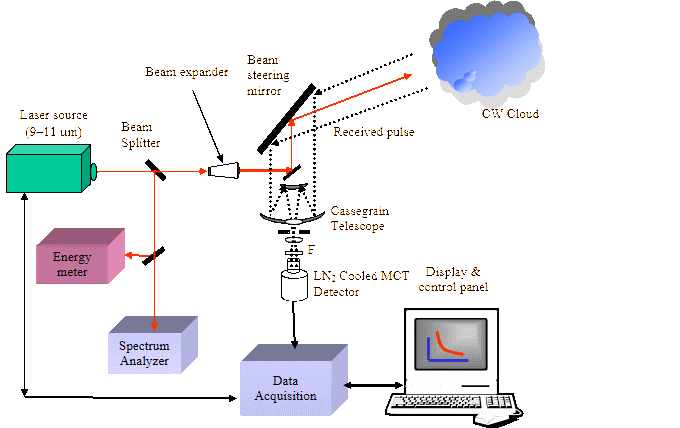
The block diagram of the multi-wavelength differential absorption lidar (MDIAL) set up considered for the present theoretical studies is given in Figure 1. The design of the system involves a common transmitter/receiver along with a scanning system for beam delivery in the desired direction and also a common command controller and data analysis systems. As shown in the schematic of multi-wavelength DIAL system, the laser pulse is collimated and sent to the atmosphere in the desired direction. The laser beam is transmitted using a gimbal scanning mirror of size typically 700 mm diameter, which scans the atmosphere in azimuth from –60 to +60 degrees and elevation from 0–30°. The backscattered signal is collected using a 500 mm diameter telescope through a scanning mirror and is focused onto the detector system that contains spectral filtering and the detector. A band-pass filter permits the lidar signals to reach the detector while blocking any stray light outside the wavelength-range of interest. The detected signals are passed through an A/D converter and data processors etc. The data processor consists of a digitizer and a computer for data storage for further analysis. Technical details of the proposed MDIAL are presented in Table 1.
Computation of dial parameters return signal strength
Let us consider a laser pulse of duration τ, on-line wavelength λon (peak absorption), off-line wavelength λoff (low absorption) and power Pt is transmitted at time to along the atmospheric path, the received power P and P at time t from a distance R [R = c(t–to)/2] in the single scattering hypothesis for two wavelength system is given by the following expression [8]:
(1)
(2)
where c is the velocity of the light, β(λ,R) is the volume backscattering coefficient of the atmosphere, (λ) is the receiver’s spectral transmission, which includes the influence of any other elements such as a monochromator, (R) is the probability of return pulse reaching the detector from a distance R, A is the effective receiver area, α is the extinction/attenuation coefficient of the atmosphere due to scattering from aerosols and absorption by molecules other than the toxic agent, and σN is the contribution from the absorbing toxic agent (σ is the absorption cross-section and N is the number density of that agent), and it is assumed that the concentration of the toxic agent cloud is between R1 and R2. Here Pt and are the laser transmitted powers at λon and λoff respectively. Pb, PJ, and Ps are the ambient background noise, Johnson noise and shot noise. Just for simplicity, we can assume Pt = although we can take these values differently and perform our computations.
The performance of the DIAL system is limited by various factors, each contributing to noise. The received signal consists of optical background noise, detector noises such as dark noise and Johnson noise. It is required that these noise levels should be quantified properly while deriving the number concentration from the DIAL signal. The background noise power received at the receiving mirror is given by:
where Tλ is the atmospheric transmittance at λ, Δλ is the optical bandwidth of detection system (µm), Ωm is the receiving mirror field of view (Sr), Ar is the area of receiver telescope (m2) and Lλ is the spectral radiance of background source (Wm–2µm–1sr−1) at λ. In general, the background intensity can be reduced by decreasing the field of the receiver telescope and optical bandwidth of the detection system. Under given condition, Johnson noise of the detector is in the order of 10−14 W and dark noise power is in the order of 10−20 W.
Signal-to-noise ratio and required transmitted energy
The noise contributions arise mainly from the combined effects of detector dark noise and the received background radiation. In the mid-IR range (spectral range of our interest), both the solar and terrestrial thermal radiation contributions are very small and hence can be neglected. While the dark noise is negligible for good detectors in the visible and near IR, the detectors in the mid-IR have fairly large dark noise. Since the origin of this dark noise is thermal in nature, cooling the detector to liquid N2 temperature (77 K) reduces the dark noise contributions significantly. It should be noted [20] that the detector noise in the case of heterodyne (coherent) lidar with sufficient local oscillator power is shot-noise limited (noise value 10–12 W), for direct (non-coherent) lidar system with weak return signals it is dark-current limited in the mid-IR spectral region. Note that the SNR is now range-dependent and, for the case of thermal-background limited case, the SNR of solid-state detector is given by [16]:
where P is the received power, NEP is the noise equivalent power of the detector and n is the number of received pulses. In the dark-current limited case, NEP of the detector is given by:
where D* is the detectivity, Ad is the area of the detector, and B is the detection bandwidth. From (1), (4) and (5), we can rewrite the SNR equation (for n=1) as:
where Et is the transmitted energy per pulse. By rearranging (6), the required energy to be transmitted in the atmosphere for single pulse can be computed for given SNR values, by:
Retrieval of concentration
If the DIAL system is to perform measurements of the spatial distribution of the toxic agents in the specified ranges, then the attenuation of the laser radiation should be primarily due to the beam interaction with the toxic agent cloud [(NΔσ)ΔR] and not the incidental atmospheric loss [α–α]. In addition to this condition, if measurements at λon and λoff are made near-simultaneously, then we can assume that α α and β β’. Equations (1) and (2) are simplified by taking the above approximation to give the following range-resolved expression for the concentration N (m–3) of the specific toxic agent between the ranges R1 and R2:
Measurement sensitivity (nmin)
The sensitivity of the DIAL method is characterized by the minimum concentration Nmin of the CW agent that can be detected with the minimum errors in optical signal. The expression for the minimum detectable concentration of toxic agent is given below under the condition of the backscattering and extinction coefficient is negligible at nearby wavelengths of λon and λoff. For the return signals P and P to be distinguishable from each other, it is essential that they satisfy the following criterion for the given detector:
From (4), for n=1, we obtain:
From (8) to (10), for a given range resolution ΔR:
From this, we get an expression for the minimum detectable concentration (Nmin) as:
where SNR is the signal-to-noise ratio at the distance R. To increase the sensitivity at the given spatial resolution (ΔR), the most intense absorption lines of the gas under study with large absorption cross section is to be selected. Given typical detection and digitization equipment, a minimum reasonable value for SNR is 10.
Results and discussion
Nerve and blister agents have been identified as the major threatening chemical warfare agents most likely to be used by terrorist and rogue countries because of their acute toxicity. Hence it has been decided to detect and identify these major eight CW agents (five nerve and three blister agents) using the DIAL technique. The five nerve agents considered here are Tabun (GA), Sarin (GB), Soman (GD), Cyclohexylsarin (GF), Vx and three blister agents (Sulphur mustard, Nitrogen mustard and Lewisite). The details of these agents, their absorption cross-sections at selected on- and off-wavelengths are listed [14] in Table 2. Many of these agents have distinct absorption bands in the 9.2–10.8 µm regions, and there is relatively less atmospheric attenuation in these spectral regions. Spectral width (FWHM) of these eight CW agents lies between 0.1 and 0.35 µm in the 9–11 µm. Our studies have revealed that CO2 lasers should have a minimum of 49 lines comprising strong and weak absorption wavelengths to detect these agents and the required laser line width is ≤ 1 cm–1. We have selected minimum of four sets of on- and off-lines for each agents. However, here we present results for one set each for all eight agents.
Using the above equations, we may now compute the values of various parameters such as the received power, SNR, and minimum detectable concentration etc. of the multi-wavelength DIAL system for the detection of CW agents. The system capability is evaluated for two cases:
1) Range resolved measurements (mainly from the aerosol scattering)
2) Co-operative target (reflection from topographic target).
| Range-resolved case | Topographic target | ||||||||
|---|---|---|---|---|---|---|---|---|---|
| Agent | λon (µm) | λoff (µm) | σon (m2) | σoff (m2) | Δσ (m2) | Conc (ppm) | α(km–1)= 0.15 | α(km–1)= 0.62 | α (km–1) = 0.62 |
| Maximum range (km) | Maximum range (km) | Maximum range (km) | |||||||
| Sarin | 9.7532 | 9.5691 | 1.08e–22 | 1.61e–23 | 9.22e–23 | 1.00 | 1.2 | 0.60 | > 5 |
| Soman | 9.6948 | 9.5691 | 1.20e–22 | 1.06e–23 | 1.09e–22 | 1.00 | 1.0 | 0.60 | > 5 |
| Tabun | 9.5524 | 9.3544 | 7.61e–23 | 1.50e–23 | 6.10e–23 | 1.00 | 1.5 | 0.80 | > 5 |
| Cyclosarin | 9.8144 | 10.1253 | 9.32e–23 | 5.68e–24 | 8.75e–23 | 1.00 | 1.4 | 0.70 | > 5 |
| Vx | 9.5198 | 9.3544 | 8.11e–23 | 2.55e–23 | 5.57e–23 | 1.00 | 1.4 | 0.80 | > 5 |
| Lewisite | 10.7185 | 10.5131 | 1.16e–23 | 2.35e–24 | 9.27e–24 | 1.00 | Signal levels are not distinguishable | ||
| 5.00 | 1.7 | 0.8 | > 5 | ||||||
| Nitrogen mustard | 10.4944 | 10.2887 | 4.70e–24 | 8.54e–25 | 3.85e–24 | 1.00 | Signal levels are not distinguishable | ||
| 15.00 | 1.7 | 0.8 | > 5 | ||||||
| Sulfur mustard | 9.5691 | 9.5039 | 1.19e-24 | 4.32e-25 | 7.58e-25 | 1.00 | Signal levels are not distinguishable | ||
| 40.00 | 1.8 | 0.9 | > 5 |
A chemical cloud with a thickness of 300 m containing uniformly distributed concentration of 1 ppm (which is equivalent to 2.69×10¹⁹ molecules of the agent per m3) to be detected in the ambient atmospheric conditions over distances from 0 to 4 km is assumed. The differential optical depth of this cloud over the path length of 300 m is 0.47 (=2.69×1019×1×6.10×10–23×300). Aerosol concentration in the atmosphere is taken to be uniform. For the sake of simplicity, we have not considered the effect of wind velocity on the concentration levels and the dispersion of the toxic-agent cloud. It is also assumed that the atmosphere is clear—that is, neither clouds nor fogs are present. Further, we have taken the values for (λ) = 0.8 = (R) in our calculations. The MDIAL simulation takes various inputs from the user such as spectral data of absorbing agents, laser transmitter, receiver system, detector electronics parameters and computes the expected return power levels, SNR, required transmitter energy etc. at various ranges. The basic flow diagram of this model is shown in the Figure 2. A graphical user interface (GUI) software has been developed in MATLAB platform to perform the simulation studies [21,22]. GUI has ten major pushbuttons as shown in Panel 1. These buttons invoke various functions such as computation of return powers, signal with noise, SNR, required energy to be transmitted, concentration derived from the return signals and return signals for both cases. Spectral data of various toxic gases including chemical warfare agents have been stored in the database. As an example, the return signal strength versus range obtained for on-line and off-line wavelengths for Sarin is shown here.
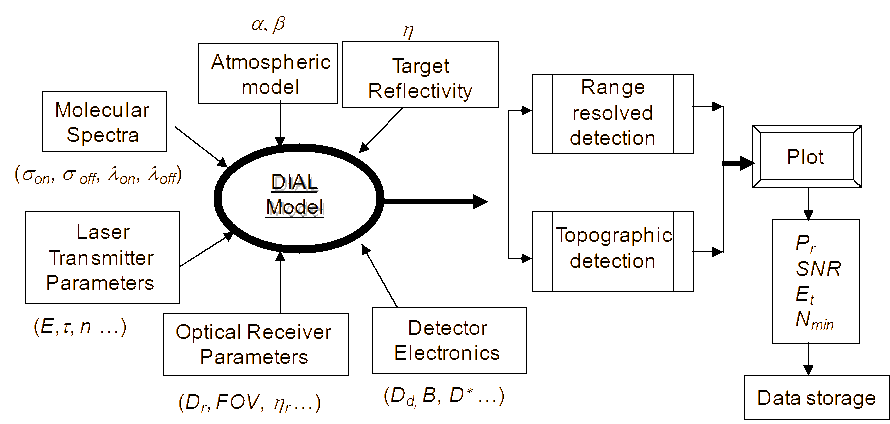
Figure 3 shows the simulated signal strength received (volts) as function of range for on-line and off-line wavelengths of Tabun using the values shown in Table 1 and 2. The return signals are simulated according to (1) taking into account detector gain, responsivity, background and detector noise levels. A Gaussian noise pattern is also added to the simulated MDIAL signals.
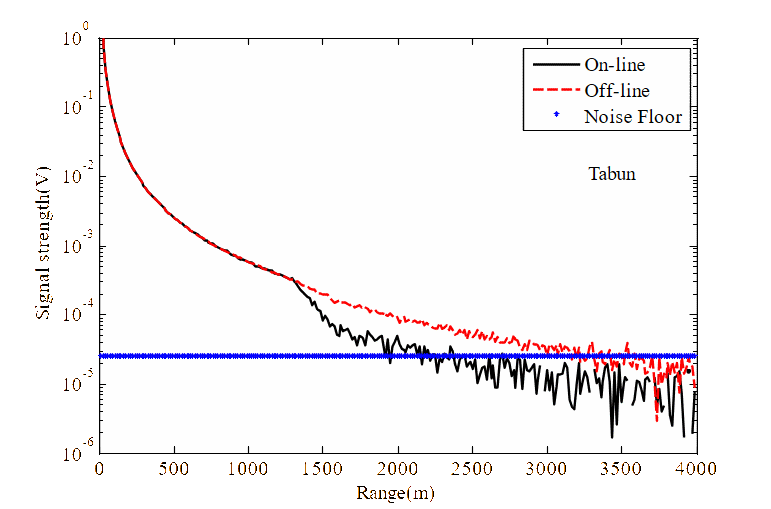
We have used the values 1.5×10⁻⁴ m–1 for extinction coefficient (α) and 5.2×10⁻⁷ m–1.sr–1 for volume backscattering coefficient (β) in our calculation [23]. In order to avoid the errors due to the variation in the attenuation coefficient, the Δλ (λon–λoff) should be kept less than 0.2 µm. Strong depletion of signal level is seen at on-line wavelength between 1 and 1.3 km., and this signal falls uniformly with range and reaching below the noise floor after 2.0 km. Any discernible detection requires the lidar signal to exceed the NEP by an adequate margin. Here, the noise floor of the system is 10 times of the NEP of MCT detector (3.5×10–8 W×3.6 A/W×200V = 2.52 µV). The maximum detectable range of the system is defined as the range at which the return signal strength of CW cloud is totally above the noise floor. The maximum detectable range for this case is 1.2 km. After 1.5 km the return signal falls totally below the noise floor which means this system cannot detect CW cloud if it is present beyond 1.2 km. Hence, it can be said that this system can detect the nerve agent cloud of thickness 300 m with 1 ppm concentration up to a range of 1.2 km. The return signals obtained from blister agent cloud of 1 ppm thick are not distinguishable. However, it can detect a few tens of ppm concentration of blister agent cloud which are discernible signals maximum up to range of 1.7 km. Under co-operative target, this system can detect nerve or blister agent cloud up to a maximum range of 5 km. In this case, the location of the cloud may not be known because it provides path integrated concentration of a given species only. It may be noted that a strategically located retro reflector increases range and sensitivity whereas range resolvable measurements leading to spatial mapping of chemical clouds over a long range. Similar exercises have been carried out for all other CW agents by considering two different atmospheric extinction coefficient values and the results are presented in the Table 2.
By using (7) and the parameters listed in Tables 1 and 2, we compute the required transmitted energy per pulse (= Et) of the laser in order to detect a CW agent concentration of 1 ppm for different values of R. The value of SNR has been taken to be equal to 10 and ΔR =300 m. For example, we see that with ΔR=300 m, at R=1.5 km, the value of required Et at on-line wavelength is equal to 57 mJ in order to detect 1 ppm each of CW agents (Figure 4).
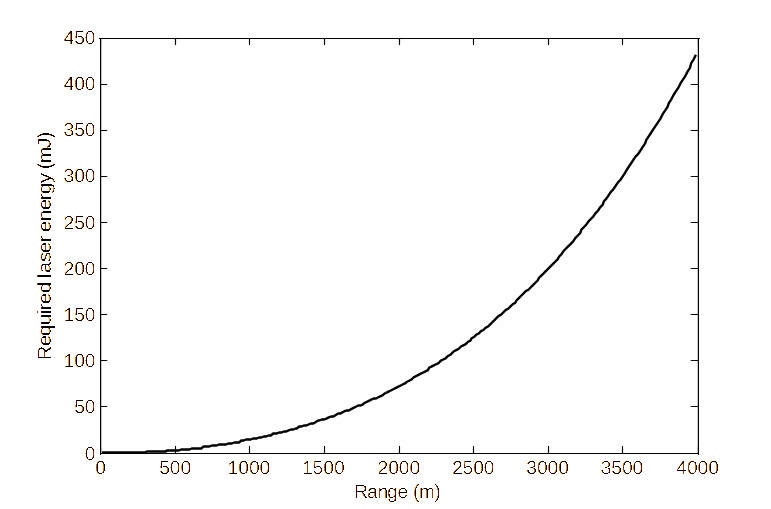
Thus we conclude that if we have a pulsed laser with Et = 100 mJ (the value in our proposed system) at each of these wavelengths, it can easily detect 1 ppm concentration of these agents located up to a distance of 1–2 km (range resolved measurements) and about 5 km (topographic target). The sensitivity of the system in terms of minimum measurable concentration is computed for Tabun and shown in Figure 5.
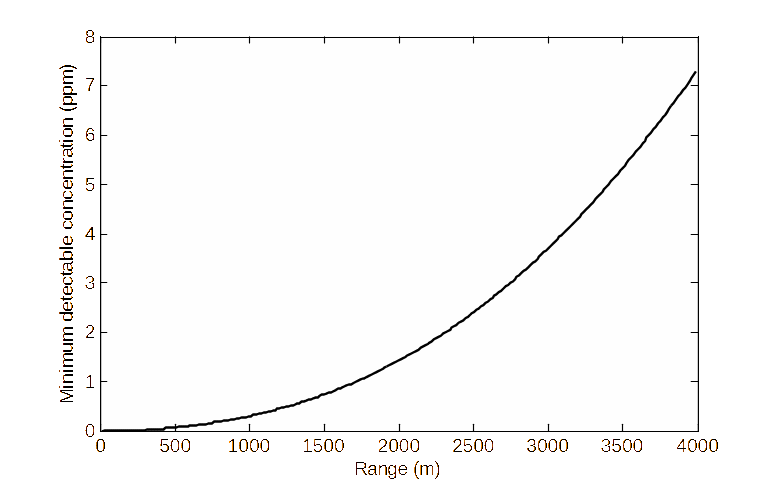
At shorter ranges (below 1 km), sensitivity of the system is less than ppm level whereas this increases beyond 1 km. In any case, the minimum detectable concentration is inversely proportional to the range resolution and differential absorption cross section which depends on the choice of the wavelengths of the probe radiation.
The performance of a CO2 lidar is dependent on the amount of backscattered radiation and extinction coefficient. The values of atmospheric extinction include both scattering and absorption due to water vapour and other interfering trace gases. As an example, Vx agent cloud with 300 m thickness and 1 ppm concentration present in the atmospheric region of 0 to 3,000 m is considered to be detected by the above system. For this, we have considered two absorption lines namely 9P10 (9.473) and 9P26 (9.609) as probing wavelength for Vx. The absorption cross sections at these lines are 7.51×10⁻²³ m2 (9P10) and 6.60×10⁻²³ m2 (9P26). Contributions of interfering molecules (atmospheric trace gases) like ammonia, ethylene, ozone and water vapour have been considered while computing the return powers at these two wavelengths. Typical concentrations of these trace gases in urban atmosphere are 50 ppb for ammonia, ethylene, ozone and 6000 ppm for water vapour, The absorption cross sections [24] of ammonia, ethylene, ozone and water vapour at 9P10 are 1.23×10⁻²⁴ m2, 1.56×10⁻²⁴ m2, 2.23×10⁻²³ m2, and 8.40×10⁻²⁸ m2. At 9P26 these values are 3.40×10⁻²⁵ m2, 8.55×10⁻²⁵ m2, 2.23×10⁻²³ m2, and 2.77×10⁻²⁸ m2. The values for the volume extinction coefficient considered here for 9P10 and 9P26 lines are 0.62 km–1 (humid condition) and 0.1 km–1 (dry condition). The laser line 9P10 has relatively strong water vapour absorption characteristics [24] than 9P26. The value of volume backscattering coefficient at these lines are in the order of 5.2×10⁻⁷ m–1sr–1. Figure 6 shows the return power levels versus range for 9P10 and 9P26 laser lines for given system parameters.
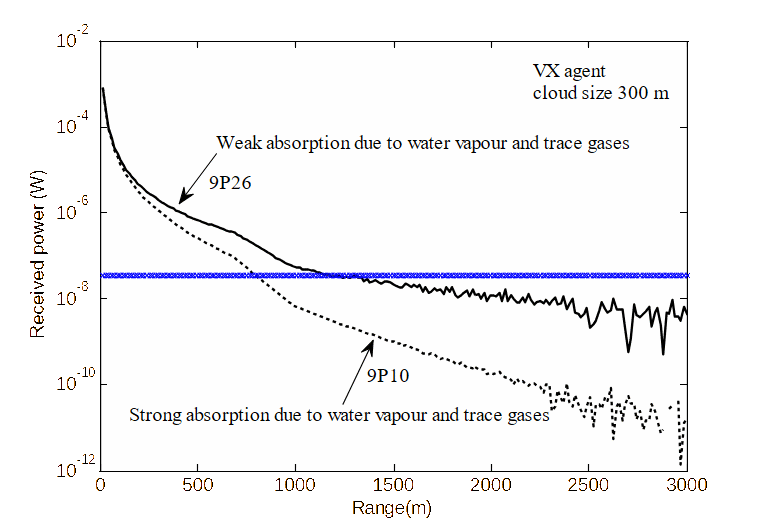
Here the cloud is introduced between 700 and 1,000 m. Return signal strengths are completely above the noise floor (dotted line). Our results revealed that the 9P26 line is capable of going up to a maximum range of 700 m in presence of interfering molecules whereas in the absence of interfering molecule this goes up to 1 km. However, the maximum detectable range for 9P10 line is 400 m. The difference in detectable range is due to the absorption of water vapour and trace gases along the entire beam path. It can be seen from the Table 2 that under humid condition the maximum detectable range of the system comes down significantly for detection of all agents. Hence, it is reported that one has to prefer the laser wavelength, which is least absorbed by the water vapour and other trace gases in order to detect CW agents in the atmosphere.
Conclusion
In this paper, we have presented the required energy levels of a laser, the received power levels and measurement sensitivity required to detect a given thickness of chemical warfare agent clouds at various ranges up to 5 km in the atmosphere. The maximum detectable range of the system is estimated by considering the influence of interfering molecules and the effect of atmospheric extinction coefficients. Our results revealed that the significant reduction in maximum detectable range. For example, it is observed that the maximum detectable range goes down significantly for detection of Vx cloud in the presence of trace gases and water vapour. Based on our results, we report that tunable CO2 laser with 100-mJ pulse energy based differential absorption lidar system, operating in 9–11 µm spectral region, is capable of detecting the chemical cloud of 300-m thickness and minimum concentration of 1 ppm located anywhere in the ambient atmosphere up to a maximum distance of 1.5 km (range resolved) and more than 5 km (cooperative target) under given atmospheric conditions and system parameters.
Acknowledgement
We express our gratitude to Sh. Anil Kumar Maini, Director, LASTEC, for his constant encouragement and support.
References
L. Szinicz, “History of Chemical and Biological Warfare Agents”, Toxicology, Vol. 214, pp. 167–181, 2005.
W.S. Carus, “Bioterrorism and Biocrimes—The Illicit Use of Biological Agents in the 20th Century”, Center for Counter proliferation Research, National Defense University, Washington DC, USA. 1998.
A.T. Tu, “Basic Information on Nerve Gas and the Use of Sarin by Aum Shinrikyo”, Journal of Mass Spectrom. Society of Japan, 1996, 44, 293–320.
Potential Military Chemical/Biological Agents and Compounds, January 2005. www.us.army.mil.
P.K. Ramachandran and N. Raja, “Chemical Weapons and Problems of Verification”, Defence Science Journal, Vol. 40, pp. 15–23, 1990.
R.M. Measures, “Laser Remote Sensing: Fundamentals and Applications”, Kreiger Publishing Company, Krieger Drive, Malabar, Florida, 32950, 1992.
C. Weitkemp, “Lidar: Range Resolved Optical Remote Sensing of the Atmosphere”, Springer, 2005.
R.T.H. Collis and P.B. Russell, “Laser Monitoring of the Atmosphere: Lidar Measurement of Particles and Gases by Elastic Backscattering and Differential Absorption”, edited by Hinkley, Springer-Verlag, Ch. 4, pp. 102–109, 1976.
Y. Zhao, W.A. Brewer, W.L. Eberhard, and R.J. Alvarez, “Lidar Measurement of Ammonia Concentrations and Fluxes in a Plume from a Point Source”, Journal of Atmosphere and Oceanic Technology, Vol. 19, pp. 1928–1938, 2002.
S.L. Jain et al., “Measurement of Liquid Water Content and Trace Species in the Atmosphere Using Differential Absorption Lidar”, Proceedings of SPIE, Vol. 4893, pp. 121–131, 2003.
H. Kildal, “Comparison of Laser Methods for the Remote Detection of Atmospheric Pollutants, Proceedings IEEE, Vol. 59, pp. 1644-63, 1971.
C.R. Prasad, P. Kabro, and S. Mathur, “Tunable IR Differential Absorption Lidar for Remote Sensing of Chemicals”. Proceedings of SPIE, Vol. 3757, pp. 87-95. 1999.
F.M. D’Amico, R.G. Vanderbeck, and R.G. Warren, “Range Resolved Frequency Agile CO2 Lidar Measurements of Smokestack Vapor Effluents”, Proceedings of SPIE, Vol. 3855, pp. 128–133, 1999.
S.W. Sharpe, T.J. Johnson, P.M. Chu, J. Kleinmeyer and R. Rowland, “Quantitative, Infrared Spectra of Vapor Phase Chemical Agents”, Proceedings of SPIE, Vol. 3127, pp. 275–285, 1997.
L. D. Hoffland, R. J. Piffath, and J. B. Bouck, “Spectral Signatures of Chemical Agents and Simulants, Optical Engineering, Vol. 24, pp. 982–984, 1985.
C.B. Carlisle, J.E. Van der Laan, L.W. Carr, P. Adam, and J.P. Chiaroni, “CO2 Laser Based Differential Absorption Lidar System for Range Resolved and Long Range Detection of Chemical Vapor Plumes”, Applied Optics, Vol. 34, pp. 6187–6201, 1995.
J. Vicenik, and A. Jancarek, “Stand-off Dial CO2 Laser Sensor of Chemical Warfare Agents”, Proceeding of International Conference of Optics & Optoelectronics, PP-OOSA-5, 12–15 Dec 2005.
S. Chandra, et al., “2-micron Pumped 8-12 micron OPO Source for Remote Chemical Sensing. Proceedings of SPIE, Vol. 4036, pp. 200–208, 2000.
P.F. Ambrico, A. Amodeo, P.D. Girolamo and N. Spinelli, “Sensitivity Analysis of Differential Absorption Lidar Measurements in the Mid Infrared Region”, Applied Optics, Vol. 39, pp. 6847–6865, 2000.
D.K. Killinger, N. Menyuk, and W.E. Defed, “Experimental Comparison of Hetrodyne and Direct Detection for Pulsed Differential Absorption CO2 Lidar”, Applied Optics, Vol. 22, pp. 682–689, 1983.
M.K. Jindal, S. Veerabuthiran, J.P. Dudeja, and D.K. Dubey, “A Versatile Simulation Software for Performance Analysis of DIAL System for the Detection of Toxic Agents”, Proceedings of SPIE, Vol. 6409-58, doi: 10.1117/12.694524, 2006.
S. Veerabuthiran, and J.P. Dudeja, “Parametric Study of the Multiwavelength Differential Absorption Lidar System for the Detection of Toxic Agents in the Atmosphere”, Defence Science Journal, Vol. 5, pp. 755–764, 2007.
G.B. Steinvall, and T. Claesson, “Measuring Atmospheric Scattering and Extinction at 10-micron Using a CO2 Lidar”, Applied Optics, Vol. 22, pp. 1688–1695, 1983.
A.D. David, “Backscattering Measurements of Atmospheric Aerosols at CO2 Laser Wavelengths: Implications of Aerosols Spectral Structure on Differential Absorption Lidar Retrieval of Molecular Species”, Applied Optics, Vol. 38, pp. 2616–2624, 1999.