
Volume 13, Number 1, March 2010
Ground Mobile WGS SATCOM For Disadvantaged Terminals
Abstract
This paper provides discussion of key system design considerations and enabling technologies for ground mobile WGS Satcom for disadvantaged terminals. The modem/waveform performance is critical and technologies demonstrated at other frequency bands could be re-used in the Ka/X bands. The suitability of existing fixed terminal standards applicable to these bands and adaptation of waveforms specifically developed for mobile satcom-on-the-move are considered.
Introduction
As described in the Australian Defence White Paper 2009, the Australian Defence Force (ADF) is reforming its information environment and is adopting a single Defence enterprise architecture. To achieve this, assured access to military and commercial satellite communications is needed. While now heavily reliant on commercial satellites, through the next decade, the ADF’s core satellite communication capabilities will be provided through the wideband global system (WGS) operated by the United States. This is further complemented by ultra high frequency (UHF) satellites through lease and Memorandum of Understanding (MoU) agreements. It is anticipated that WGS will provide global broadband access to fixed and large mobile platforms, while UHF will provide narrow-band access to mobile land forces.
The domestic L-band Defence Mobile Communications Network (DMCN) is not expected to continue beyond 2014. Beyond Australian borders, Inmarsat services are widely used for both land and maritime operations. Where shown to be cost effective and technically feasible, migration away from commercial satellites is desirable. The Australian Government has entered a $927 million partnership with the United States to access the WGS constellation and ground infrastructure [1]. Additional costs will be incurred in acquiring WGS certified terminals, as well as handling the technical restrictions inherent in X-band and Ka-band satellite communications.
At these frequencies, ground terminal mobility is particularly challenging due to antenna size and complexity, in addition to unfavourable radio propagation effects.
Ground terminals can be classified according to setup time and data rate. Transportable terminals with setup times greater than ten minutes use larger and more directional antennas, and can thus use satellite resources most efficiently. Mobile terminals with short setup times use smaller aperture antennas, and suffer from lower gain, lower data rates and greater power spill-over into adjacent satellites—adjacent satellite interference (ASI). Further, terminals mounted on land vehicles, maritime vessels, or aircraft platforms all require tracking antennas to maintain accurate satellite pointing.
In actuality, it may not be viable within reasonable cost, size and power constraints to meet all specifications set out for WGS ground terminals. But if significant mobility benefits can be gained with little or no effect on other WGS users or other systems, relaxed specifications can be argued for disadvantaged terminals.
To a large extent, the ground terminal can be considered as separate RF/antenna and modem/waveform subsystems. The RF/antenna design is very dependent on the operational frequency band(s), while many modem/waveform features are frequency independent and scalable across different bands. In this paper, we consider desirable features of a ground mobile system in the context of other WGS Satcom initiatives, focusing on the modem/waveform characteristics. We review prior system designs that can be scaled to WGS. Specific design issues are then discussed in detail followed by conclusions.
SOTM over WGS
WGS constellation
For the United States, WGS is intended to supplant the Defence Satellite Communication System (DSCS) in X-band, and Global Broadcast System (GBS) in one-way Ka-band communications. Additionally, it introduces new two-way Ka-band capability. It will consist of a constellation of six geostationary satellites at 35,000 km orbits. The satellites are launched in two blocks of three satellites each. WGS-1 was launched in October 2008 whereas WGS-2 and WGS-3 were put into orbit in 2009. The total cost of the satellites is US$1.8 billion with Australia funding the WGS-6 satellite. This partnership allows Australia to access the WGS constellation pro-rata with investment.
WGS satellites are hosted on the 18 kW Boeing 702 bus; while the WGS transceiver itself consumes 13 kW. It is expected to have a 14-year design life. The six satellites will be located at 135°W (WGS-5), 12°W (WGS-3), 60°E (WGS-2), 104°E (WGS-6), 150°E (WGS-4) and 175°E (WGS-1), and provide coverage from 65°N to 65°S. They are non-uniformly distributed in orbit with large footprint overlaps. Each satellite will be visible to a number of ground stations, and each ground station can see a number of satellites. Site SGS-W in Geraldton, WA (due for completion in 2012), will have the unique capability of sighting four satellites: WGS-1, 2, 4 and 6. All other stations can see at most three WGS satellites. A consequence of this design is that the WGS constellation supports a variety of network topologies: broadcast, hub-spoke, mesh, and point-to-point.
Each satellite will have 39×125-MHz channels (4.875 GHz after frequency reuse). Each channel is sub-divided into 48 sub-channels, providing 1872 independent sub-channels. There are 19 beams per satellite: eight steerable, shape-able X-band beams with separate transmitter and receiver phased arrays, 10 Ka-band beams with steerable diplexed gimballed dish antennas (eight NCA + two ACA), and one X-band earth coverage beam with a horn antenna. The X-band beams operate at 7.9−8.4 GHz uplinks and 7.25−7.75 GHz downlinks, while the Ka-band beams operate at 30−31 GHz uplinks and 20.2−21.2 GHz downlinks, all in government allocated spectrum. Cross-banding is possible with WGS: X-band users can communicate with Ka-band users.
Depending on the waveform and terminal types, each satellite is capable of 2.1 Gbps to 3.6 Gbps bandwidth. The range of data rates highlights the need to efficiently use satellite resources, especially for mobile terminals. For comparison, DSCS III supported only 0.25 Gbps for the whole constellation.
Block II WGS satellites have an additional “radio frequency bypass” mode to support airborne intelligence surveillance reconnaissance (AISR) by unmanned aerial vehicles (UAVs). When required, a number of the 125 MHz channels can be aggregated to form 2×400-MHz channels. The term “bypass” refers to bypassing the channelizer.
It is expected that by 2010, there will be approximately 1700 WGS terminals in use.
Disadvantaged terminals
Ground vehicle terminals may need to operate with a low profile antennas with compromised transmit side lobe performance. The design of a suitable waveform that allows the signal power spectral density to be controlled so as to limit ASI is highly desirable, so long as the satellite power and bandwidth resources are within the overall system operating budgets. The extent to which the waveform achieves this whilst supporting an acceptable user quality of service can be traded against antenna size, cost and performance. The RF/antenna design is a highly specialized area requiring review and is not considered in detail in this paper.
Applicable initiatives and standards
There are a number of US DoD-funded WGS programs underway focusing on the development of waveforms and hardware for WGS Satcom on the Move (SOTM). Recently, US Army has awarded DataPath $225 million (over three years) to develop Ka-band conversion kits that will enable satellite terminals on the battlefield to operate using the WGS system. These SATCOM terminals being converted were designed by the US Army for the Joint Network Node (JNN)/Warfighter Information Network-Tactical (WIN-T) program. Several other companies such as L3, ViaSat and General Dynamics have also benefited from the WIN-T program to develop terminals that are suitable for WGS [2]. Characteristics of interest include transportable transit case configuration; adaptive dynamic resource management; support for up to thousands of users in a hub less mesh network; full mesh IPoS; compliance with MIL-STD-165A and JTRS SCA 2.2 standards; closed- or open-standard waveform.
Further detailed points are highlighted below.
MIL-STD 188 164/165b
This waveform is implemented by ViaSat in the enhanced bandwidth efficient modem (EBEM). It uses turbo-like-codes to achieve very high power and bandwidth efficiency. The modem supports frequency division multiple access (FDMA) data rates in the range from 64 kbps to 155 Mbps. The modem also includes an Information Throughput Adaptivity (ITA) mode to combat rain fading experienced on Ka band using an adaptive coding and modulation scheme with approximately 17 dB of range. For mobile or disadvantaged terminals it is important to have a spread-spectrum capability and fast re-acquisition; these areas are not well addressed here.
JIPM
Joint IP Modem (JIPM) uses DVB-S2 and DVB-RCS which are advanced standards for broadcast and internet connectivity over satellite. DVB has its origin in Digital TV Broadcast and is strongly oriented towards highly efficient outbound channel to fixed receiving terminals, with the option of a narrower band return channel. Although there has been further standardization work aimed at supporting mesh networking and mobility, there are no available terminals providing all these features and further development work would be required.
NCW
The network centric waveform (NCW) is a multi-frequency time division multiple access (TDMA) standard. It uses direct sequence spread spectrum (DSSS) for disadvantaged terminals but still operates at a power disadvantage due to the TDMA media access control (MAC) layer—that is, the terminal has to transmit and receive more power than an FDMA link due to the peak-to-average data rate ratio. A more resource efficient waveform would be preferred for ADF applications. There are efficiencies to be achieved through more powerful error control coding and through use of a multiple access method that allows continuous transmission such as code division multiple access (CDMA).
ViaSat arclight mobile communication system
ViaSat have developed a military Ku-band system. The design has made special allowance for signal blocking that commonly occurs in the mobile environment. Paired carrier multiple access (PMCA) which allows efficient use of bandwidth in the point-to-point case, however there is no power gain through PMCA. DSSS is included to assist in meeting ASI requirements. The system throughput is limited by multiple access interference (MAI) [3] and does not employ interference cancellation.
Land mobile propagation channel
Electromagnetic signals propagating through the atmosphere experience a number of impairments, most of which are wavelength-dependent. The impairments are more severe at the smaller Ka-band wavelengths compared to X band, and much research focuses on the former. Significant impairments are described in the following.
Amplitude loss
Attenuation due to rain is the largest impairment for Ka-band satellite communications. Absorption is significant as wavelengths approach typical raindrop diameters of 1.5 mm. By measuring satellite beacon signals at a few geographical locations, 0.1% rain attenuation at Ka band has been found to vary from 20 dB to more than 50 dB, compared to only 0.4 dB to 4 dB at X band [4]. Using global meteorological data, generalization to arbitrary locations can be made [5]. Further, some models offer generalization to arbitrary frequencies [6].
However, first order statistics insufficiently quantify availability; a link that breaks only once a year for an unacceptable nine hours still has 99.9% availability. Second order statistics such as fade rate are needed before a complete synthetic model can be generated, but available data is limited [7]. In general, most results show very slow fade rates, no more than 0.3 dB/s. A survey of time series generation of rain fading can be found in [8].
Amplitude and phase fluctuations
While rain fading accounts for long-term variations, scintillation accounts for short term variations above 0.03 Hz. Scintillation refers to loss-less fluctuations in amplitude and phase due to changes in refractive index of the atmosphere in the presence of temperature, pressure and humidity gradients. A relationship between scintillation standard deviation and rain attenuation was reported in [9]. For instance, scintillation standard deviation is 0.45 dB at 20 dB attenuation, and 0.3 dB at 10 dB attenuation. Scintillation generally increases with lower satellite elevation angle, but is usually of concern only for higher order modulations.
Shadows and reflections
Ka-band wavelengths are significantly smaller than most physical terrain features, resulting in less diffraction and penetration, but more shadowing. Naturally, shadowing becomes more problematic at low satellite elevations. Experiments found 1% fades of 8 dB in the middle of broad suburban roads, 27−30 dB at the edge, and 10% [sic] fades of more than 30 dB in heavily canopied suburban roads [10]. As with rain fading, second order statistics are few, and would depend heavily on motion patterns.
While terrain reflection is limited, reflections off smooth man-made buildings are still possible although antenna beam-widths in the order of 1−2° tends to isolate the line-of-sight signal from reflections making multi-path a minor effect.
Doppler
At WGS downlink frequencies, Doppler spread for a 100km/h terminal is approximately 2 kHz and rate of change of Doppler for 10 m/s2 acceleration is approximately 0.7 kHz/s under reasonably steady state conditions but may be significantly greater instantaneously due to short term tracking effects resulting from platform motion. Comparing this against the WGS channelization of 2.6 MHz, we can infer that the normalized frequency offsets are small provided the channel symbol rate approaches the channel bandwidth. Compensation for Doppler effects is addressable through use of information on the vehicles motion and/or receiver carrier tracking. This would become more difficult with narrowband carriers if the normalized frequency offset is significant.
Design reuse for a ground mobile WGS system
In this section we consider enabling technologies and modem/waveform designs that may be applicable to WGS across a range of mobile satcom systems. The authors have contributed to the examples referred to through development of the specifications and/or related ground equipment.
Within Australia, Aussat developed the first domestic L-band digital voice services during the early 1990s. There was a high level of technology innovation during this program such as phase shift keying combined with forward error control coding techniques, digital voice coding and software implementations of the digital signal processing. Fast re-acquisition of the modem in response to shadowing from trees and other obstacles was critical to the signalling channel performance and also voice quality. Technology was shared between Aussat, Inmarsat, and American Mobile Satellite Corporation (AMSC) under separate MoUs leading to the deployment of three systems with many similar features although each having a different proprietary air interface. A variant of the system known as the Defence Mobile Communications Network (DMCN) was supplied to the ADF by Optus.
The Inmarsat Broadband Global Area Network (BGAN) air interface design originated from R&D work in Adelaide undertaken by joint industry/academic team consisting of DSpace and the University of South Australia. This included building the first proof of concept modems that supported turbo coded 16QAM through a non-linear Power Amplifier (PA) and fading channel conditions. Later a complete software implementation of the BGAN UT was developed by DSpace as a product and has been licensed to various Inmarsat terminal manufacturers.
BGAN is a third-generation system with Inmarsat proprietary satellite access to the core network through three radio access nodes, gateways and Ericsson switches. Within the terminals, there is a well defined abstraction layer providing an interface from the standards based protocol stack and the underlying Inmarsat physical layer. Inmarsat was able to make maximum reuse of the 3GPP standards and reduce overall program development costs while supporting a rich set of circuit and packet switched services.
Based on the experience and know-how from design roles in the systems mentioned, DSpace developed several technologies to improve performance under mobile conditions and maximize system capacity. These were realized in the DSpace Waveform Adaptive Modulation (DWAM) air interface. DWAM is a physical layer design that addresses low latency, highly efficient radio communications under challenging and variable conditions. The packet sizes and coding are optimized to carry IP and voice services efficiently. It is designed with great flexibility to fit a wide range of bandwidth and power constraints, through selection of different coding and modulation options across a continuum of packet parameters.
DWAM was applied to demonstrate 64QAM operation over an Inmarsat 3 spot beam and high speed data services over Optus B3 and ACeS Garuda satellites at L band. It was also used to demonstrate enhanced bit rates and reliability for the Australian Army Raven VHF combat net radio for terrestrial line-of-sight communication. It was proposed as candidate to upgrade the DMCN to support high speed data and was successfully used in a number of trials for ADF and other government agencies.
DWAM was conceived to support a wide range of terminal types and operating environments, initially implemented for single channel per carrier (SCPC) operation with a simple channel sharing and channel allocation scheme to support small groups of users. For more dynamic situations, a demand assignment scheme was also developed and tested in the laboratory based on TDMA—DSpace Radio Access Scheme (DRAS). This featured adaptive coding and modulation control and ARQ for robust messaging.
The development of highly efficient FEC and modulation techniques was achieved in DWAM through triple parallel concatenated codes. These turbo codes achieve performance close to the Shannon channel capacity limit and are compared with the efficiency of various WGS options in Figure 1.
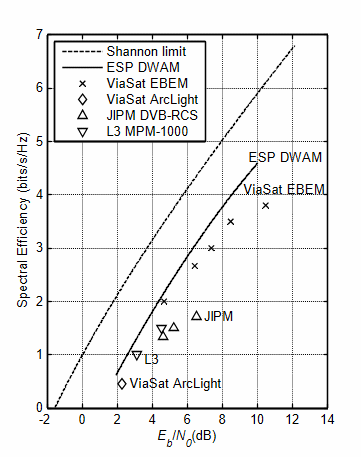
DWAM design was optimized for use in a multi-user environment with multi-user detection (MUD) at the receiver. This allows the simultaneous use on a shared channel in a similar manner to that employed in CDMA systems, except without the need to spread the signal to the same extent. MUD is very effective where fast access to the channel (low latency) and overall throughput is important. It also reduces sensitivity to near-far problems making transmit power control redundant in some cases.
Effective implementations of MUD [11] offer significant performance benefits to complex systems where shared resource utilization is critical. The MUD technology was successfully applied to the Comtech Movement Tracking System (MTS). Comtech has claimed throughput improvements of up to 20× [12] as a result of the licensed technology allowing a greater number of users to share the return channel and reducing the number of message losses.
An often under stated aspect of satellite communications systems design is modem synchronization, involving a trade-off between waveform efficiency and receiver complexity. The use of pilot symbol positioning and smart algorithms [13] is an important aspect of waveform design which ensures fast acquisition over the required Doppler range while using computationally efficient receiver algorithms.
System design issues
Adaptive coding and modulation
The WGS system may experience many different operating conditions, and the ability to adapt allows the link performance to match current conditions. The system will need to respond to the following conditions:
Rain fading
As mentioned previously, rain fading occurs at X band and Ka band but it is most severe at Ka band. Under rain conditions the sky noise increases and the signal can be dramatically attenuated.
Position relative to target and adjacent satellite
There will be six WGS satellites in geostationary orbit. The relative position of the nearest adjacent satellite, as far as avoiding interference is concerned, may be different for each satellite and may change over the long term, as satellites are launched or decommissioned.
Radio resource demands
The satellite resources are shared between many terminals and many systems. As load on the system is increased the resources of power and bandwidth are allocated more finely.
The modem needs to be able to use the appropriate bandwidth and information data rate to respond to the prevailing conditions. A combination of modulation, error control coding, spreading and symbol rate adjustment can be used to respond to the current conditions. The modem should be configurable to provide an efficient combination.
A large range of data rates suggests that more than one type of error control coding is required. Many services such as interactive voice require a low-latency, which implies an acceptably short block size for the error control coding. Error control coding latency is the product of bit rate and block size. If very short blocks are required then convolutional coding is indicated. For very long block lengths low density parity check codes (LDPC) are the obvious choice, whereas turbo codes are an excellent choice for medium and long block lengths.
Adjacent satellite interference
ASI is a limiting factor particularly at X band. A disadvantaged terminal generally has a smaller antenna with a wider beam width. Interference on adjacent satellites is generated by transmissions from these terminals. The problem is illustrated in Figure 2. The ASI must be kept to an acceptable level, usually specified in terms of power spectral density at the adjacent satellite.
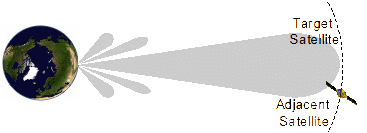
The factors influencing interference on adjacent satellites are:
- the antenna pattern and the current look angle;
- the antenna pointing accuracy;
- the current transmit power; and
- the transmit bandwidth and spreading ratio (that is, the power spectral density).
The position of adjacent satellites is known, however their spot beam and gain configuration may not be known. The terminal population may include a mixture of transportable/satcom on the halt (SOTH) with medium/high gain antennas and disadvantaged terminals.
Radio resource management (RRM) can balance satellite utilization and quality of service (QoS) while keeping within ASI constraints. A flexible waveform is needed to implement the resource management. Note, that the RRM problem is slightly different in the forward and return link. In the return link the total power spectral density incident on the adjacent satellites must be constrained. In the forward link the constraint is the power of the satellites transponder with each terminal receiving a measurable level of interference [14]. Furthermore, in some satellite bands the ITU imposes downlink power flux density limits to facilitate spectrum sharing with terrestrial radio networks. The ASI incident on the target systems terminals may vary in the short term or long term as it depends on the operation of the adjacent satellite(s).
Acquisition and re-acquisition
Re-acquisition is typically not well defined or characterized for modems designed primarily for relatively static (fixed or limited mobility) conditions. In the land mobile scenario the signal may be temporarily blocked by trees or buildings causing a communications outage. The outage time can be reduced if the terminal can re-acquire quickly thus re-acquisition time is an important performance criteria which is often given insufficient consideration.
Acquisition/re-acquisition design involves considering two issues:
- The amount of pilot information to be included in the waveform. The pilot information is an overhead reducing the efficiency of the waveform.
- The complexity of the acquisition algorithm. Iterative algorithms such as turbo acquisition can achieve fast acquisition with minimal pilot information however the acquisition algorithm may need considerable processing resources to achieve the desired acquisition times.
Acquisition and re-acquisition are important considerations for the disadvantaged terminals.
Multiple access method
The principle options for multiple access are TDMA, FDMA, and CDMA. Naturally combinations are possible. An important constraint is that radio frequency amplifiers are generally limited in instantaneous power. In WGS the transmitted power spectral density may be limited for ASI.
Return link
TDMA provides a simple means of sharing the channel but it can be inefficient in terms of transmitter power. The terminals are allowed to transmit a fraction of the time, but being instantaneous power limited does not allow them to transmit high average power.
FDMA is more power efficient than TDMA in the return link however it may not allow for efficient resource management with regards to ASI. Consider the case where there are SOTH and disadvantaged terminals on the same system. ASI can be reduced by allowing the disadvantaged terminals to use a wide band width. FDMA splits the bandwidth according to terminal thus limiting the amount of spreading the disadvantaged terminals can use.
CDMA is a good choice for reducing the power spectral density and thus the ASI, however CDMA is limited by MAI. The MAI affects can be ameliorated by application of MUD technology.
Forward link
TDMA is flexible, simple and efficient on the forward link. Scheduling allows terminals to listen only to the relevant segments of the signal thus facilitating a power saving mode.
FDMA may be less efficient than TDMA on the forward link as an FDMA signal has a larger peak-to-average power ratio than the TDMA signal. Flexible bandwidths are more complicated to implement than the flexible length time slots of TDMA.
CDMA can allow flexible resource allocation in the forward link however if multiple codes are used the signal can have a large peak-to-average ratio as is the case in FDMA.
In summary, the forward and return links have different constraints and the modem needs to be flexible enough to accommodate both scenarios. Modems purporting to resolve all issues with one access method may be compromising system efficiency.
Multi-user detection
MUD is a well known technique, gaining fame through solving the near-far problem on cellular CDMA systems. Even in the more conservative area of satellite communications, systems with MUD technology are appearing [12].
A MUD receiver is able to decode communications signals which are not spatially, time, frequency or code separated as is conventionally the case. An effective way of implementing the MUD technique is illustrated in Figure 3. The received signal(s) are passed through an interference canceller and an attempt is made to demodulate and decode the separate communications signals. The signals are reconstructed via the Soft Modulators and then used to remove interference from the received signal. The process is repeated a number of times to improve the quality of the Decoded Data.
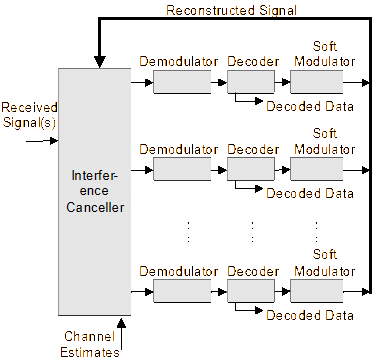
MUD receivers may provide a number of benefits depending on the application; three applications are discussed in the following sections.
CDMA-MUD
If CDMA is used as a multiple access system then there is the possibility that co-channel interference reduces its performance to less than the equivalent TDMA or FDMA system. Using MUD will recover this loss and give the CDMA equivalent performance in a homogeneous system. CDMA-MUD will have an advantage in a system consisting of SOTH and disadvantaged terminals. The MUD allows the high gain terminals to use less of the channel resources as a consequence of their better signal-to-noise ratio. This is a significant advantage over TDMA networks where the smallest terminal will dictate the network performance and larger terminals are disadvantaged in terms of possible throughput. CDMA-MUD is the theoretically optimum scheme for most multiple access scenarios. The performance gain depends very much on the reference scheme and scenario.
Packet capture
In low latency packet applications a random access scheme is used. Scheduling can result in unreasonable delays. Random access schemes such as Aloha tend to have very poor channel utilization, much less than 37%. A solution to this problem is to use spreading and MUD in combination with a random access scheme [11]. This solution can recover much of the inefficiency of the random access scheme while retaining low latency packet delivery.
Multi-carrier modulation
In FDMA carriers need to be separated by a guard band to ensure negligible adjacent channel interference (ACI). This can lead to wastage of 25% to 50% of the spectrum. A MUD receiver can be used to detect and cancel the ACI in the receiver, thus eliminating the spectral wastage.
In conclusion, there are a number of areas where a WGS system can significantly benefit from the efficiencies realised through MUD technology.
Network
Broadcast systems such as in satellite systems are inherently physically fully connected mesh networks. Some nodes behave as gateways to other networks, perhaps to a terrestrial fiber optic network, while other nodes can only communicate within the same network and rely on gateway nodes for broader connectivity.
Discussion about satellite network topology therefore usually refers to logical connections, which are subsequently dependent on waveform and protocol design. Centralized control through a common gateway is simplest to design and setup, but suffers from a single failure point. It has the advantage of simple point-to-multipoint broadcast capabilities, and depending on radio resource control design, possibly single-hop point-to-point connections.
Decentralized control requires more complex signaling and protocol design, but does not have a single failure point, an important consideration in ad-hoc networks. Point-to-multipoint broadcast messages require complex discovery protocols, but single-hop point-to-point connections are efficiently implemented.
Regardless of centralized or decentralized designs, another design consideration is circuit or packet switching. The former is useful for streaming applications such as voice and video, while the latter is useful for bursty applications such as IP traffic. Streaming applications may be supported using IP and packet switching may be well suited.
Conclusions
In this paper, we have summarized key modem technologies that could enable ground mobile terminals for WGS Satcom to disadvantaged terminals. These technologies exist and have been demonstrated at other frequency bands. The combined usage of spreading through CDMA to reduce signal power spectral density and MUD technology has the potential to significantly improve overall system performance relative to current standards. There are no available terminal products specifically addressing mobility in an efficient manner for WGS Satcom. The approach of re-using components of mobile enabled design in the modem/waveform for Ka/X bands is the most practical and low risk to bring new capability to market in the near to medium term. This could take the form of evolving the current WGS (emerging) standards to support mobility by judiciously applying smart new technologies or alternatively extending the usage of an existing mobile capable waveform such as DWAM to Ku and X band operation. The authors believe that a scalable waveform capable of supporting a wide range of terminal types and operating environments efficiently is feasible and could be widely deployed using SDR platforms.
References
[1] Australian Minister for Defence, “Australia to Join with United States in Defence Global Satellite Communications Capability”, 111/2007, 3 October 2007.
[2] A. Baddeley, “Flyaway Satcom”, Special Operations Technology, Vol. 7, Issue 2, pp. 36-40, KMI Media Group, USA, March 2009
[3] D. Wilcoxson, et al, “Ku-band SATCOM On-the Move”, Proceedings of the Military Communications Conference, MILCOM 2005, Atlantic City, New Jersey, 17-20 October 2005.
[4] N. Golshan, “Interim Findings of ACTS Ka-Band Propagation Campaign”, Proceedings of the 4th Ka-Band Utilization Conference, Venice, Italy (November 1998).
[5] R.K. Crane, “Prediction of Attenuation by Rain”, IEEE Transaction on Communications, September 1980, Vol. Comm-82, No. 8.
[6] A. Safaai-Jazi, H. Ajaz, W.L. Stutzman, “Empirical Models for Rain Fade Time on Ku and Ka-Band Satellite Links”, IEEE Transactions on Antennas and Propagation, Vol. 43, No. 12, December 1995.
[7] A. Rocha, “One Year of Propagation Measurement Results at Ka-Band”, Proceedings of the 11th Ka and Broadband Communications Conference, Italy, September 2005.
[8] U.C. Fiebig and J. Lemorton, “Overview of Available Channel Models For Time Series Generation”, COST Action 280, 1st International Workshop, July 2002.
[9] E. Matricciani and C. Riva, “Long Term Correlation Between Scintillation and Rain Attenuation in a Slant Path at 18.7 GHz From Italsat”, Proceedings of the 11th Ka and Broadband Communications Conference, Italy, September 2005.
[10] D.S. Pinck and M.D. Rice, “K/Ka-band Channel Characterization for Mobile Satellite Systems”, Proceedings of the IEEE 45th Vehicular Technology Conference, Volume 2, July 1995.
[11] T. Giles, I. Shakeel, M. Rice, and V. Wong, “Analysis of a MUD-based Situation Awareness Messaging System without a Feedback Channel”, Proceedings of the IEEE 67th Vehicular Technology Conference VTC-2008 Spring, Marina Bay, Singapore, 11–14 May 2008.
[12] Comtech Mobile press release: http://www.comtechmobile.com/pr021709.html.
[13] T. Giles, M. Peake, and M. Rice, “Pilot Symbol Distributions for Satellite Burst Waveforms”, Proceedings of the AIAA International Communications Satellite Systems Conference ICSSC-2005, Rome, Italy, 25-28 September 2005.
[14] M. deLaChapelle and C. McLain, “Optimum Waveforms for Broadband Mobile Satellite Communications”, Proceedings of the 12th Ka and Broadband Communications Conference, Naples, Italy, 27-29 September 2006.