
Volume 7, Number 3, November 2004
Unattended Ground Sensor Network for Force Protection
- 1 Department of Electrical and Computer Engineering, National Technical University of Athens, 9, Iroon Polytechniou St. Zografou, Athens, 15773, Greece.
Abstract
Force protection during military operations is a major concern for every commander. In this paper we present design guidelines and concerns when implementing an unattended ground sensor network for force protection. We define the particular characteristics of physical force protection during peacekeeping, force projection, low intensity conflicts or in general, during peace operations and we highlight a novel wireless network consisting of unattended ground sensors optimised for protecting a deployed force in such an operation unit.
Introduction
After the end of cold war, military forces are dealing with a new challenge: the rapid deployment of forces in usually hostile territories in order to participate in peacekeeping or force projection operations or to assist international governmental and non-governmental organizations engaged in human relief operations. This type of operations, widely addressed as Peace Operations (PO) has a unique set of characteristics that provoke great overhead to military commanders when designing the force protection plan for deployed units. The characteristics that affect security are [1]:
- PO operational area is characterized by complex, ambiguous, and, at times, uncertain situations that may have some or all of the following: asymmetrical threats, failed states, absence of rule of law, gross violations of human rights, collapse of civil infrastructure, or presence of displaced persons and refugees.
- Risk management is a key theme. Leaders at every level must endlessly assess the risk to their forces and take appropriate actions to mitigate that risk.
- During early stages of deployment military units may be required to conduct non-traditional military operations.
- PO are unique, with their own political, diplomatic, geographic, economic, cultural, and military characteristics.
In our analysis we define as force protection the actions taken by commands, in order to prevent or diminish hostile actions against PO forces, resources, and facilities. In [2], the authors described a hypothetical scenario where a future commander using high-tech wearable systems could deploy miniature, dust-sized sensors in order to achieve early warning against any threat towards his establishment. We believe that it is possible, using today’s technology, to achieve early warning, against hostile individuals attempting to break into a secure area of a unit, deployed in a PO operational area.
Unattended ground sensors: design concerns
A network of unattended ground sensors (UGS) wirelessly connected is suitable for a wide range of military operations [4-6]. We propose such a network consisting of seismic and acoustic sensors optimized for human and vehicle detection as an ideal candidate for the role of early-warning / early-detection system. When designing such a system the following requirements must be satisfied:
- Energy efficiency. One of the main concerns and constraints when designing such a network is energy consumption [7-10]. In most of the operational scenarios, where wireless sensor networks will be deployed, energy will be a scarce resource and in order to overcome this shortage the sensor node, the processing algorithms and the communication-routing protocols must be energy-aware.
- Low probability of detection (LPD). Due to the nature of the operations that the network will perform, low probability of detection is a very important requirement. We distinguish LPD in the manner of:
- Physical presence. Nodes should be tiny enough in order not to be easily visually pinpointed by adversaries.
- Communication transmissions. RF signals can be easily intercepted so communication bandwidth and transmission should be very low. When there is no activity, communication activities should be constrained to nil.
- Sensing activity. In order that sensing activities are undetectable passive sensors such as acoustic, magnetic, passive infrared, vibration, or seismic should be preferred.
- Reliability. Reliability can be distinguished in two different levels; in node’s hardware reliability (nodes construction must be robust in order to be protected from the effects of weather changes, random animal activity as well as human-made noisy activities), and in detection reliability. Detection reliability is highly correlated with false-alarm rate which indicates the expected rate of occurrence of alarms which are not attributable to intrusion activity. A false alarm is an alarm when the cause is unknown and an intrusion is therefore possible, but the facts after the event indicate no intrusion was attempted, or when the reason of the alarm is known or suspected (such as animal activity, friendly human noisy activities, and system failure) and is not connected with an intrusion attempt.
- Scalability—Ease of deployment. The system should be easily deployed from different types of platforms (human, vehicle or aerial), should be deployed with minimum adjustments to different deployment areas (mountainous terrain, forest, desert, grass, and so on) and without the need of any specialized personnel. Scalability refers to system’s capability to scale in size by adding or removing nodes to an existing network or by cooperating with other similar networks in an ad-hoc manner.
- Security—Vulnerability to defeat. It is crucial for the system to have a very low possibility of interception. Security in such a system incorporates authentication, integrity, confidentiality, non-repudiation, anti-playback resilience against traffic analysis and physical security [11–13]. In order to fulfil the above-mentioned security requirements the system must use secure protocols, implement encryption algorithms and use frequency hopping techniques for data transmission. Physical security is another major concern when designing the sensor network security architecture. Since, in most of the missions in which they will be deployed, the sensors will be unattended and at the edge and beyond of secure areas controlled by friendly units, the risk of tamper attacks is significant. For the system to be protected against those attacks, passive tamper protection mechanisms, such us protective coatings and tamper seals, must be used in each node. We promote the use of passive tamper protection mechanisms because they do not need any additional circuitry for their operation so that they do not consume any energy. The main goal of those mechanisms is to make it uneconomical, in manner of time and effort, for an adversary to try to alter the behaviour of captured nodes. Although tamper-protection mechanisms strengthen the physical security of the network, they cannot protect against all attacks; thus when designing the overall sensor network security architecture we must consider that some nodes within the network may be compromised. Hence, the protocol and the software levels of the nodes must be designed in such a manner that ensures secure operation of the network even in the presence of a small number of malicious nodes. Vulnerability to defeat deals with the topology and the coverage of the system; it is an indicator that measures the difficulty of bypassing undetected our deployed network. Because of the limitations of the system due to internal and external factors, the system should be deployed in such a manner that guarantees maximum coverage of the surveillance zone [14–19].
System description and architecture
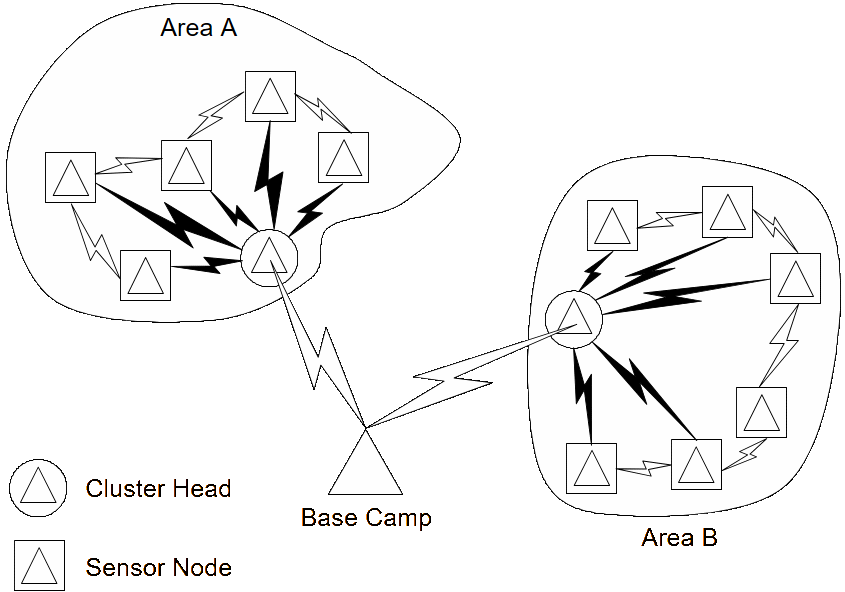
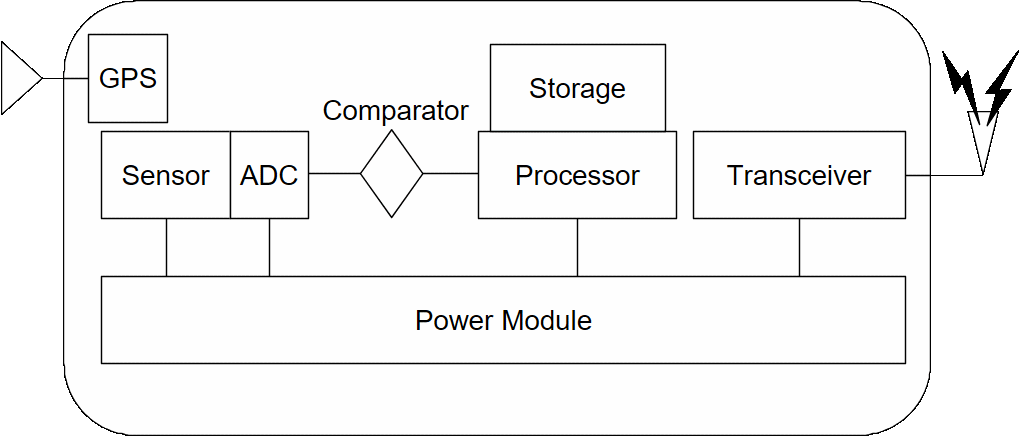
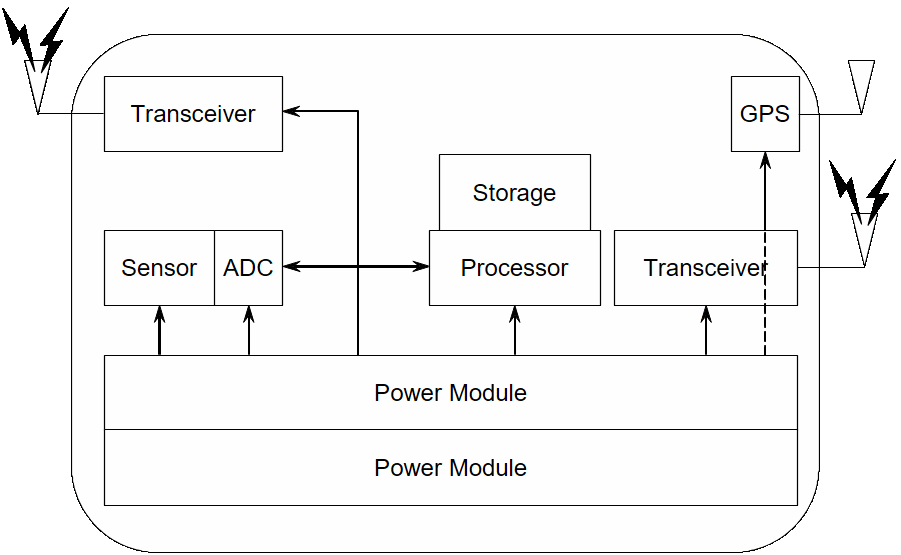
Figure 1 shows a possible deployment of an unattended ground sensor network. We assume a surveillance network with two areas of interest. A number of sensors is deployed in each area as well as a “hyper” node which serves as an area or cluster head. This node is responsible for the fusion of the selected data from its area and for the communication tasks between the area and the base camp. We also assume that each node can communicate with any other neighbour node, but in this type of application we believe that any node would be only one hop distance from the area’s head node. The architecture of each sensor node is shown in Figure 2. Every node is equipped with a sensor board with two different types of sensors on it; an acoustic and a seismic sensor. We have chosen to use acoustic and seismic sensors because of their specific characteristics which make them suitable for human and vehicle detection and because the two sensing abilities complement each other.
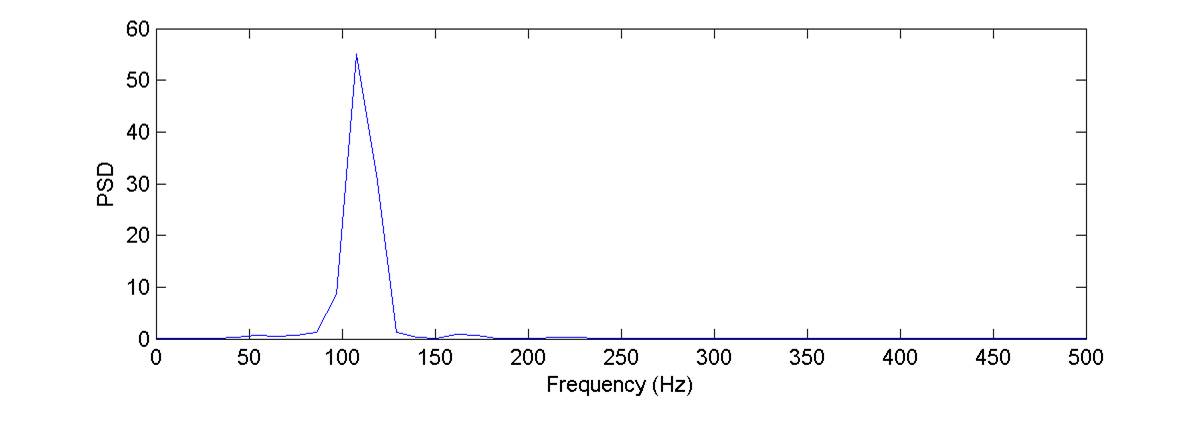
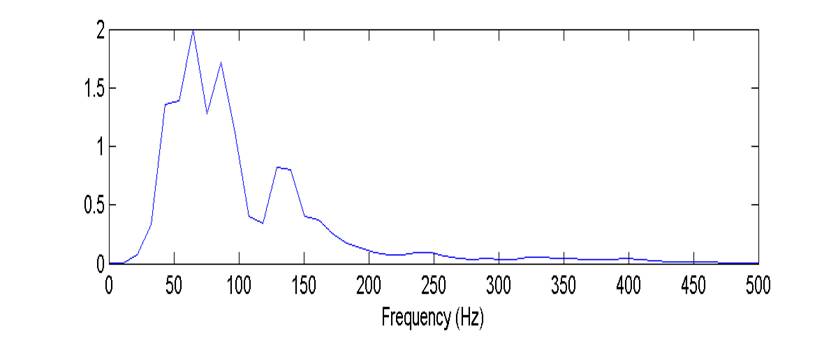
- Acoustic sensors. This type of sensor has a long history of usage in a variety of military applications [20]. They can be used to detect, locate and classify targets on the battlefield by taking advantage of their acoustic signature. Their usage offers many potential benefits such us: low cost, passive operation, detection capability in non-line-of-sight situations and spoofing immunity (because acoustic signatures are very difficult to imitate). One major problem of acoustic sensors is that their detection capability is heavily dependent on atmospheric conditions, on the terrain of the deployment area [21], on the hour of the day (during the night, an acoustic sensor’s sensing ability is better because of the absence of the phenomenon of refraction due to atmospheric thermal gradients [22]), on human-made noisy activities, and on the energy emitted by the source. The effective target-detection range varies from tens of kilometres (around 15–25 km for an artillery round) to 1 km for a large moving vehicle when operating in ideal weather and perfect ground conditions; when the target is a moving human the effective range is limited to 30–50m. Figures 3 and 4 present the power spectral density of signals emitted by a main battle tank (MBT) and a truck [23].
| MCU | GPS* | Sensor | A/D | Radio | Memory |
|---|---|---|---|---|---|
| Active | Active ( full tracking and acquisition) | On | On | Tx/Rx | Active |
| Idle | Sleep | On | On | On | sleep |
| Sleep | Sleep | On | On | On | sleep |
| Sleep | Sleep | On | On | Off | sleep |
| Sleep | Sleep | Off | Off | Off | sleep |
*GPS module is used only during the initialization of the network in order to extract geolocation information.
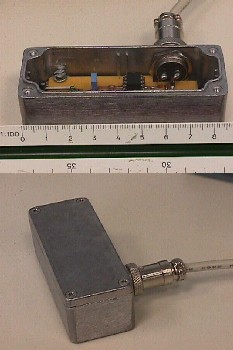
- Seismic sensors. In order to detect human or vehicle seismic activity our node is equipped with a novel, piezoelectric accelerometer optimized for human detection [24]. Seismic sensors based on piezoelectric accelerometers are characterized by high signal-to-noise ratio (SNR) which means high sensitivity and low noise (very small accelerations can be detected). Figure 5 presents a photo of the prototype seismic sensor [25], which is power aware and has compact design. Seismic sensors generally have less effective range than acoustic sensors. Their effective range is heavily dependent on the ground topology but their operation is less affected by changes on the weather conditions. Our node’s effective range for human activity varies from 15–40m.
Our node is also equipped with a low power GPS module, which is used at the early stages of deployment for the exact geolocation discovery of the node; when this task is accomplished the GPS module goes to sleep mode in order not to consume energy. Furthermore the node has an A/D converter attached to the microcontroller unit, in order to convert analogue sensed signals to digital, for further processing.
It has already been pointed out that energy consumption is a major concern when designing such a network and the transceiver is the major energy consuming part of the node [26]. In order to optimize node’s energy usage we have designed a comparator that compares the sensed data with a threshold value stored at a system’s register. The benefits we gain from the utilization of a comparator (which has low power design) are multiple; we avoid unnecessary transmissions and unnecessary processing, which is also an energy-consuming operation, and finally we have a method for dynamically changing the behaviour of our node by altering the threshold value at the register the comparator utilizes. The above operation is performed by sending the new register’s value to a specific node or to a cluster of nodes through the RF component. Additionally in order to ensure system’s operation in noisy environments we have developed an algorithm that dynamically adjusts the sensing threshold to a value over the noise value created by the environment at the deployment area.
Furthermore, in order to minimize energy consumption, our node can operate in different levels of sleep-states. At each time the state in which our node will operate will depend on the operational needs defined prior to deployment, on the operational planning and security goals of the system, and on the activity on the area under surveillance. Table 1 presents the different levels of sleep states in which our node can be operated. In general, sleep states are differentiated by the power consumed, the overhead required in going to sleep and the wake up time. In most cases, the deeper the sleep state, the lower the power consumption and the longer the wake-up time; thus when planning the sleep-state policy one must have in mind how important for the mission is the sensing task and that gains at the energy consumption space, achieved from the transition to less energy consuming level, will turn into losses in detection space. That means that there will be a number of missed events but, because of the nature of the events (human or vehicle movements) that we want to detect that are spatially and temporal distributed, we believe that the number of missed events will be minimal.
For performing communication tasks our nodes are equipped with a RF radio. Finally our node has a microcontroller unit, a low-power storage unit and a power module (two rechargeable Lithium batteries).
Our cluster head high-level architecture is illustrated in Figure 6. The main differences between a normal node and a head node are the inclusion of one additional transceiver at the head node and that the head node is not limited by energy, size or computation capacity. We have decided to provide the head node with an additional transceiver, because the one that is similar to the node’s transceiver will be used for intra-cluster communications and the other will be used for communicating with other clusters or base station. Depending on the deployment scenario, this transceiver could utilize different types of radios (FM-VHF, satellite, and so on.) Apart from its communicative tasks, the cluster-head node’s major responsibility is fusion of sensed data from the nodes. While a number of definitions of data fusion have been proposed by several authors, one definition suitable for most disciplines, identifies it as the process of combining data and knowledge which originates from different sources with the aim of maximizing the useful information content, improving reliability, whilst minimizing the quantity of data ultimately retained [27]. Numerous operational advantages may be expected in using data fusion, the most prominent relate to issues highly relevant with the purposes of this contribution are [28]:
- Robustness, fault-tolerance, reliability. A system employing data fusion remains operational even if one or several sources of information cease their function (due to the individual sensor availability)
- Extended coverage in space and time. A solution based on data fusion may cope with the situation when an individual sensor is unable to yield a solution as the target moves from one sensor’s coverage area to another’s.
- Reduced ambiguity. More complete information provides better discrimination between available hypotheses (sensor fusion yields the capacity for combining data extracted as partial solutions from individual nodes).
- Statistical advantage. Advantage is gained by involving all available independent observations, from the complete set of different sensors in the final solution when data are combined in an optimal manner (compare with the selected use of only one technique or one data set; selection is also a type of fusion although sub-optimal).
We suggest that distributed decision-level fusion, as in Figure 7, is the best fusion strategy for the application that we examine.
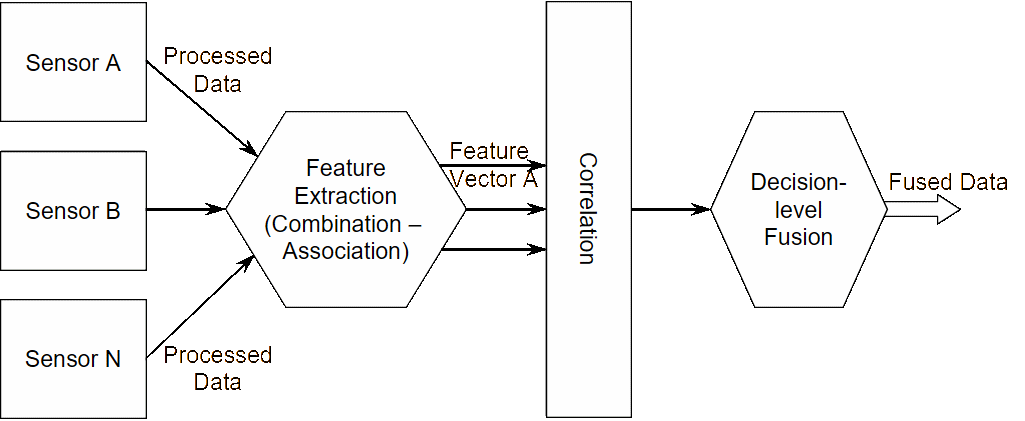
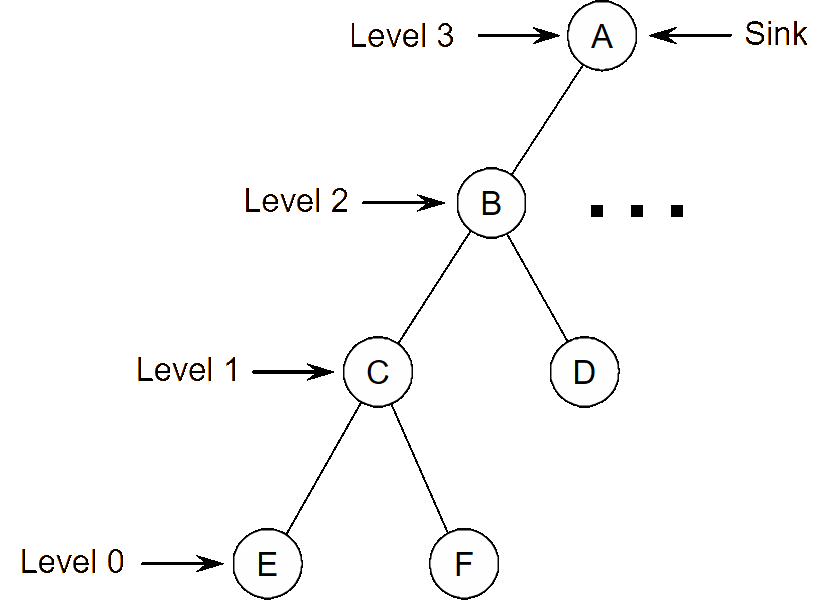
When an event occurred at the sensing horizon of a cluster first of all each sensor is making an initial estimation of the measured event’s state and then those estimations are evaluated [29] at the clusters head node. Then cluster’s fused data is transmitted to a higher fusion level, as shown on Figure 8 as adopted from [30]. The fused data from different levels is correlated and propagates inside the network until it gets to the base station. The main advantages of this architecture are [31]:
- lighter processing load at each fusion node due to the distribution over multiple nodes,
- lower communication load, thus less energy consumption, since data does not have to be sent to/from a central processing site;
- faster user access to results since there is less communications delay;
- higher survivability since there is no single point of failure; and finally
- higher decision accuracy since the final decision is a result of the combination of a number of independent observations associated in an optimal manner.
Main distributed decision-level fusion methodologies are the weighted decision methods, the classical inference, the Bayesian inference the Dempster-Shafer’s method, statistical techniques, belief functions and voting rules such us majority voting (MVF) and best majority voting (BMVF).
Conclusions and future work
The major considerations have been presented and an unattended ground sensor network for force protection has been described. We believe that the combination of acoustic and seismic sensors is a perfect choice for this type of operations, because of their complementary sensing characteristics. Our future work will be focused on:
- further optimization of our nodes, especially in enhancing their sensitivity and range;
- development of more-efficient power management techniques, processing and fusion algorithms; and finally
- development of a secure communication protocol.
References
[1] US Army Training and Doctrine Command, Peace Ops: Multi-Service Tactics, Techniques, and Procedures for Conducting Peace Operations, FM 3-07.3, October 2003.
[2] S. Hynes and N. Rowe, “Multi-Agent Simulation for Assessing Massive Sensor Deployment”, Journal of Battlefield Technology, Vol. 7, No. 2, July 2004.
[3] R. Rinaldo, “Warfighting and Peace Ops: Do Real Soldiers Do MOOTW?”, Joint Force Quarterly, Winter 1996-97, available at: http://www.dtic.mil/doctrine/jel/jfq_pubs/peaceop.pdf
[4] I. Akyildiz, W. Su, Y. Sankarasubramaniam, and E. Cayirci, “Wireless Sensor Networks: A Survey”, Computer Networks, Vol. 3, pp. 393–422, 2002.
[5] N. Srour, Unattended Ground Sensors: A Prospective for Operational Needs and Requirements, Report for NATO LG-6 (STANOC-EW).
[6] T. Bruns, R. O’Connel, J. Wells and M. Dapper “Unattended Ground Sensor (UGS) Systems for Homeland Defence”, Proceedings of SPIE, Vol. 5071, 2003.
[7] A. Goldsmith and S.B. Wicker “Design challenges for energy-constrained ad hoc wireless networks”, IEEE Communications Magazine, Vol. 9, pp. 8–27, August 2002.
[8] V. Raghunathan, C. Schurgers, S. Park, and M. Srivastava “ Energy-aware Wireless Microsensor Networks.”, IEEE Signal Processing Magazine, Vol. 19, pp. 40–50, March 2002.
[9] R. Min et al, “Energy-centric Enabling Technologies for Wireless Sensor Networks”, IEEE Communications Magazine, Vol. 9, pp. 28–39, August 2002.
[10] R. Min, M. Bhardwaj, S. Cho, N. Ickes, E. Shih, A. Sinha, A. Wang, and A. Chandrakasan, “Energy-centric Enabling Technologies For Wireless Sensor Networks”, IEEE Wireless Communications, August 2002.
[11] S. Avancha, J. Undercoffer, A. Joshi, and J. Pinkston, “Secure Sensor Networks for Perimeter Protection”, Computer Networks, Vol. 43, pp. 421–435, 2003.
[12] K. Jones and M. Eltoweissy, “Towards a New Paradigm for Securing Wireless Sensor Networks”, ACM New Security Paradigms Workshop, Ascona Switzerland, 2003.
[13] A. Perrig, R. Szewczyck, V. Wen, D. Culler and J. Tygar, “SPINS: Security Protocols for Sensor Networks”, Proceedings MOBICOM’2001, Rome, Italy, August 2001.
[14] S. Megerian, F. Koushanfar, G. Qu, G. Veltri, and M. Potkonjak, “Exposure in Wireless Sensor Networks: Theory and Practical Solutions”, Wireless Networks, Vol. 8, pp. 443–454, 2002.
[15] G. Veltri, G. Qu, Q. Huang, and M. Potkonjak, “Minimal and Maximal Exposure Path Algorithms for Wireless Embedded Sensor Networks“, SenSys ’03, Los Angeles California, USA, ACM 1-58113-707-9/03/0011, November 5–7, 2003.
[16] K. Chintalapudi and R. Govindan “Localized Edge Detection in Sensor Fields”, Ad Hoc Networks 1, pp. 273–291, 2003.
[17] C. Huang and Y. Tseng, “The Coverage Problem in a Wireless Sensor Network”, WSNA’03, San Diego California, USA, ACM 1-58113-764-8/03/0009, September 19, 2003.
[18] S. Dhillon, and K. Chakrabarty, “Sensor Placement for Effective Coverage and Surveillance in Distributed Sensor Networks” Wireless Communication and Networking Conference ’03, 0-7803-7700-1/03, IEEE, 2003.
[19] T. Clouqeur, V. Phipatanasuphorn and P. Ramanathan, “Sensor Deployment for Target Detection”, WSNA’02, Atlanta, GA, USA, 2002.
[20] M. Metcalf, “Acoustics on the 21st Century Battlefield”, Joint Force Quarterly, Winter 1995–96, available at :http://www.dtic.mil/doctrine/jel/jfq_pubs/.
[21] G. Becker and A. Gudesen, “Passive Sensing with Acoustics on the Battlefield”, Applied Acoustics, Vol. 59, pp. 149–178, 2000.
[22] D. Heimann and G. Gross, “Coupled Simulation of Meteorological Parameters and Sound Level in a Narrow Valley”, Applied Acoustics, Vol. 56, pp. 73–100, 1999.
[23] D. Fragoulis, Methods for Designing Audio Recognition Systems, PhD Thesis, National Technical University of Athens, January 2004.
[24] A. Kollias, Application of Piezoelectric Films for the Design of Sensors and Microsystems, PhD Thesis, National Technical University of Athens, July 2004.
[25] A. Kollias and J. Avaritsiotis, “A Study on the Performance of a Bending Mode Piezoelectric Accelerometer”.
[26] G. Pottie and W. Kaiser, “Wireless Integrated Network Sensors”, Communications of the ACM, Vol. 43, No. 5, May 2000.
[27] A. Starr, P. Hannah, J. Esteban and R. Willetts, “Adapting Data Fusion Frameworks for Condition Based Maintenance”, Proceedings 14th International Congress on Condition Monitoring and Diagnostic Engineering Management (Comadem 2001), Manchester UK, pp. 209–216, 2001.
[28] P. Kikiras and D. Drakoulis, “An Integrated Approach for the Estimation of Mobile Subscriber Geolocation”, accepted for publication by Wireless Personal Communications Journal—Special Issue on Location-based Technologies and Services.
[29] J. Llinas and D. Hall, Multisensor Data Fusion, CRC Press, 2001.
[30] W. Yuan, Srikanth, V. Krishnamurthy, and Satish K. Tripathi, “Synchronization of Multiple Levels of Data Fusion in Wireless Sensor Networks”, Globecom, 2003.
[31] S. Thomopoulos et al, “Distributed Fusion Architectures and Algorithms for Target Tracking”, Proceedings of the IEEE, Vol. 85, No. 1, January 1997.