
Volume 6, Number 1, March 2003
Training to Improve Decision Making—System Dynamics Applied to Higher-Level Military Operations
- 1 Operations Division, Norwegian Defence Leadership Institute (NODLI), Norwegian Defence Education Centre (NODEC), Oslo mil /Akerhus, NO-0015, Oslo, Norway.
Abstract
This paper is concerned with how to improve the training of higher-level military officers, given that the conditions for learning in “conventional” exercises (with a high degree of realism and complexity) are sub-optimal. From other applications (e.g., business and public management) we know that a key feature of effective decision training is high exercise frequency. Another requirement is for the decision-maker to see the full range of consequences resulting from his/her decisions. Both aspects require time compression in the training environment. We suggest applying the same principles when training military commanders, in a newly created concept termed Minimalist Decision Training (MDT). MDT is characterized by simplifying the commander’s operating environment, radically compressing time and space. In MDT, a typical two-day exercise can cover several repetitions of a thirty-day conflict and at the same time provide continuous feedback about the unfolding of the conflict, consequential to decisions made. To this date, we have tested prototypes of system dynamic models (“microworlds”) to be used as MDT environment at the Norwegian Defence Staff College as well as operational headquarters. The pilot users (instructors as well as student officers) have reported a high degree of satisfaction with the models as exercise environments. In particular, the operational relevance of a “high-intensity” model has been assessed. In a post-exercise survey participants indicated that eight out of ten suggested manoeuvre principles were believed to have substantial impact on operational outcome. We take these findings as evidence to support the view that the MDT concept is viable, and deserving further attention within research and development.
Introduction
It has long been recognized that decision making in organizational and managerial contexts is a highly complex task (Simon, 1956; 1978). Most real-life situations require that the decision maker has acquired the skills of his profession through real-life experience. This is a far-from-trivial demand, when decisions and their consequences are (widely) separated in time and space. Repeated instances of what might appear to be the same problem, in reality differ on important characteristics, which only contributes to the difficulties people have when it comes to make valid and robust inferences.
These difficulties are also present in the typical military staff exercise, where a higher-level combat/conflict situation is simulated. This kind of exercise requires considerable resources and takes days or weeks to conduct. Replays to investigate alternative outcomes are just too costly. Unfortunately (?), the only “real-life” operational experience most military officers will get during their career is what they get through more-or-less realistic exercises.
The main obstacle in contemporary development for higher-level military training seems to be the desire to achieve the greatest possible technical detail and accuracy in the simulations that are to support such training. In practice, the creation of higher-level simulations has been regarded as a problem of integrating/aggregating as many lower-level (tactical) simulations as possible, and in real time. As a consequence, development budgets “explode”, and the real learning remains with the development team and the application testers.
Minimalist Decision Training (MDT), which will be introduced in this paper, takes the opposite “angle of attack”. With this approach, the simulation model focuses narrowly on the problem at hand, which (for an operational or strategic commander) is usually related to the perception and handling of dynamic dilemmas, featuring aspects such as time lags, feedback and non-linearities. Most, if not all, of the technical detail concerning weapon platforms such as information systems is just left out of the simulation model.
Outline
This paper presents a system dynamic model (“microworld”) to be used for training higher-level military decision making. We start with the background: by pointing out the challenges facing the operational commander of today. Then we discuss the benefits (and possible pitfalls) of reducing training complexity, before introducing the concept of Minimalist Decision Training (MDT) and our suggestions for “translating” concepts from military operations into system dynamic terms. The major portion of the paper is devoted to the model description and a review of feedback from pilot users. The paper concludes with recommendations for further work.
Demands on the operational decision maker
It used to be that an operational level commander would command single service units of national capabilities. Current operations, however, are joint and combined at increasingly lower levels of command. They are also multinational at ever-lower levels of command. This has implications for training in that the typical single service training previously so critical for the operational commander no longer is sufficient. Not that the single service training is less important—on the contrary, increased op-tempo and technical sophistication combined with delegation makes it ever more important to understand the operational dynamic implications on single service combat or crisis decisions. But in addition, more understanding is needed about similar implications of decision making on complementary service operations.
Furthermore, the commander must not only understand the dynamics of combat, but also the dynamic implications on other operations. On top of that, the decision maker needs to be able to integrate more factors in a shorter time than before —at least if he wants to out-cycle the enemy by eliminating a bottle-neck in today’s operations—time required for decision-making. This again fuels a need for a decision-maker that is able to quickly think through—or even better, intuit—the effects of actions taken. The proliferation of decision supports tools makes the demand for intuitive decision making only stronger, as such intuition also must guide in the selection amongst a plethora of information sources.
Learning in complex environments
Sterman (2000) expresses the problems with learning from real-life experience in the following way (p. 26): “Faced with the overwhelming complexity of the real world, time pressure, and limited cognitive capabilities, we are forced to fall back on rote procedures, habits, rules of thumb, and simple mental models to make decisions. Though we sometimes strive to make the best decisions we can, bounded rationality means we often systematically fall short, limiting our ability to learn from experience”. Observing that people perform quite poorly in systems with even modest levels of complexity, Sterman (1989) labels this kind of cognitive dysfunction “misperceptions of feedback”. The solution would be to develop “systems thinking” abilities in the mind of the decision maker.
That people have problems when applying common sense (or intuition) to static situations involving simple probability judgment is well known (see Kagel and Roth, 1995, for a comprehensive review). Several authors now point to decision makers’ failure to consider feedback in complex, dynamic systems. Let two recent studies illustrate the magnitude of this problem: In his studies of management of renewable resources, Moxnes (1998) observes that experienced decision makers over-invest and over-utilize their resources. He attributes this behaviour to systematic misperceptions of stocks and flows, and of non-linearities. Sweeny and Sterman (2000) took a different approach when they gave system dynamics case problems to students at an elite business school. The students, who were highly educated in mathematics and science (but had received no prior schooling in system dynamics concepts), were found to have a poor level of understanding of the basic system dynamics concepts: stock and flow relationships, and time delays.
Tversky & Kahneman (1987) recognized early the shortcomings of a static, one-shot approach to learning. They describe the prospects for learning in dynamic environments like this: “Effective learning takes place only under certain conditions: it requires accurate and immediate feedback about the relation between the situational conditions and the appropriate response. The necessary feedback is often lacking for the decisions faced by managers, entrepreneurs, and politicians because:
- (i) outcomes are commonly delayed and not attributable to a particular action;
- (ii) variability in the environment degrades the reliability of the feedback, especially where outcomes of low probability are involved;
- (iii) there is often no information about what the outcome would have been if another decision had been taken; and
- (iv) most important decisions are unique and therefore provide little opportunity for learning (see Einhorn & Hogarth, 1978).”
Brehmer (2002) finds empirical support for a negative relation between complexity of the training environment, and learning. When the task is very complex, training/practice has little effect by itself. When tasks are simpler and more transparent (that is, more information on the dynamics of the task is given) training may have a positive effect. Brehmer (2002) gives the following advice to make training and practice more effective (see also Bakken and Gilljam, 2001):
- make the dynamics of the task transparent;
- decompose the task into smaller, manageable parts (part-task training); and
- teach decision makers general strategies for coping with complexity, for example:
- collect information and test hypotheses systematically; and
- focus on long-term goals and identify trends.
It is reasonable to assume that mental strategies of this kind contribute to better performance in experienced managers, as opposed to inexperienced. From this assumption it follows that such strategies may be learned from experience.
Sterman (2000) makes the following recommendations for instructors who want to enhance participant learning in microworld-based training:
- take time to reflect on outcomes;
- supply preparatory training in scientific method (hypothesis testing, and so on);
- apply a structured procedure—for example, keep laboratory notebooks, and formulate hypotheses;
- spend time to address participants’ defensive behaviour;
- ensure participants are confident that the model is an appropriate representation of the problem under study;
- allow for inspection, critique and change of assumptions underlying a model; and
- allow for active participation in model development.
The various tools and techniques that have been developed for group model building should be given special consideration. These include causal loop diagrams, policy structure diagrams, interactive computer mapping, and various problem structuring and “soft systems” methods (p. 36).
Reducing complexity, gaining focus
It appears clear that decision training should focus on the relevant factors for training a successful decision maker. A key to achieving effective learning is a two-step feedback. The first step is to see the consequences of one’s own actions in a meaningful way. The second is an evaluation of those results.
There are two types of feedback consequences for a commander. Those relating to how he is perceived by his supporting staff (including his subordinate, tactical commanders) and those relating to how the adversaries respond (feedback “from the field”).
For feedback from the field to be meaningful, the time span of the exercise must be appropriate. Typically the relevant time horizon increases with the command level. For a tank commander the focus should be on the next minute, hour or day. For the Combined Joint Task Force (CJTF) commander, this should typically be the winning—or carrying out—of the current campaign. Typically, then, feedback can only make sense after a week, a month, or a quarter of a year. From the above it follows that training decision making in a “CJTF-context” requires substantial time compression. Typically, a thirty day campaign is played within a day or two, and so the clock in the “learning laboratory” must go ten to a hundred times faster than in the real world.
In training and exercise parlance, massive training implies that scenarios should be run through not once, but preferably dozens of times. As a consequence, training professionals in the United States Marine Corps (USMC) use the analogy from rifle training applied to the refinement of senior officer mental models and intuition, labelling their concept with the metaphor “a shooting range for the mind” (Schmitt, 1996). Similarly, training events should not take place only once every four or five years, but several times a year. Large staff exercises, especially if multinational, typically require years of pre-planning and total immersion for hundreds of people. There is no practical way for such exercises to be carried out with the required frequency.
Minimalist decision training (MDT)
A minimalist decision trainer (MDT) is a very simple and pedagogically designed simulation-supported system for use in the training of higher-level commanders (both existing and to-be). The training focus is to build and rehearse the commander’s ability to quickly form a mental image of a combat/conflict situation, and to intuitively comprehend what are the likely combined outcomes of the inherent dynamics governing the situation, and the decisions made to act upon the situation. This ability is required when it comes to making rapid decisions of high quality—essential for achieving success in (over-)complex and “dramatic” situations. A commander who has this ability can be said to possess combat dynamic intuition (CDI).
Bakken (1993) introduced the concept of Combat Dynamic Intuition (CDI), which was later used by Friman and Brehmer (1999) under the label “intuitive battle dynamics”. CDI encompasses the commander’s ability to “think strategically in dynamic situations based on non-linear knowledge”. The object of CDI research is to improve the development of such abilities in higher-level commanders and executives.
MDT is aimed at putting a commander or the command group in charge of own logistics and operations resources in a scenario. The scenario may contain any implied or explicit mission. The resources reflect a combined joint operation; typically the lower limit of resources will be less than a hundred units representing land, sea and air resources, with upper limit being less than a thousand. The representation need not be restricted to the military organization—political, psychological, economical, and legal (and so on) means of exerting influence may also be included.
MDT belongs to a class of training solutions referred to as “Management Flight Simulators” (MFS)—a term invented at MIT’s Sloan School of Management (Bakken et al, 1992). Instead of individuals flying a simulated aircraft, a management team “flies” the corporation, creating products that “fly in the marketplace” through making appropriate strategic, operational and tactical decisions. MDT represents the best of tabletop war games and MFS for its players: the operational level commander—or more typical—his associated command group.
Isaacs and Senge (1992) argue that microworlds used in a training context will alleviate many, if not most, of the so-called “barriers to learning” in dynamic environments. There is an apparent risk, however, that such tools—simplified as they are, and often to the extreme—could be misused. An example of such misuse could be to support short-sighted/narrow-minded views and policies, arising (more or less consciously) because of inaccurately formulated models or of misinterpreted feedback from the model.
Military operations in system dynamics terms
A military operation or campaign presents the commander with a dynamic decision problem. During the campaign, the commander continuously receives status information, and on the basis of this information he will manage his resources (by issuing directives to his staff and subordinate commanders). As the directives are acted upon, subordinates will report back on outcome and new status (updated situation assessment). This cyclic procedure will repeat for the duration of the campaign.
As a practical example to illustrate, consider this general description of crisis management, taken from the NATO/PfP “Generic Crisis Management Handbook” (1997 interim version): “Procedures and activities in crisis management range across; information acquisition and assessment; the analysis of the situation; the establishment of goals to be achieved; the development of options for actions and their comparison; the implementation of chosen options, to (finally, as feedback to close the loop) the analysis of the reaction of the parties involved.”
According to Brehmer and Allard (1991), a dynamic decision problem has the following characteristics:
- It requires a series of decisions.
- The decisions are interdependent.
- The state of the problem changes, both autonomously, and as a consequence of the decision maker’s actions.
- Decisions must be made in real time.
We propose that a MDT suitable for improving CDI should have a simulation model built around basic system dynamics concepts. These are (see for example, Senge, 1990; Sterman, 2000):
- Flow and accumulation of resources—contributing to time lags.
- Feedback loops—self-reinforcing and self-correcting.
- Non-linear cause-effect relationships.
To illustrate how an operational setting may be represented in system dynamic terms, consider this example of forces deploying to an area of operations—where the lines of communication constitute a limited capacity. In this very general setting, there is an imminent danger that forces under transportation may start to “pile up” if (or when) capacity utilization approaches its maximum (just consider the always present “fog of war”). This might happen when the commander in chief is eager to deploy, and orders his troops to force their way toward the area of operations. The misperception is here the belief that the more troops who start advancing at an early stage, the greater the possibility of arriving early at the “scene”.
The consequences of this flawed strategy might be quite the opposite—the more troops on the move at the same time, the greater the possibility of congestion along the way. The outcome of this unsuccessful strategy may even be reinforced. When the commander receives reports from rangers at the area of operations, telling that his forces are delayed (and not understanding that this is caused by his “foolish” desire to pre-empt the enemy), he might order that even more troops be transferred—thus only making things worse.
The lessons to be learned from the above is that one should consider more than the anticipated “up-front” effects of any strategy, and that any unanticipated effects are (usually) due to a poor understanding of resource accumulation, time lags and self-reinforcing feedback. The goal of any MDT is therefore to enhance the learning of the above and similar “lessons”, thus creating and improving CDI in the minds of military commanders.
The design philosophy underlying an MDT model based on system dynamics principles is that as much as possible of the technical detail describing force structure should be omitted. Instead, the focus will be on representing the assets (“units” of military/political force), the actions (military/political “operations” involving the assets) and the effects (results of applying force in various operations) in a very general manner. With this approach, the continuous representation that is associated with system dynamics models becomes highly appropriate. When technical detail is kept to a bare minimum, this leaves more room to focus on the higher-level problems that are typically facing the operational commander. In particular, this applies to the side effects that are felt most severely at this level.
Prototype models for mdt—an introduction
The main effort when it comes to designing a simulation-supported training program is of course devoted to the actual design of simulation model(s). Since Summer 2001, we have built and tested two simple prototype models for military operations.
Model 1 is designed for individual players, and no external operator is needed. The model simulates a deployment task, and the decision-level is strategic to operational. The whole game can be played in less than one minute, but the average time would be about two or three minutes. The player’s mission is to deploy combat units and supplies, and the two deployment lines have different dynamic behaviours.
One principle the player will learn from this game is to concentrate forces to pre-empt the enemy, who then will be deterred from deploying more units. The player will also learn the importance of allocating and balancing his resources in an appropriate manner (strategic logistics focus).
Model 2 is played by two command groups—or two single commanders—who act as opposing forces. The operation is high-intensity and is simulated at an operational to tactical level. The scenario depicts one nation’s territorial attack on the other. As such, it conveys the view of a “classical” warfare situation. While having the advantage of being well known (at least in theory) to most players, this kind of situation appears less relevant today than it did 10-20 years ago. However, the main emphasis is of course on learning certain basic concepts (see below), which to a great extent are context-free.
Each player, or group of players, will make three types of decisions every simulated day: How many Ground Force units to employ at each combat area, and how many Cruise Missiles and Special Force units to support ongoing combat or to disturb transportation routes between combat areas. One game will take in the region of 1-2 hours and requires interaction with a graphical user interface in addition to the model itself.
In the following, this model, named “Commander’s Quest” is presented in more detail.
Commander’s quest
Framework and purpose
Commander’s Quest is a gaming model for running high-intensity military operations (“current ops”) at the CJTF (Combined Joint Task Force) level. The challenge facing the player (in the role of commander-in-chief, CINC) is to employ military resources (information, materiel, and personnel) to counter a similarly equipped opposing force. When used properly and in the context of a training program, the model will illustrate the benefits of applying principles from the manoeuvre doctrine in order to achieve operational success.
Implementation and usage
The model is implemented in the ithink system dynamics software (from High Performance Software, Inc). The player(s) interact with the model through a graphical user interface programmed in Java. Although the model may be regarded as extremely simplified when it comes to representing military operations, it comprises in the range of 2000 variables and constants when implemented in ithink. In ithink, array-functionality is used to separate different classes of resources and to avoid redundancy of graphical structures and computational expressions.
The model can be played as single or multi user. There are two sides in the conflict, and a user can play either side. In case of only one player, the computer will “play” the opposing force. Although the commander role has been given focus, the graphical user interface allows information to be masked so that different users may observe only information of relevance to their function in the team.
The actual users can be individual persons or small groups. A single run of the model (day 0 to 30) may be accomplished in as little as two hours (sometimes even less than one hour if the situation should become “static” before regular termination at day 30). When used as part of a training program, briefs and de-briefs with guided discussions are compulsory elements.
Scenario in brief
The nations
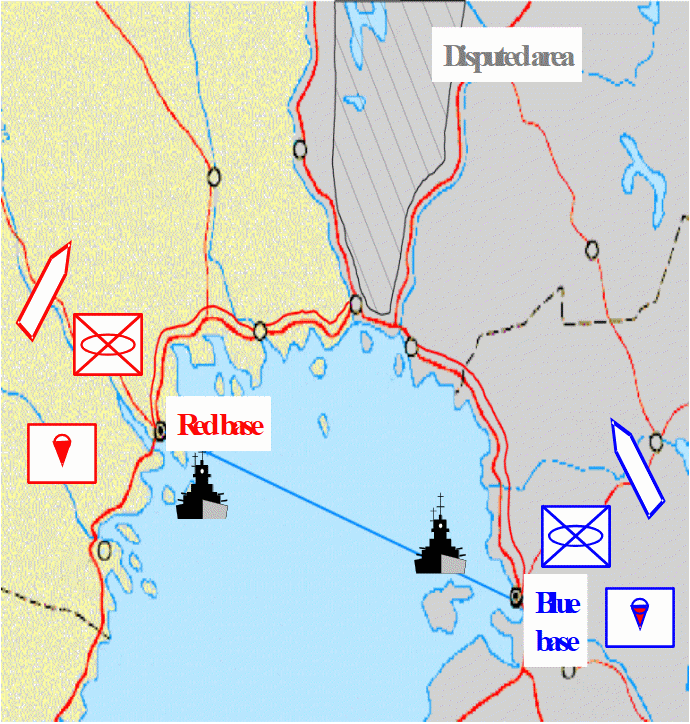
Two neighbouring nations, “Blueland” and “Redland”, are in conflict. The nations share no common border (on ground), and are separated by the “Purple Bay” in the south. To the north of the Bay the nations are separated by a “disputed area”, to which territorial rights have never been settled. The nations have located their military bases (ground, naval and air forces) on either side of the Bay, respectively.
In times of peace it is possible to travel between the nations either by a network of highways and local roads, or by sea across the Bay. It is only possible to enter the other nation on ground by passing through the “disputed area”, along the top of the Bay. Scheduled ferries cross the Bay several times a day, providing transportation to passengers, cars and trucks.
The full version of the scenario description (not given here—may be found in Bakken, 2002) covers the events leading up to the culmination of a severe political-military crisis. As the game starts, the nations are on the verge of a full-scale conventional war. To simplify, there are only three territorial areas identified to be of strategic interest to the nations: the area covering and surrounding the military bases within the borders of each nation, as well as the “disputed area” in the north. These are also the only areas where regular ground battles are permitted to occur (hereafter termed “combat areas”).
The missions
The operational commander (Commander In Chief, CINC) on both sides have been authorized to take the necessary and appropriate actions for maintaining the integrity of national borders, as well as denying enemy use of the “disputed area”. The authorization is not restricted to defensive actions, i.e., it does not exclude the possibility of attacking and taking control of either enemy base or the “disputed area”. The mission will have to be completed within 30 days. At that time a new allied command will take over—and player performance will be evaluated.
Each combat area has its own strategic “value”. The player’s performance is quoted as the sum of values of combat areas under own control. If an area is only partially controlled, its value is distributed between the sides in proportion to degree of control (relative strength of ground forces present in the area).
Rules and assumptions
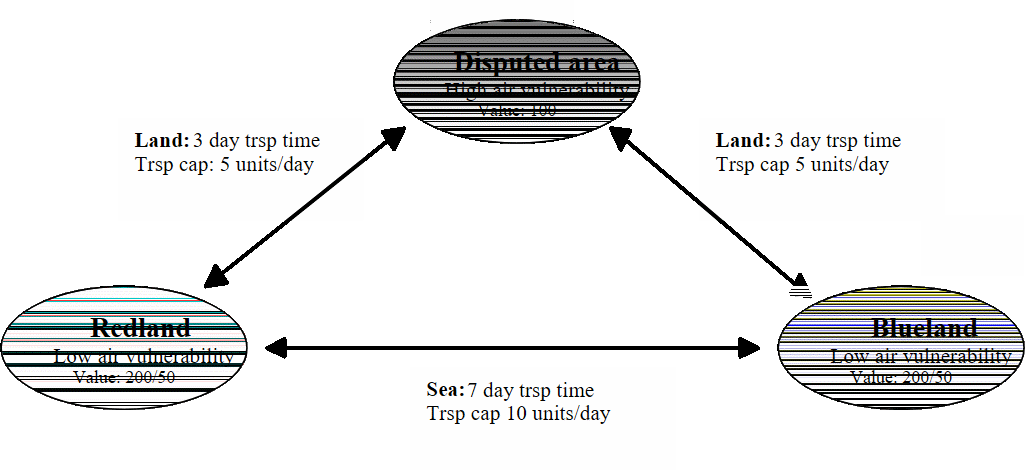
The diagram below shows approximate transportation times and capacities between areas under “normal” circumstances. An indication of vulnerability to air raids, and strategic value are also given.
The quoted transportation times are given as averages, and corresponds to loads (number of ground units on transfer per day) as indicated. If this load is exceeded, both transportation time and “friction loss” will increase. Air raids and other enemy action will contribute to increase delays and losses. Note that ground forces may only move along the indicated transportation routes (arrows in the diagram), both on ground and at sea. For land transportation, it is assumed that more than one single road exists between areas, that is, the arrows may be interpreted as a network of roads of varying quality and capacity.
All units are self-supplied (food/water, fuel, spare parts, ammunition) for the duration of the operation. Units that are lost will not be regenerated. No reinforcement units may be expected for the 30-day period.
The combat effectiveness of ground forces depends of course on their relative quantity versus the enemy (more own units gives greater combat strength—and at the same time less enemy units gives fewer own losses). Location of forces bears impact on effectiveness, as units are more effective when fighting on own territory than on enemy territory. On “disputed area” there is no advantage to either side. As mentioned, regular ground combat (battles) takes place only in one of the three designated areas.
Air raids are accomplished by way of missile assaults. Long-range (cruise) missiles can inflict losses on ground units in combat areas, as well as cause delay and losses to forces under transportation. Missiles may be launched from air, sea or ground platforms—in fact, to simplify, location and type of launcher is not specified. Consequently, launchers (along with unused missiles) cannot be lost in combat.
Special forces act to disturb transportation of enemy ground forces; perform reconnaissance for own ground forces in combat; and missile guidance. Special operations are always concealed, thus special forces cannot be lost in combat.
To summarize, we have the following military assets, and their possible actions and effects:
Ground Forces (typically: mechanized infantry with amphibious capacity):
- may transfer between combat areas, on ground and at sea;
- actual transfer time and friction loss depends on load and enemy activity on axis;
- automatically engage in battle when encountering enemy forces in combat areas; and
- combat effectiveness in an area depends on relative number of units in that area.
Long-range Missiles (typically: cruise missiles fired from ground, sea or air):
- attacks enemy forces in combat areas and in transit (ground and sea);
- effective immediately—marginal effectiveness decreases with quantity fired; and
- neither launchers nor missile stocks may be lost in combat.
Special Forces (typically: helicopter-lifted rangers or “marines”):
- supports ground and missile operations, disturbs transportation;
- deployment incurs a four-day preparation phase before forces are effective—possible re-deployment requires six days regeneration;
- marginal effectiveness varies with quantity employed (“S-curved” shape); and
- special forces may not be lost in combat.
Decision-making process
The standard set-up for a game is two-player—one plays the “Redland” commander, the other plays “Blueland”. Recall that a single player can be an individual, or a small group of persons (team). When playing as a group, each group member may take on the view of a commander, or the members may be assigned to individual roles (for example, planning, current ops, logistics, intelligence), depending on the purpose of the game. A training session is usually initiated with a brief of the game—and concluded with a de-brief and wrap-up. To stimulate reflection and thus support learning among players, a number of discussions may be conducted both during and after the game. We suggest that a game administrator, competent in pedagogic as well as military (operational) issues, mediates and “guides” those discussions. A complete training session may involve repeated plays of the model, and may last for 1-2 days.
Starting at day 0 (game time), each player gives his decisions concerning ground force movement, missile attacks and special operations for the following three-day period. After number of units (of each asset type) and corresponding target (area/axis) are entered into the model (through the user interface), the model is advanced three days, and its output is fed back to the user. After some time of evaluating the outcome for that period, the players once again set out to make decisions for the next three-day period. This cycle continues for the duration of the game—30 days. The time limits imposed on players for decision-making and evaluation may be more or less strict. If players are previously unfamiliar with computer-supported games, it may probably be wise to apply a rather “loose” time schedule.
It is possible—and usually also desirable—to gradually increase the level of difficulty during a training session with “Commander’s Quest”. The model may be played with only ground forces at the outset. As players gain experience, long-range missiles and subsequently special forces may be introduced.
The representation and learning of principles
The objective of engaging in a training session with a gaming model such as “Commander’s Quest” is of course for the player to gain insight into the dynamics of operational warfare, and in particular learn how to apply appropriate manoeuvre principles to reach a desired end state. The goal is to achieve an understanding of how a combat situation “unfolds” in the short and long term, not only by itself, but also as a consequence of own and enemy actions. The key to achieve such a competence is to develop an intuition for the causes-and-effects that reign in the operational theatre. Being sensitive to feedback “from the field”, taking into account the nature of time delays that govern the system, is probably the most important requirement in the decision-making process.
The model “Commander’s Quest” is still under development (as of Spring 2002), and has so far been tested only as a prototype. We have not yet put any effort into an investigation of possible learning effects from playing this model (that is scheduled for “further research”). However, as part of the prototype evaluation process, we have collected data on players’ beliefs on the model’s representation of prominent manoeuvre principles.
The next section is a brief listing of manoeuvre principles we believe to be present in the “Commander’s Quest” model, and how they are implemented. We do not intend to give full explanations of the principles and their properties, nor do we attempt to discuss limitations and shortfalls in the manoeuvre philosophy. Furthermore, we have deliberately tried to avoid using expressions and terms that would only be understood by experts on military operations. In-depth presentations and analyses can be found in, for example, FFOD (2000), USMC (1998) and Claesson et al (2001).
In essence, the manoeuvre philosophy constitutes a set of norms for thinking and acting when conducting military operations, and is concerned with how to “… generate the greatest decisive effect against the enemy at the least possible cost to ourselves” (USMC, 1998). The principles are general, in that they may be applied to operations of any kind (and at any level of command), although they may be more appropriate for “modern” high-intensity warfare involving a range of heterogeneous, highly mechanised and mobile weapon platforms, and when there is considerable uncertainty in beliefs about enemy situation; his capabilities, plans and actions. As such, the philosophy emphasizes rapid, flexible and opportunistic thinking and acting in the “theatre of war”.
A logical consequence of the manoeuvre philosophy (and assuming rational actors) is that opposing forces in a conflict may continuously make assumptions of each other’s capabilities, plans and actions. Based on those assumptions each side in the conflict may at any time (unilaterally) decide not to escalate the conflict, but rather retreat, since the conflict could not be “won” anyway (at least not without large own losses). In many ways, this kind of evasion behaviour could be regarded as a “win-win” outcome, which would not be attainable in historic “attrition” warfare.
The principles and their implementations
Uniform objectives
The operational commander should strive to make his intentions and goals known to, and understood by, all his staff and sub-commanders. Furthermore, a common “situational assessment” (beliefs about own and enemy “status” in the broadest sense) should be established and maintained/updated throughout the operation. An unambiguous command chain, and clarity in individual roles and functions are prerequisites to achieve this. This principle is not represented directly in the model—its impact is a direct consequence of how the teams of players have organised themselves, and of individual capabilities.
Rapid and focused planning process
Obviously, a rapid and well-organised process for making decisions should be a necessary condition for good performance in the game, especially if the game administrator imposes a strict time schedule. This principle is not represented directly in the model—its impact is a direct consequence of how the teams of players choose to organise themselves, and of individual capabilities.
Balancing of forces
A balanced force means that an appropriate “mix” of resources is employed in a combat situation. The model supports this by allowing elements of ground forces, missiles and special forces to be employed in synergy (as so-called “force multipliers”), rather than in isolation. A single asset would yield a higher effect when used in combination with other asset types, than it would by itself. Mathematically, this is achieved by using multiplicative, rather than additive, computation of combined effects. Flexibility in force composition is of course a prerequisite, which the model provides.
Target prioritisation
Since all possible targets cannot be struck at once (or even during the entire operation), it makes sense to make priorities among them. The general idea is to place “main effort” on striking the enemy at the point where he is most vulnerable (and where our calculated losses are minimal). This is directly represented in the model by the range of decisions players are allowed to make. For example, since a ground force unit cannot be used more than one place at a time, and there are usually significant time lags involved when moving the unit between combat areas, the player has to make his choice knowing that the consequences of that choice will last for some time. The most prominent dilemma is one of considering the various opportunity costs associated with making one or the other action.
Concentration of forces
This principle is related to the previous one, in that when a (major) target is to be struck, it is considered wise to direct as much firepower as possible to that target. This is to maximise the likelihood that the enemy will yield that target in a minimum of time, while minimizing own losses. This is consistent with computational rules in the model, where the marginal effect of ground forces increases with (relative) volume. Mathematically, this is achieved by applying modifications of “Lanchester’s Square Law” in the combat equations.
Unexpected manoeuvres
A central idea in manoeuvring is to conceal own actions, in order to be less predictable and thus less vulnerable to enemy actions. The model supports concealment in that the user interface presents only selected subsets of available information to the players. Basically, the player may only be allowed to assess the status of own units. This information base could then be expanded, depending on assumptions of an implicit command-and-control system.
Tempo of engagement
Tempo is of course related to the concentration principle, in that higher tempo makes it more likely for force concentration to be effective and on time (time is always short in military operations). The model supports tempo indirectly, in that transportation axes and asset types may be selected on basis of the engagement speed and mobility they convey. Generally, higher speed means that longer (“deeper” or just more cumbersome) axes can be used for transportation without loss of effect.
Depth of engagement
A capability to perform “deep” engagements is considered vital if the enemy is to be struck not only in the “front” (where he is most likely to have concentrated his firepower), but also on the “deep” where his vulnerability may be lower and at the same time there may be high-value targets located (for example, headquarters, communication centres). Achieving sufficient tempo, and being able to strike unexpectedly, is of course essential for a “deep” engagement to become successful (see above).
Dispersion of forces
Force dispersion is in many ways the opposite of force concentration. As such, it may be regarded more as a defensive measure, applied when the risk of having own forces in a concentrated posture is seen as too high. As with concentration, tempo/mobility is a key capability, especially if forces are to be shifted between being assembled and spread out in short periods of time.
Deception manoeuvres
Deceiving the enemy is not merely a matter of keeping him uninformed of your actions and plans (a more “passive” attitude to deception), but also involves performing “false” (or demonstration) manoeuvres in order to trick the enemy into believing that your operational focus is a different one from what it really is. A deception manoeuvre is usually limited in time and effort—since the forces eventually will have a greater value when used at a “real” target.
Data collection
During two days in January, 2002, a total of 61 students (officers) at the Norwegian Defence Staff College (FSTS) participated in a training program with the model “Commander’s Quest” as the primary “object of study”. A week prior to the playing of the model, a brief of the game scenario and rules were given to all officers in a plenary session (45 minutes). A week after, a de-brief was given (45 min). The de-brief included a mediated discussion of “lessons learned”, as well as an opportunity for the best performing team to present their plan and experiences.
As communicated to the students, the purpose of the game was to “… make participants aware of the special conditions that a two-sided game may induce, with focus on illustrating the differences between a static and a dynamic decision “world”. This includes among others: to experience the dynamics that arises between the actors; the importance of knowing the battlefield and understand the situation; and experience the kind of problems that an imperfect situational comprehension may lead to.”
The participating officers ranked (almost exclusively) from Major to LtCol, and had therefore considerable professional experience from the Norwegian Armed Forces. All three services—Army, Navy and Air Force were represented in almost equal proportions (with Army being slightly “heavy”). Being Norwegian officers (with a couple of exceptions) at this level, it is unlikely that any of them had experience from “sharp” operations, however.
Immediately following the de-brief, the officers were instructed to individually complete a questionnaire (which all 61 of them also did(!)). There were 34 questions, with answers to be marked on a six-point “Strongly disagree—strongly agree” scale. The survey was anonymous, even though team number, rank and service would have to be indicated. The questions encompassed all kinds of aspects somehow related to the “appropriateness” of using “Commander’s Quest” as an exercise and training instrument. The answers we consider here, are those related to how well the model represents the manoeuvre principles (1-10) listed above.
Playing process
The students were distributed to eight teams, thus there were 7-8 officers per team. No instructions or restrictions were given on to how to organize teams. Observations of teams under play indicate however that few teams sought to divide tasks between them—usually, all members on a team would take the perspective of operational commander. School instructors and managers also sporadically observed the teams while playing—which is common in any exercise at this level.
A team would play the model for a whole day. First one game before lunch, then a second (optionally more) after lunch. The first game was played with only ground forces and missiles available—consecutive games were played with all three asset types. The model was re-initialised between games, so that results on one game would not have impact on following games. There was no strict time limit on playing. However, the teams eventually managed to make decisions in very short time, using less than five minutes to plan and decide for the three-day decision period.
Analysis and results
The data collected cover, among others, officers’ individual ratings (N=61) of how well they believed the model “Commander’s Quest” represented certain principles from the manoeuvre philosophy. The actual question was worded as an assertion:
“The following factors had a strong impact on the outcome (of the operation):” [followed by list of factors, corresponding to principles 1-10 above, but unexplained]
| P# | Principle | Scale |
|---|---|---|
| 1 | Uniform objectives | 1=Strongly disagree 2 3 4 5 6=Strongly agree |
| 2 | Rapid and focused planning process | |
| 3 | Balancing of forces | |
| 4 | Target prioritisation | |
| 5 | Concentration of forces | |
| 6 | Unexpected manoeuvres | |
| 7 | Tempo of engagement | |
| 8 | Depth of engagement | |
| 9 | Dispersion of forces | |
| 10 | Deception manoeuvres |
Answers were marked on the provided 6-point “Strongly disagree—strongly agree” scale, one scale for each principle. For each principle, we take a rating of more than 3.5 (the “critical point”) to indicate that the principle in question is believed by the player to have a strong impact on outcome of operations.
It should be emphasized that no direct mention of “manoeuvre principles” was made in the questionnaire. In general, one should expect officers at this level to have at least a basic understanding of manoeuvre warfare in theory, and therefore such mention would probably be superfluous.
The analysis shows (see Table 2) that principles 1-8 on average rated in the range 3.9-5.1, with standard deviations ranging from 0.9 to 1.2. The principles 9 and 10 rated only 3.0 and 2.9 respectively (standard deviation 1.1). The relatively low standard deviations suggest that the officers are in strong agreement, and shows in essence that “Commander’s Quest” to a large degree fulfils the ambition of representing prominent manoeuvre principles.
| P# | Principle | Rating (std dev) |
|---|---|---|
| 1 | Uniform objectives | 5.1 (1.0) |
| 2 | Rapid and focused planning process | 4.9 (1.0) |
| 3 | Balancing of forces | 4.7 (1.0) |
| 4 | Target prioritisation | 5.1 (0.9) |
| 5 | Concentration of forces | 4.9 (1.0) |
| 6 | Unexpected manoeuvres | 3.9 (1.1) |
| 7 | Tempo of engagement | 4.5 (1.2) |
| 8 | Depth of engagement | 4.2 (1.0) |
| 9 | Dispersion of forces | 3.0 (1.1)* |
| 10 | Deception manoeuvres | 2.9 (1.1)* |
- *= below critical point
That principles 9 and 10 were rated below the critical point is also consistent with our a priori beliefs about the model. That the dispersion principle (#9) acts in adversary to the concentration principle (#5), and the latter being the more important one, may contribute to this. Considerable transportation time lags (relative to the total duration of the operation) may have rendered principle #10 (deception) to be regarded as unimportant (compare with principle #6).
Other results
The participants were also asked to rate their degree of satisfaction with the model. Table 3 below shows ratings for various assertions related to satisfaction (the same scale as above is used).
| A# | Assertion | Rating (std dev) |
|---|---|---|
| 1 | An officer playing this game may become a better military decision maker | 4.0 (1.2) |
| 2 | An officer playing this game may become better at planning military operations | 3.7 (1.1) |
| 3 | By playing several times one can learn more about the relationships in the game | 5.5 (0.7) |
| 4 | Experience gained from game#1 is crucial for outcome in game #2 | 4.8 (1.2) |
| 5 | The game was informative | 4.4 (1.0) |
| 6 | I would recommend this game to my colleagues | 4.8 (1.2) |
| 7 | The Staff College should use this kind of game for training | 4.9 (1.2) |
As shown in Table 3, participants were in general very happy with the model, and in particular they seemed to be convinced of the game’s usefulness as a pedagogic instrument. This result is even more interesting knowing that the ratings for realism were below the critical point (3.2, standard deviation 1.1).
Conclusions and further work
So far, prototypes of two simulation models for operational learning have been tested with great success at the Norwegian Defence Staff College, and are due for further testing at other military educational organisations as well as operational commands. The pilot users (staff, instructors and students) report a high degree of satisfaction with the models as exercise environments. In particular, the operational relevance of a “high-intensity” model (“Commander’s Quest”) has been assessed. In a post-exercise survey participants indicated that eight out of ten suggested manoeuvre principles were believed to have substantial impact on operational outcome.
What remains is to complete the design of a training program that integrates the models, in a fashion that provides a stepwise increase in complexity for the exercise participant (consistent with the part-task training principle). Furthermore, we need to make assessments of learning effectiveness (that is, to what degree does performance improve from trial to trial). We believe that by using a tool such as ithink for model implementation, it will be relatively straightforward to “tune” the models to an appropriate level of complexity (which is also a question of selecting participant background), so that learning can be assured.
In parallel to model testing, completion and integration, there are ongoing activities at the Norwegian Defence Leadership Institute (NODLI) with the purpose of (experimentally) evaluating learning strategies in dynamic environments. Both Brehmer (2002) and Sterman (2000) provide extensive lists of viable strategies—most of which have been previously experimentally confirmed as fruitful and efficient—but where further testing in various contexts could provide further insights.
Depending on the degree of success from further testing in academic environments, the MDT concept and simulation models may be adopted by operational NATO headquarters in Norway and abroad.
References
Bakken, B., et al, (1992), “Experimentation in Learning Organizations: A Management Flight Simulator Approach”, European Journal of Operational Research, Vol. 59, pp. 167-182.
Bakken, B., (1993), Learning and Transfer of Understanding in Dynamic Decision Environments (PhD thesis), Massachusetts Institute of Technology, Boston, MIT.
Bakken, B., et al, (2001), An Experiment on Minimalist Decision Training (Technical Report—Forthcoming), Norwegian Defence Research Establishment (FFI), Kjeller, Norway.
Bakken, B., (2002), “Commander’s Quest”, Specification of Requirements, FFI/NOTAT-2002/00886 (Forthcoming).
Bakken, B. and Gilljam, M., (2001), “Combat Dynamic Intuition (CDI): What Is It, and How Can It Be Improved?”, J. Cañas (ed) Proceedings of the International Workshop on Cognitive Research with Microworlds—Methodological and Theoretical Issues for Industrial and Military Applications, Granda, Spain, pp. 22-35.
Brehmer, B. and Allard, R., (1991), “Dynamic Decision Making: Effects of Complexity and Feedback Delays”, J. Rasmussen et al (eds): Distributed Decision Making: Cognitive Models of Cooperative Work., Chichester, Wiley.
Brehmer, B., (2002), “Learning to Control a Dynamic System”, Unpublished manuscript, Swedish National Defence College, Stockholm.
Claesson, M., et al, (eds) (2001), Manövertänkande. Essäer kring teori och praktisk tillämpning, Swedish National Defence College, Stockholm.
FFOD, (2000), Forsvarets fellesoperative doctrine, Forsvarets overkommando.
Friman, H. and Brehmer, B. (1999), “Using Microworlds to Study Intuitive Battle Dynamics: A Concept for the Future”, Command & Control Research Symposium, US Naval War College, Rhode Island.
HPS inc., (2000), An Introduction to Systems Thinking (ithink 6.0), www.hps-inc.com.
Isaacs, W. and Senge, P., (1992), “Overcoming limits to learning in computer-based learning environments”, European Journal of Operational Research, Vol. 59, pp. 183-196.
Kagel, J. and Roth, A., (1995), Handbook of Experimental Economics, New Jersey, Princeton University Press.
Moxnes, E., (1998), “Not Only the Tragedy of the Commons: Misperceptions of Bioeconomics”, Management Science, Vol. 44, pp. 1234-1248.
Schmitt, J., (1996), “How We Decide”, Designing TDGS—A Tactical Decision Games Workbook, US Marine Corps University.
Senge, P., (1990), The Fifth Discipline (Norwegian edition). Oslo: Hjemmets bokforlag as.
Simon, H., (1956), Administrative Behaviour, New York, Wiley.
Simon, H., (1978), “Rationality as Process and Product of Thought”, American Economic Review, Vol. 68, pp. 1-16.
Sterman, J., (1989), “Modelling Managerial Behaviour: Misperceptions of Feedback in a Dynamic Decision Making Experiment”, Management Science, Vol. 35, pp. 321-339.
Sterman, J., (2000), Business Dynamics: Systems Thinking and Modelling for a Complex World, Boston, McGraw-Hill.
Sweeny, L. and Sterman, J., (2000), “Bathtub Dynamics: Preliminary Results of a Systems Thinking Inventory”, 2000 International System Dynamics Conference, Bergen, Norway.
Tversky, D. and Kahneman, D. (1987), “Rational Choice and the Framing of Decisions”, Hogarth, R. and Reder, M. (eds), Rational Choice: The Contrast between Economics and Psychology, Chicago, University of Chicago Press.
USMC, (1998), Marine Corps Planning Process, U S Marine Corps.