
Volume 6, Number 1, March 2003
Transforming Data into Actionable Knowledge in Network Centric Warfare
- 1 Institute of Medical Cybernetics, Inc., 937A Russell Ave, Russell Office Park, Gaithersburg, MD 20879, USA.
Abstract
The concept of Network Centric Warfare (NCW) is premised on three hypotheses: information sharing promotes shared awareness across the networked force, shared awareness improves collaboration and synchronization, and improved synchronization yields greater mission effectiveness, due to a greater speed of command, resource sharing, and increased lethality, survivability and responsiveness. This paper continues discussion of these hypotheses, focusing on awareness sharing and its precursor information sharing. By bringing to the fore combinatorial complexity inherent in command decision-making, the paper suggests that: information sharing, as conceptualized in network centric warfare, might depend on radical advances in communication technology; and awareness sharing might require equally radical advances in decision modeling and decision aiding. This paper outlines a model of commander decision making focused on representing and improving battlefield comprehension. The outline is followed by suggestions of how the model can be used to drive content delivery and ease technological demands in realizing NCW.
Introduction
The concept of Network Centric Warfare (NCW) is premised on three hypotheses:
- information sharing promotes shared awareness across the networked force,
- shared awareness improves collaboration and synchronization, and
- improved synchronization yields greater mission effectiveness,
due to a greater speed of command, resource sharing, and increased lethality, survivability and responsiveness ([1], p. 59).
This paper continues discussion (see [2-4]) of these hypotheses, focusing on awareness sharing and its precursor, information sharing. By bringing to the fore combinatorial complexity inherent in command decision-making, the paper suggests that:
- Information sharing, as conceptualized in NCW, might depend on radical advances in communication technology; and
- Awareness sharing might require equally radical advances in decision modeling and decision aiding.
The main question is this: Assuming a fully interconnected, reliable and secure network, what content will it be delivering to the users that could cause a quantum leap in mission effectiveness? What is the added value of networking, over and above that of robust message passing? Improving robustness is not enough for upgrading the role of communications from supportive to the central one in war fighting. Apparently, changes in content are expected to boost effectiveness dramatically. What kind of changes?
The NCW framework identifies comprehension as both the key component and principal beneficiary of awareness (“battlespace awareness is—a rich, dynamic comprehension of the military situation and factors that drive it” ([1], p. 139). However, not enough has been done to substantiate what comprehension comprises and how it bridges the gap between information and performance. Models of Situational Awareness (SA) [5] and Recognition Primed Decision (RPD) making [6] adopted in NCW do not fill this gap and, possibly, underestimate its significance. This deficit, combined with reports that battlespace digitization can slow comprehension [7] blurs the reasons for positioning networking as the central technological determinant in future wars. This paper outlines a model of commander decision making focused on representing and improving battlefield comprehension. The outline is followed by suggestions of how the model can be used to drive content delivery and ease technological demands in realizing NCW.
Information sharing
What does networking buy, over and above message passing? The appeal of “information sharing” builds on the intuitive advantage of ubiquitous connectivity and “everybody getting the right information at the right time.” The disadvantages of irrelevant information and bad timing are not so intuitive, in addition to being obscured by the terminology. Technically, the term “information exchange” implies restricted communication between a source and recipient, with all the messages drawn from a finite vocabulary shared by both parties [8]. The restrictions are that a) the recipient is uncertain about the state of the source, and b) every message yields a measurable reduction of this uncertainty. Networking, as conceptualised in NCW, can violate these restrictions, in the following sense.
Nodes in the network are engaged in restricted message passing, but also, on the top of that, are capable of broadcasting across the network. Such broadcasting is a major contributor of value but also the cause of a problem. Value is produced by an unanticipated discovery of relevant data in the broadcast, while the downside lies in finding no relevant data whatsoever, in which case investment in processing the broadcast has failed to yield any reduction of uncertainty. Technically, signals yielding no uncertainty reduction cease to carry information, thus turning into noise. The difference is that broadcast can restore its information carrying status with any turn of events making some data in the earlier broadcast relevant to the recipient’s situation.
Figure 1 depicts source-recipient relationships in the network as partially overlapping vocabularies held by the nodes and adjusted each time the change of circumstances at the nodes causes shifts in their relevance criteria.
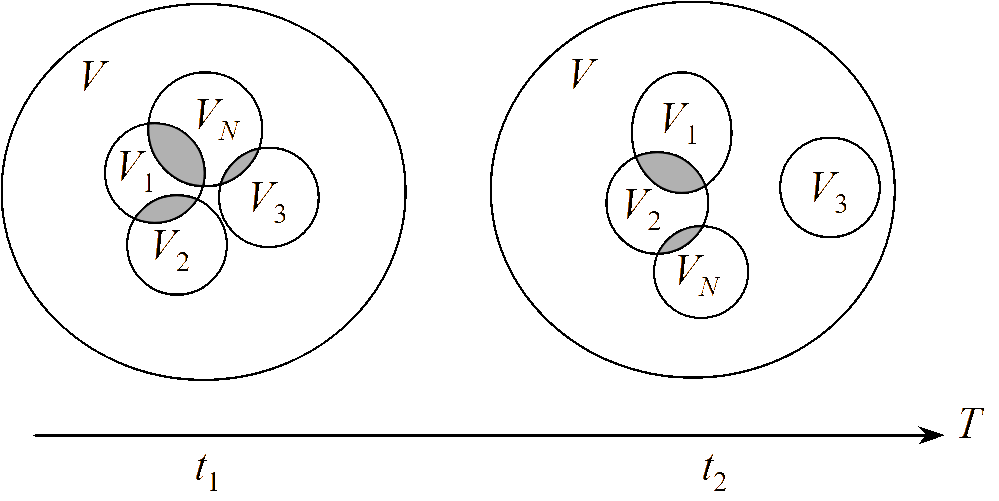
Forces in a N-node network all share the same vocabulary V. However, different nodes (force units) use different subsets of V, depending on their local conditions. As a result, communications from any node can be temporarily unprocessible by (irrelevant to) some of the other nodes, completely or in part. Changes in the situation can change both the temporary vocabularies and the degree of relevance of all the current and past messages. Even the presently irrelevant (currently unprocessible) messages must be stored, due to the possibility of becoming highly relevant at the next turn of events.
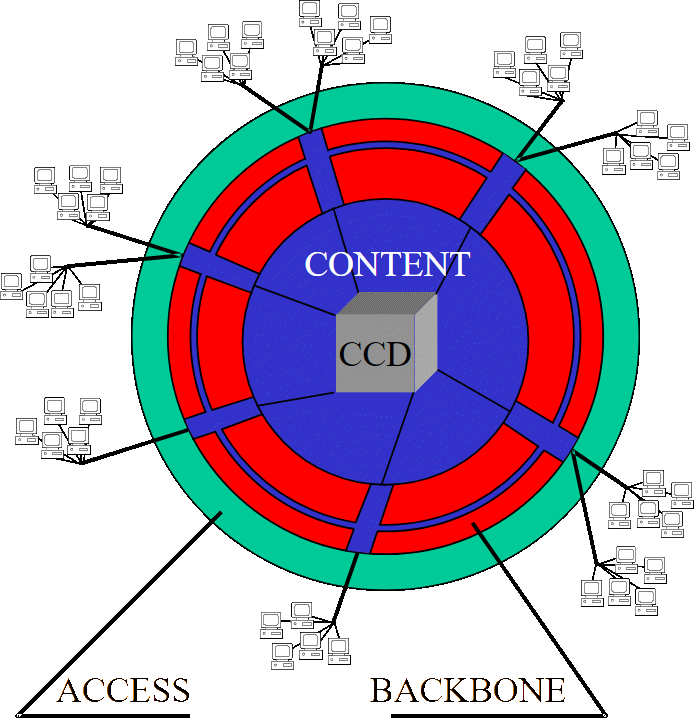
Conditions in Figure 1 are not consistent with the notion of information, so content is proposed as a convenient substitute. Figure 2 illustrates the process of content sharing. Clusters of users (nodes in the network) are contributing into a common content pool, simultaneously with drawing from it. The pool keeps growing by accepting inflows of streaming video, audio, sensor data, textual documents, and so on. Users are surrounded by the “fog of war” making their situation uncertain. As the content accumulates, the users are also facing increasing uncertainty as to what potentially relevant data is held in the pool.
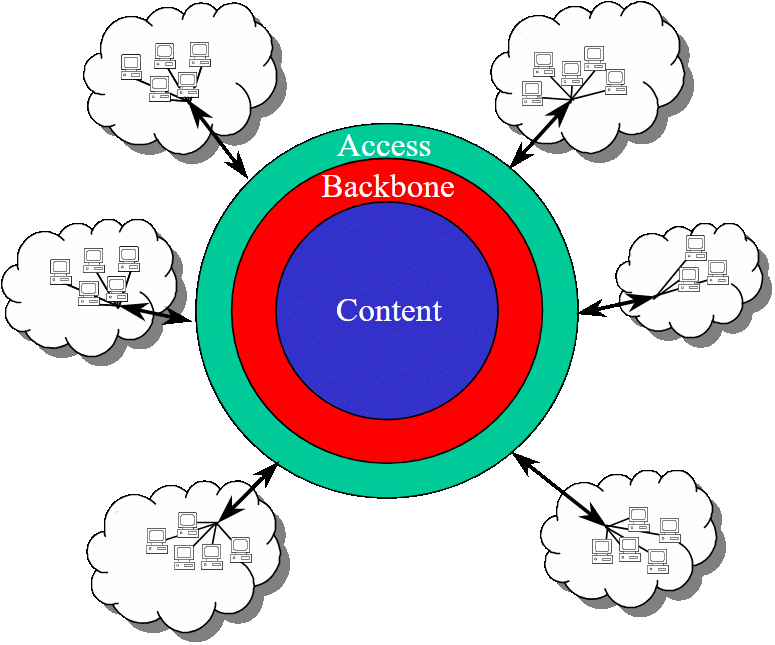
Figure 2 makes apparent two problems. First, due to content accumulation, the network’s ability to generate content can quickly overwhelm the backbone’s capacity for carrying it around. Second, because of the same reason, the escalating amount of data in the pool can overwhelm users’ capacity to process it on time. The two intertwined problems necessitate an automatic “Content Director” responsible for content analysis, storage and delivery. More precisely, such Content Director must be splitting continuously the entire content inflow in two parallel streams, one for immediate and the other one for postponed delivery (storage). Next, data earmarked for delivery must be ordered, prioritised and channelled to destinations in a manner responsive to changes in the local situation. The requirement is that data “nuggets” (that is, relevant data) are sure to reach the appropriate users on time while the amount of noise is kept in the vicinity of some acceptable threshold (the more urgent the situation, the lower the threshold). Creating such Content Director is clearly a daunting problem, practically without a precedent: Telephone networks have no storage, while storage in the web is designed for user-directed retrieval in the indefinite future. By contrast, in the networked force, relevant content must reach the appropriate user “here and now,” almost independently of the user’s ability to articulate the request. Figure 3 claims a pivotal role for Content Director in implementing the NCW framework. Such Director must have sufficient “intelligence” for analysing both the incoming content and the situational changes experienced by the users, and for channelling the content accordingly (note that a functionally centralized Director can occupy several servers).
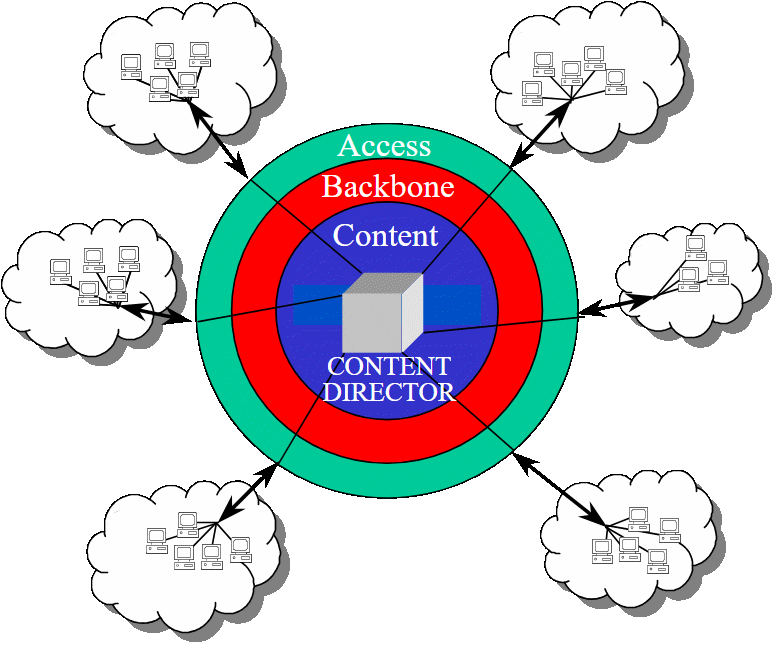
It appears that taking full advantage of force networking is contingent, to a large degree, on computational technology capable of “intelligent” real-time mapping between multi-modal data and situational changes at the users’ sites. Unhappily, surveying the field makes one wonder as to where such technology would come from. Half a century of AI research has produced algebraic heuristics that are known to perform well within tightly bounded tasks and fail immediately as the boundaries are crossed. Placing general intelligence of such heuristics below that of a housefly [9] can sound too pessimistic, but only until one starts looking for a working example challenging this judgment. Turning to neurosciences, one can find a helpful general framework but no detailed instruction. For example, functions of even the most prominent structures in the human brain, such as the prefrontal cortex, are still understood largely hypothetically, with no consensus as to how they are carried out in the neuronal substrate [10]. Finally, a discouraging note has been sounded by one of the leaders of modern science arguing forcefully that consciousness cannot be adequately represented by computational metaphors, and involves physical processes yet unknown in physics ([11], p. 154).
The problem of Content Director is given a closer look in the rest of this paper, where the elusive task of representing general intelligence is reduced to representing a specific attribute of intelligence, which is comprehension. The argument is that battlefield comprehension is amenable to modelling, and such models can inform NCW design.
Awareness sharing
In the SA terminology, situational awareness subsumes comprehension, creating the impression that comprehension regularly follows or even coincides with awareness. Again, an unfortunate choice of terms creates sort of a mental occlusion preventing one from noticing a gaping hole between awareness and comprehension in all but trivial cases. That is, a commander can be fully aware of all the details and dangers of the situation, and remain perfectly clueless as to what to do about them. Comprehension can demand an extreme cognitive effort while awareness is a necessary but by no means sufficient prerequisite for making this effort successful. What is comprehension?
Webster’s Dictionary defines comprehension as “mental grasp or capacity to apprehend general relations of particulars”. A commander’s ability to see “forest behind the trees,” as the definitive feature of successful war fighting, was already recognized in the early classics of military thought and described with an astounding psychological insight:
“In general, commanding a large number is like commanding a few. It is a question of dividing up the numbers. Fighting with a large number is like fighting with a few. It is a question of configuration and designation.” ([12], p. 187)
This formula captures, in three sentences, both the essence of battlefield comprehension and the dual process by which comprehension is reached. The process iterates between integration (a “large number” integrates into “a few”) and partitioning (“dividing the numbers”): First, a unifying grasp simplifies commander’s perception of the battlefield and reduces it from “many” (entities, locations, capabilities) to “few” (general relations) and, second, the unified mental picture is partitioned into “configuration” (force groupings) and “designations” (force allocations). Figure 4 illustrates the process. a) Awareness produces a meaningless mosaic of fragments. b) Comprehension integrates disconnected fragments in a perceptual whole, and partitions that whole into meaningful configurations (capital Bs). The product of comprehension is again available to conscious awareness. People are usually aware of the data on which comprehension works (a) and of the final product (b), but not of the process transforming (a) into (b).
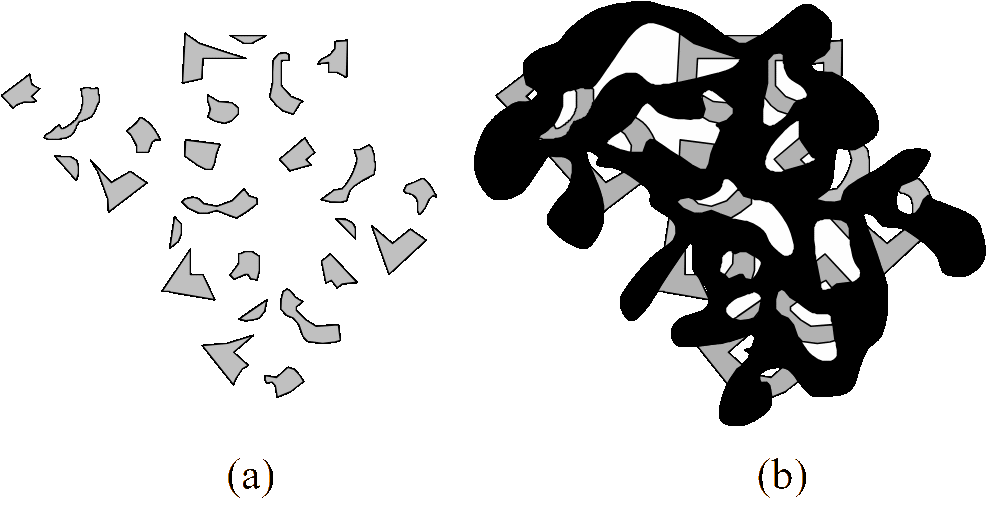
In the picture in Figure 4(b), the “glue” that brings the fragments together is supplied by the artist. In general, comprehension depends on the person’s ability to generate such “mental glue” without the aid of another party. Figure 5 stresses this point. To an amateur, a chess position looks like a mosaic of pieces. In that case, full awareness of all the pieces in the mosaic and rules of the game does not prevent confusion as to what actions to take. By contrast, a master perceives the situation as a coherent whole revealing meaningful piece “configurations” and inherent opportunities (“destinations”). Comprehension allows transforming material disadvantage in position (a) into a victory for White in position (b), in just a few moves (Morphy—Amateurs, New Orleans 1858, blindfolded, simultaneous matches).

? ?
(a) (b)
What kind of “mental glue” is produced in the master’s brain? A study of chess decision-making (one the most thorough investigations of expert cognitive performance ever undertaken in psychology) opened a window onto the inner workings of an expert mind [13]. Several excerpts below summarize some of the main findings:
“Chess thinking is non-verbal thinking and especially thinking in terms of spatial relationships and possibilities for movement.
The position is perceived in large complexes each of which hangs together as a generic, functional and/or dynamic unit.
The essential relations between the pieces, their mobility and capturing possibilities, their cooperation or opposition, are often perceived and retained better than the positions of the pieces themselves.
Apart from the relations and possibilities for action…perception is often primarily dynamic. …support for dynamic perception comes from the errors in reproducing the position: a piece is often put on the square which it wants to be on or on a square that an enemy or another own piece disputes (points of intersection)…
Integration of the position… consists essentially of taking stock of the spatial, functional, and dynamic relations among the perceived parts…so that they can be combined into one whole. Ordinarily this occurs “automatically” and can rarely be charted.” ([13], pp. 329-333).
The skill of “combining all parts into one whole” is born of experience and leads to a decisive advantage:
“The rapid insight of the chessmaster into the possibilities of a newly shown position, his immediate ‘seeing’ of structural and dynamic essentials, of possible combinatorial gimmicks, and so forth, are only understandable if we realize that as a result of his experience he quite literally ‘sees’ the position in a totally different (and much more adequate) way than a weaker player. …The difference is mainly due to differences in perception.” ([13], p. 306)
The last conclusion explains the value of comprehension: While a mosaic of pieces entails an astronomical number of possibilities, comprehension reduces that number to a few alternatives one can manage within the time available. The next section of this paper offers a model of such reduction and a hypothesis as to how it gets accomplished in the human brain.
It is informative to compare observations in [13] with the RPD model deriving superior performance from recognizing and exploiting similarities between the present situation in the battlefield and some of the earlier ones the commander faced in the past. On the account of recognition-primed decision-making, experience improves performance via building up and diversifying a stock of examples in the commander’s memory. Taking advantage of this stock involves two steps: a) recalling a situation similar to the present one, and b) adopting a similar strategy, with adjustments. Such recall might require a deliberate memory search but is more likely to be triggered (primed) by some familiar situational features. Hence, recognition-primed decision making [6].
The RPD model is intuitively appealing due to its simplicity and common sense, particularly when compared to behaviourist and decision-theoretic approaches predating RPD in the military psychology. Since both those schools insisted on describing performance in a manner quite alien to the way people tend to understand and give account of their actions, the RPD model provided a welcome relief.
Although the model doesn’t envision much use for comprehension in command and control, it does not deny it either. Rather, the model focuses on the product more than on the process. As suggested in Figure 4, the initial and final stages of comprehension are available to conscious awareness but rarely the transition between them. Once the grasp occurs, the initial and intermediate memory structures are discarded from memory. For example, one is likely to remember something about the shape and orientation of the capital Bs in Figure 4(b), but hardly anything about the fragments in Figure 4(a). On the other hand, if one contemplates the fragments long enough without grasping their organization, only the fragments will be retained. By the same token, a commander explaining his/her actions can reference either some generalized characteristics of the battle, or the features and details (fragments), especially those encountered repeatedly in several episodes. In both cases, the mechanism by which the many details were amalgamated into an actionable memory structure can be left totally out of the picture.
There are two main reasons to insist that successful command and control cannot be based on clues and comparisons with the past situations. First, since battlefield is in continuous flux and conditions are fluid, situations do not recur and there can be no determinate rules for relating conditions to situations (for example, material disadvantage does not necessarily constitute a bad situation):
“There are no precise, determinate rules: everything depends on the character that nature has bestowed on the general, on his qualities and defects, on the nature of the troops, on the range of the weapons, on the season of the year, and on a thousand circumstances that are never twice the same.” ([14], p. 223)
Second, command and control boils down to dynamic asset allocation, and problems of that type cannot be solved by recognition. Consider the simplest scenario in Figure 6. Situation 1 includes weapon A acting successfully against the target type B. This success gets recorded in the memory store. Situation 2 requires allocating weapons A and C against target types B and D. It happens that weapon A is efficient against both targets while weapon C can act only against the target type B. Situation 3 recollects success in situation 1, and acts on the clue. Situation 4: Target D gets through unopposed. Bang !!!
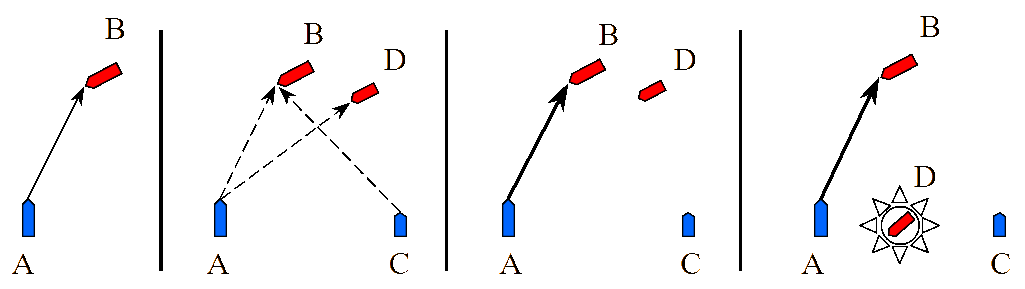
Figure 6 shows that commanders using their assets based on clues and situational similarities are not likely to be heard from later. Consequently, some other mechanisms acting below the level of conscious awareness must inform wiser decisions.
Within the RPD framework, sharing awareness across the network implies sharing clues and their interpretations, on top of the other data. Since clues and interpretations are subjective, sharing them can provoke disagreement just as easily as leading to consensus. In any case, the problem of content distribution remains unsolved.
Battlefield comprehension
The essence of command and control is dynamic asset allocation under changing constraints and priorities:
“The art of war consists, with a numerically inferior army, in always having larger forces than the enemy at the point which is to be attacked or defended.” ([14], p. 221)
An unavoidable difficulty in asset allocation is exploding combinatorial complexity. Figure 7 returns to the simple scenario in Figure 6 and enumerates all possible courses of action (COA) for two weapons acting against two targets. Choice of a superior (near-optimal) COA is determined by the interplay between the relative threat T1 and T2 posed by the targets, relative weapon costs C1 and C2, and the corresponding kill probabilities K11, K12, K21, and K22. A slight change in one of the values can cause the solution to jump from one choice to another. As the number of variables (targets and assets) increases, the number of choices escalates.
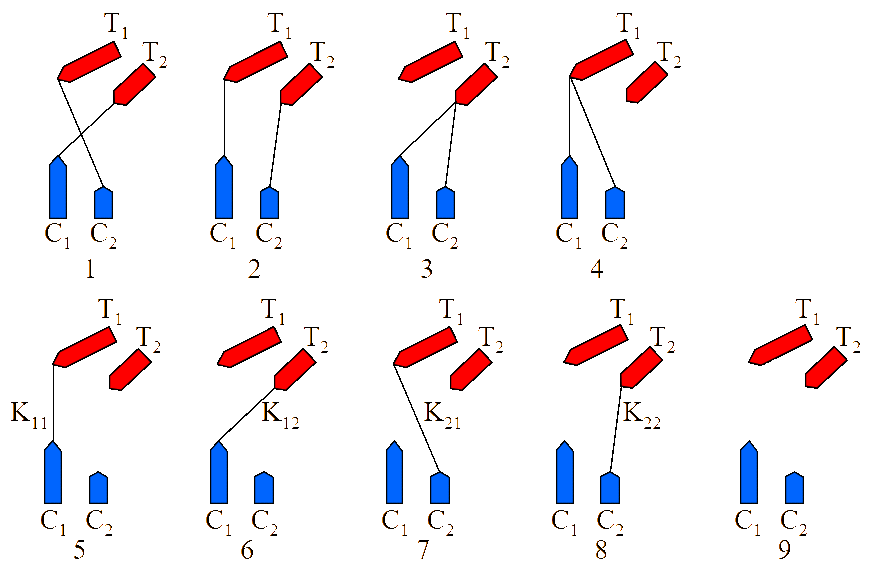
In an idealized battlefield where the “fog of war” is lifted and “friction” eliminated, combinatorial complexity remains the main challenge facing the commander. Suboptimal allocations equate to reduced lethality of the weapon, which can vary between the nominal value (near-optimal allocations) and zero (misused weapon). Consequently, there is no way around the need for maintaining allocation efficiency in the vicinity of global optimum. Escalating combinatorial complexity, coupled with kaleidoscopic changes (“circumstances are never twice the same”), makes recognition- and/or rule-based decision making infeasible. How does the problem get solved?
A comprehensive model of complex decision-making must be mathematically, psychologically, biologically, and evolutionary plausible. First, the model must include a computational strategy yielding complexity reduction without sacrificing accuracy. Second, there must exist a reasonable degree of correspondence between that strategy and some observable stages and characteristics of the human decision process. Third, there must exist a plausible mechanism for implementing the strategy in the biological substrate. Finally, there has to be a plausible or, at least, conceivable path by which this mechanism could evolve in the brain from some identifiable predecessors. It has been argued elsewhere that the model summarized in the remainder of this section satisfies, to an extent, all four criteria [16]. The following sketch addresses only the first two of them.
The model, called Virtual Associative Network (VAN) [17,18] starts with the observation that reducing combinatorial complexity of asset allocation requires breaking the original large problems into smaller sub-problems such that the full-scale solution can be closely approximated by the sum of sub-problem solutions. The strategy works only if the sub-problems are sufficiently independent, that is, either no possible cross-allocations exist, or the existing ones are insignificant and can be ignored. Finding such “magical” decomposition cuts down combinatorial complexity (the total number of combinations yielding a near-optimal solution) without sacrificing accuracy. More importantly, a “magical decomposition” cuts down psychological complexity since, at any instance, the decision maker deals only with a manageable allocation task. The VAN model asserts that battlefield comprehension involves two interrelated abilities:
- perceiving and conceptualising battlefield dynamics as asset allocation; and
- decomposing the large-scale allocation problem into small independent sub-problems.
According to the VAN model, stages and characteristics of a mathematically sound strategy manifest in psychology of decision making. Consider the mathematical aspect first. For the purposes of problem decomposition, all the interactions between the variables must be accounted for, which equates to linking the interacting variables into a network and weighing the links based on the relative strength of the corresponding dependencies. After that, independent sub-problems can be obtained either by identifying disconnected networks, or, in the absence of such, finding subnets in network connected to the network via weak links (insignificant interactions). In this way, decomposition is reduced to finding minimal-cut sets in the weighted interaction network (see for example [23]).
Arguably, this strategy manifests in the human memory architecture comprising associative Long Term Memory (LTM) and small capacity Short Term Memory (STM) where associative clusters are retrieved from the LTM and operated upon one-at-a-time. Since behaviour consists in dynamic allocation of sensory-motor resources, decomposition via network partitioning can be the main underlying mechanism responsible for the supreme efficiency, robustness, and adaptability of human performance. The VAN model argues that such mechanism is, in fact, the foundation of human intelligence, including language and logic [17]. The same dual strategy of capturing interdependencies in the environment in the form of associative networks, and constructing responses via network decomposition underlies expert behaviour across a spectrum of tasks, with only the network parameters varying from one task to another. For example, for a chessmaster:
“… from the very start the group of considerable moves is quite sharply delineated and, moreover, divided into subgroups according to function. In the same way this high selectivity holds in later stages in the thought process—in principle, in every position that the player envisages in the course of his analysis.” [13]
The essence of domain expertise boils down to adequate evaluation of interaction strength between the domain variables under the current and foreseeable conditions. This skill derives from experiences and is difficult both to acquire and verbalize. In chess:
“… the general methods of piece cooperation appear to be particularly difficult to describe in detail—‘book learning’ still provides but the groundwork—the just as important superstructure consists of more or less ‘unconsciously’ applied or at least not readily specifiable intuitive methods.” ([13], pp. 303-304).
The same holds for war fighting:
“In almost all other arts …the active agent can make use of truths … which he extracts from dusty books. But it never so in War…The moral reaction, the ever-changeful form of things, makes it necessary for the chief actor to carry in himself the whole mental apparatus of his knowledge, that anywhere and at every pulse beat he may be capable of giving the requisite decision from himself. Knowledge must, by this complete assimilation with his own mind and life, be converted into real power.” ([15], p. 200).
Figure 8 hypothesizes the inner workings of such “mental apparatus” when making command and control decisions [19-21].

- Comprehending the battlefield starts with assessing the distribution of own and enemy units across the terrain. The “mental glue” comes in the form of associative links between the interacting (cooperating/opposing) units.
- Situation assessment concludes by forming an associative network in the commander’s memory accounting for all units and their interactions.
- In the act of comprehension, the network is decomposed into weakly coupled (minimally interdependent) blocks. (Note that geographical proximity is only one of the determining factors in such decomposition so that assets separated by large distances can still be placed in one block—for example, radars and weapons—and vice versa.)
- The benefit of comprehension lies in cutting down psychological complexity of the allocation problem and ability to solve it quickly and accurately.
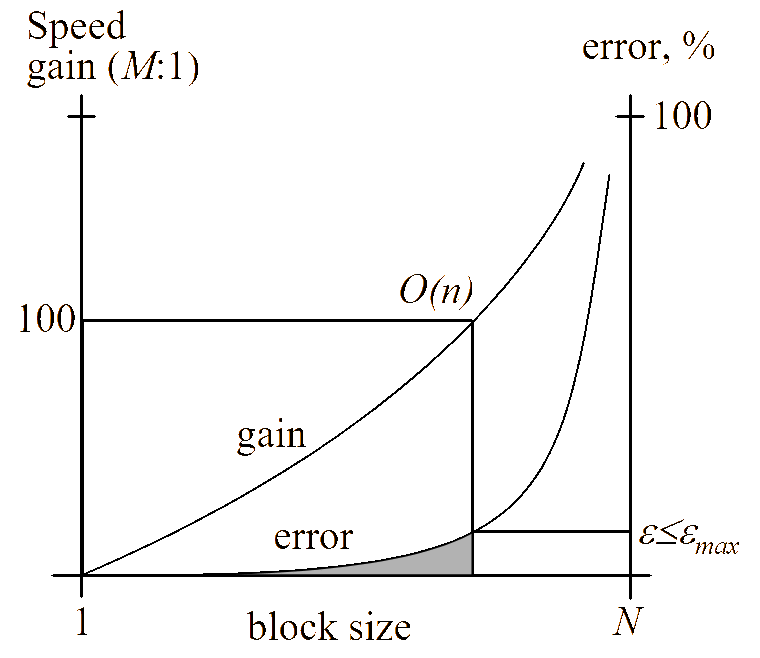
Figure 8(d) demonstrates the relationship between the average block size in the decomposed network, and solution speed and accuracy. The block size varies from a single node (1) to the total number of nodes in the network. “Speed gain” is the ratio of time involved in solving the same problem before and after decomposition so, for example, the gain of 100 indicates a 100:1 solution speed up. “Error” is the relative difference of the outcomes (computed as the expected utility gain). The diagram in Figure 8(d) reveals a range of block sizes (shaded) where gain grows without tangible increase in the error value. Computational experiments have shown the possibility of many orders of magnitude speed up without increasing the error above several percentage points. However, after some size threshold error is reached, the error curve experiences a steep upturn so that still faster solutions become grossly inaccurate. The point in the Gain-Size-Error space corresponding to the maximal block size n and maximal speed gain obtainable at the cost of a border line error (remaining below some threshold εmax) is called Ockham’s point (O(n), or O-point). The quality of comprehension is determined by the commander’s ability to find decompositions in the vicinity of that point.
Note that gain of 100:1 under a below threshold error indicates that only 1% of interactions had significant impact on the solution, while the remaining 99% made practically no difference. Stated differently, only 1% of the available data was taken into account when making allocation decisions, while the remaining 99% turned out to be noise. Simulations have shown that the O-point moves upward (towards larger values) as the size of the problem grows (with other characteristics remaining unchanged). That is, the larger the problem, the larger the possible gain via decomposition and, correspondingly, the smaller the data/noise ratio. These results are consistent with and contribute towards explaining human performance in chess and other complex tasks.
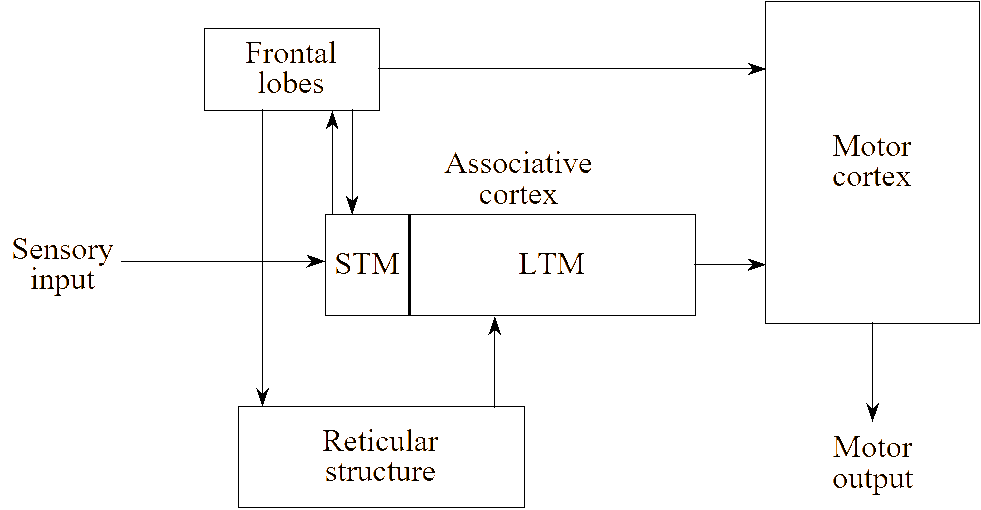
To summarize: Battlefield comprehension replaces a large asset allocation problem (Figure 8(b)) with a series of small sub-problems (Figure 8(c)) solved one at a time. Each such sub-problem contains a group of force units that interact stronger with each other than with the units in the other sub-problems. Without such decomposition, the battlefield would remain incomprehensible (compare Figure 8(a) and Figure 4(a)). There exist degrees of comprehension: superficial comprehension results from decompositions residing to the far right of the O-point (large blocks), while decompositions to the far left (small blocks) produce inefficient comprehension overburdened with excessive detail. An expert commander finds a middle course between the extremes. Figure 9 maps this analysis on the human cognitive architecture. The main functional components in the architecture include Frontal Lobes, Reticular Structure, and Associative and Motor Cortices. LTM mechanisms are responsible for forming associative networks, decomposing them into blocks, and organizing their retrieval into STM where they are matched against the sensory input stream. Frontal Lobes control attentive processing of individual blocks in the STM and attention switching. Reticular Structure influences all LTM mechanisms, including those underlying memory integration (“mental glue”). Only the current STM contents are amenable to conscious awareness but neither the LTM contents nor the mechanisms operating on them. Problems of the size shown in Figure 7 approach the maximal size afforded by STM capacity.
![Human cognitive architecture (following [22]).](/journals/journal-of-battlefield-technology/volume-06/issue-01/assets/6-1-4-yufik/figures/figure09.jpg)
By iterating between scanning the entire battlefield and attending to different local situations, the memory network gets updated and re-partitioned, allowing commander to follow the flow of events and respond flexibly to the changing conditions. No fixed set of rules and/or templates can serve that purposes with a comparable efficiency. Rules and templates are likely to play a role in assessing interactions between battlefield entities. However, putting those assessments together in a coherent actionable whole in the commander’s memory is the process by which “knowledge … is converted into real power.”
Self-decomposition of LTM networks into internally cohesive and externally weakly coupled blocks is the central hypothesis of the VAN model. As typical in reverse engineering, there is no way to know how closely the model matches reality. However, there exist data and theories consistent with the model (e.g., [23], [24]) and none, to the best of our knowledge, that would rule it out. The next section applies the model to inform the design of Content Director.
Cognizant content director
CCD is a computational process that complements human asset allocation skills and emulates allocation strategies employed in the human cognitive system. The advantages of CCD include reduction of content circulation in the backbone, combined with reduced amounts of irrelevant content delivered to the users. Figure 10 illustrates the concept. CCD accumulates and integrates content from all units, and returns content packages fine-tuned to the current needs of specific users. All users have full access to the entire content pool at all times. However, circulation of generic content in the backbone is minimized while the bulk of content delivery is channelled to users and user groups based on the on-going relevance determination in the CCD.

Figure 11 suggests functional organization of CCD. To allow content distribution in a manner responsive to the current user tasks and conditions, processes must exist for analyzing and fusing data from multiple concurrent sources. That is, of course, a tall order, although not unique to CCD. For the purposes of CCD, the outcome of fusion and analysis boils down to specifying capabilities and locations of force units populating the battlefield. Depending on the state-of-the-art in data fusion and other disciplines, it is conceivable that such specification will require human involvement. However, the subsequent steps in the CCD process are computable and can be automated. CCD functional architecture includes DATA FUSION AND ANALYSIS and CONTENT ABSTRACTION modules responsible for extracting specifications of force units, their location, and other characteristics from the input streams. The MAPPING module associates units and locations (terrain regions) with user objectives. The INTEGRATION module computes interactions between the force units and forms interaction network. The DECOMPOSITION module computes unit groupings having high degree of interaction with (strong impact on) user objectives, and distributes the content accordingly.
The shading in Figure 11 underscores that data fusion and assessment of battlefield conditions (content abstraction) are generic steps towards making the data useable that need to be performed regardless of CCD. In a sense, these preprocessing steps bring battlefield representation to the form captured in Figure 8(a), while CCD completes the final steps in making massive data comprehensible to human users, by resolving combinatorial complexity inherent in the changing battlefield situation. Figure 12 illustrates simplification of the battlefield as a result of unit grouping.
The integration phase in CCD can be computationally intense, involving assessment of the units’ ability to cooperate in meeting the objectives within the specified time limits, as a function of the terrain, weather, weapon ranges, and other pertinent data (if available), such as readiness and accessibility of supplies. The integrated results of this computation reveal opportunities and vulnerabilities inherent in the pattern of force distribution: opportunities are defined by the alternatives for obtaining concentration of forces sufficient for goal satisfaction, while vulnerabilities are defined by the similar alternatives available to the opponent.
Summarily, CCD completes the process of making data comprehensible, thus transforming it into actionable knowledge. Units are grouped based on the expected degree of cooperation between them (for example, as a function of proximity, conditions in the area influencing their mutual accessibility, other factors). Groups are ranked based on the relative threat they can present to friendly forces entering the area (as a function of known weapon supplies in the areas, availability and strength of cover, and so on). Colour codes communicate the ranks.
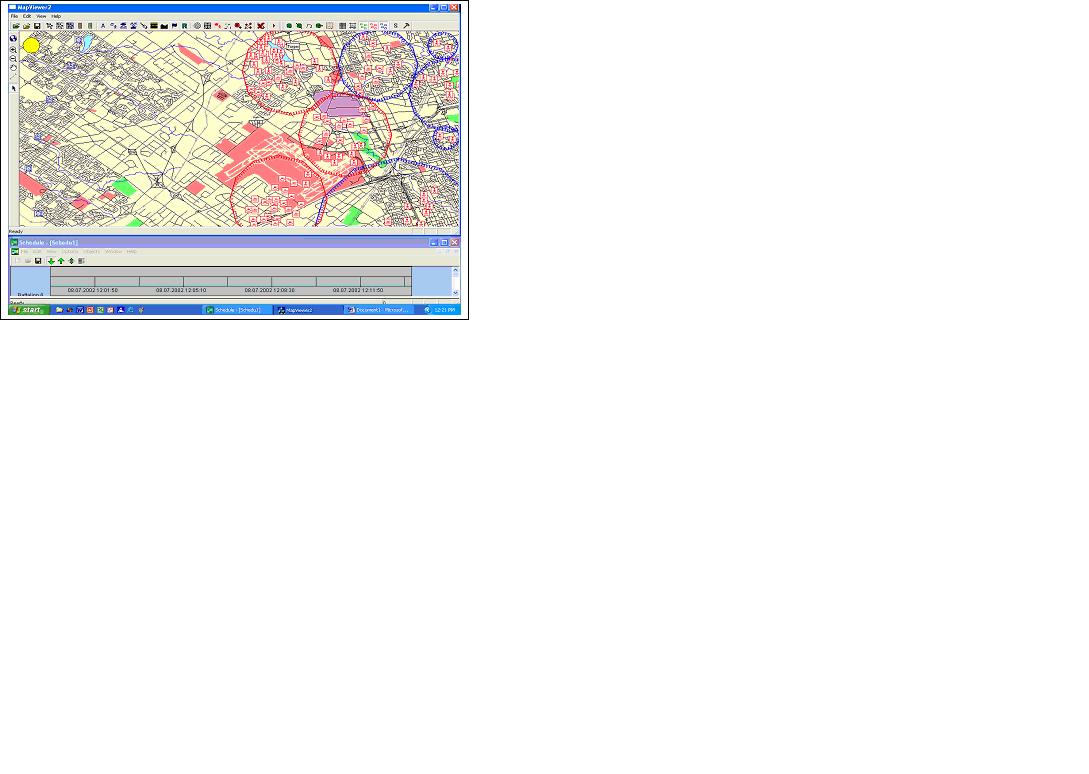
Based on the ranking and strength assessment of the enemy groupings, CCD computes allocation alternatives for the own forces, including possible asset selections and time estimates for asset delivery to the objectives. Figure 13 shows an example.
TiN is the time estimate for reaching the nominal strength (100%) of the own assets on the objective OBJi. Selecting and/or editing one of the alternatives by the commander provides CCD with the criteria for adjudicating data relevance and partitioning the data flows accordingly.
Collaboration in NCW
It has been long established that unconstrained collaboration in cognitively demanding tasks can produce diminishing returns, that is, the larger the group of collaborators, the smaller the productivity increments yielded by the subsequent additions to the group. Characteristically, the less competent are the participants, the quicker diminishing returns turn into losses. Figure 14 illustrates these relationships. N—the number of collaborating programmers, W—percent of effective working time per day per person, C—relative project cost. Productivity of a team composed of highly competent (“best case”) programmers drops by 30% while the project costs increases by 40% as the team grows to 20 persons. For “typical programmers”, team productivity can drop to next to zero while the cost increases seven-fold.
![Diminishing return from collaboration in software production (adopted from [25]).](/journals/journal-of-battlefield-technology/volume-06/issue-01/assets/6-1-4-yufik/figures/figure14.gif)
Figure 14 demonstrates that facilitating interactions between the collaborators combined with an emphasis on reaching common understanding and reconciling the differences, can be self-defeating. Diminishing return is, in fact, predicted by Metcalfe’s Law, if the latter is adjusted to account for limited processing capacity of the nodes. The effectiveness of a network indeed increases exponentially with the number of nodes (Metcalfe’s Law) if the nodes have redundant capacity (exceeding that required for processing traffic from the other nodes). However, if the nodes can be overwhelmed by the traffic and slow down (or even come to a halt), the effectiveness is bound to decline exponentially (or faster) as the number of the nodes increases.
In the C2 hierarchy, the problem caused by unconstrained access can be exacerbated due to superior commanders reaching down and interfering with the decision processes of their subordinates (it is safe to assume that upward access will be safeguarded). One can easily imagine conditions under which collaboration across the network will spiral towards confusion, entailing either paralysis of decision-making or erratic decisions.
Figure 15 suggests an organizational remedy in the form of interlocking hierarchies. Superior nodes jointly define objectives and constraints for the subordinate layer but do not interfere either with team forming or with the team decision processes in that layer. Units interact only with other units in the own team, all other interactions (team-team, team-superior, team-subordinates) are conducted via team leaders.
Such interlocking hierarchies take full advantage of force networking while preventing content explosion. As a result, multiple force units can be brought together to form an organic whole capable of flexible re-groping and task re-constitution with a minimal inertia. In this holistic organization, flexible teams have a degree of autonomy in executing their plans, and can also change their membership and re-negotiate the objectives with the other teams.
More generally, interlocking hierarchies allow adaptive globally coordinated re-distribution of all assets, from personnel to computational and communication resources, responsive to the changing objectives and priorities in the battlefield. The key principle of such coordinated re-distribution consists in grouping enemy units depending on their collaboration possibilities, followed by the own assets grouping, and group allocations. As the situation changes, the assets are changing their group membership accordingly. Since any such change is time consuming, coordination quality and the degree of optimality of asset allocations throughout the battle are determined by a max-min criteria: maximizing satisfaction of the objectives while minimizing delays caused by asset transfers between the groups.
Dynamic coordination of asset allocation in the networked force replaces synchronization as the key determinant of effectiveness. Those are the conditions under which “numerically inferior army can always have larger forces than the enemy at the point which is to be attacked or defended” [14].
Conclusions
- Force networking can cause explosive growth of content in the system that will overwhelm processing capacities while delivering data irrelevant to most users most of the time.
- Emphasizing collaborative decision making and increasing the size of collaborative teams can be counterproductive.
- To take advantage of networking, a computational agency is needed capable of sorting content based on its relevance to different users, and distributing it accordingly (Cognizant Content Director, or CCD).
- CCD interacts with the commander and performs a dual function of content distribution and commander decision support. These functions are intertwined.
- Relevance is determined by the context, which is asset allocation under changing constraints. Dynamic partitioning of large allocation problems into small minimally interdependent subproblems makes both the allocation problem and content sorting problem computationally feasible.
- There exist evidence and theoretical reasons to believe that problem partitioning underlies situation assessment and decision making by competent commanders. Correspondingly, employing a partitioning strategy by CCD allows for intuitive and expedient interaction with the commander.
- Problem partitioning yields radical reduction in content circulation. Experiments show that in asset allocation only a fraction of the domain data strongly influences the outcome. Content sorting by CCD aims at identifying such significant data, while impeding circulation of the insignificant content.
- The decision aiding function of CCD includes situation assessment across the battlefield (opportunities, vulnerabilities, and response alternatives). Such assessment contributes into a common operational picture across the force, facilitates battlefield comprehension by the commander, and intent communication to the subordinates.
- Sensory-motor coordination in complex organisms involves an interplay between excitation and inhibition, resulting in dynamically constrained propagation of stimuli through the system. By the same principle, coordinated asset allocation in a networked force requires dynamically constrained content distribution. Satisfying this requirement can turn the force into a cohesive functional whole capable of timely adaptive reorganization under the changing battlefield conditions.
Acknowledgement
I am grateful to Rear Admiral Riley D. Mixson (Ret.) for his helpful feedback and excellent comments. Grandmaster Lev Alburt provided a window into the world of chess strategy. Thanks are due to Ed Dawidowitz of US Army CECOM for support and many discussions that influenced this paper.
References
[1] D. Alberts, J. Garstka, R. Hayes, and D. Signori, Understanding Information Age Warfare, CCRP, Washington, DC, 2001.
[2] W. Blair, “Who Knows, Wins? Knowledge Management and Emerging Army Tactical Command and Control Concept”, Journal of Battlefield Technology, Vol. 5, No. 2, p. 13-19, 2002.
[3] A. Kaufman, “Be Careful What You Wish For: The Dangers of Fighting with a Network Centric Military”, Journal of Battlefield Technology, Vol. 5, No. 2, pp. 20-23, 2002.
[4] J. Widdowson, “Under Command, Out of Control—The Emerging Paradigm for Army Operations”, Journal of Battlefield Technology, Vol. 4, No. 2, p. 9-16, 2001.
[5] M. Endsley, “Toward a Theory of Situation Awareness in Dynamic Systems”, Human Factors, Vol. 37, No. 1, 1995.
[6] G. Klein, “A Recognition-Primed Decision (RPD) Model of Rapid Decision Making”, in: G. Klein, J. Orasanu, R. Calderwood and C. Zsambok (eds) Decision Making in Action: Models and Methods, Ablex, Norwood, 1993.
[7] B. McGuinness, L. Foy and T. Forsey, “Battlespace Digitization: SA Issues for Commanders”, Human Performance, Situation Awareness and Automation Conference Proceedings, Savannah, GA, 2000.
[8] C. Shannon and W. Weaver, Mathematical Theory of Communication, University of Illinois Press, Urbana, 1949.
[9] R. Restak, Brainscapes: An Introduction To What Neuroscience Has Learned About The Structure, Function And Abilities Of The Brain, Hyperion, NY, 1995.
[10] J. Grafman, K. Holoyak and F. Boller, “Structure and Functions of the Human Prefrontal Cortex”, Annals of the New York Academy of Sciences, NY, 1995.
[11] R. Penrose, “Can a Computer Understand”, in: S. Rose (ed), From Brains to Consciousness? Essays on the New Sciences of the Mind, Princeton University Press, 1998.
[12] Sun-tzu, The Art of War, Barnes & Noble Books, 1994.
[13] A. De Groot, Thought and Choice in Chess, Mouton & Co, The Hague, 1965.
[14] J. Herold, The Mind of Napoleon, Columbia University Press, NY, 1955.
[15] C.Von Clausewitz, On War, Penguin Books, London, 1968.
[16] Y. Yufik, “How the Mind Works”, Proceedings of the IEEE World Congress on Computational Intelligence, Honolulu, Hawaii, pp. 2255-2259, 2002.
[17] Y. Yufik, “Virtual Associative Networks: A Framework for Cognitive Modeling”, in: K. Pribram, (ed), Brain and Values, Lawrence Erlbaum Associates, New Jersey, pp. 109-177, 1998.
[18] Y. Yufik, Probabilistic Resource Allocation System with Self-Adaptive Capabilities, US Patent # 5, 886, 219, 1996.
[19] Y. Yufik and T. Sheridan, “Swiss Army Knife and Ockham’s Razor: Modeling and Facilitating Operator’s Comprehension in Complex Dynamic Tasks”, IEEE Transactions on SMC, Part A: Systems and Humans, Vol. 32, No. 2, pp. 185-199, 2002.
[20] Y. Yufik and T. Sheridan, “New Framework for Operator Modeling and Interface Optimization in Complex Supervisory Control Systems”, Annual Reviews in Control, Pergamon, UK, pp. 179-195, 1997.
[21] Y. Yufik and W. Cunningham. “Towards Dominant Battlespace Comprehension in Network Centric Warfare”, Transactions of the 6th International Command and Control Technology Conference, Annapolis, MD, 2001.
[22] A. Luria. The Working Brain: An Introduction to Neuropsychology, Basic Books, NY, 1973.
[23] T. Ibaraki and N. Katoh, Resource Allocation Problems: Algorithmic Approaches, The MIT Press, 1988.
[24] S. Landry, T. Sheridan and Y. Yufik, “A Methodology for Studying Cognitive Groupings in a Target-tracking Task”, IEEE Transactions on Intelligent Transportation Systems, Special Issue on Air Traffic Control, pp. 92-101, 2001.
[25] R. Pressman, Software Engineering: A Practioner’s Approach, McGraw-Hill, 1987.