
Volume 6, Number 1, March 2003
Ballistic Properties of Depleted Uranium and Biological Consequences
- 1 Department of Chemistry and Chemical Engineering, Royal Military College of Canada, Kingston, Ontario, Canada K7K 7B4.
Abstract
Over the past quarter century, depleted uranium (DU) has replaced tungsten alloys as the material of choice for penetrators in armour piercing rounds in some armies, as well as a being used as a supplement to steel in tank armour. The tendency for adiabatic shear failure to overcome work hardening, and increased ductility are attributed for the improved ballistic performance. The aerosolisation of a portion of the penetrator on impact creates a potential health hazard, particularly through ingesting resuspended aerosol particles. Bioassays of military and civilian personnel, who were potentially exposed to DU contamination, have failed to establish a link between DU and symptoms of “Gulf War illness”. In fact, increased DU body burdens have usually not been detected. Further, Canadian testing has not been able to identify elevated levels of DU or even natural uranium in urine, hair or bone samples of veterans.
Introduction
Over the past 25 years, depleted uranium (DU) has become the material of choice for kinetic energy (KE) armour penetrators for a number of armies around the world. This paper examines the place of DU in the inventories of these armies, and the biological threat it may pose to combatants and subsequently to peacekeepers and civilians. It will also report on studies currently being conducted on troops, including Canadians, who may have been exposed to DU.
Ballistic performance
In order to understand the usage of DU as a penetrator material, a brief look at penetration mechanics is warranted. In the hyper velocity regime, for penetrator/target impacts in excess of 3 km/s, penetration is achieved by the mutual erosion of both the target and penetrator. Assuming that both the penetrator and target behave as incompressible fluids, that penetration occurs at constant velocity and invoking conservation of momentum, it can be shown that:
(1)
where:
P is depth of penetration in target
L is penetrator length
ρt is target density
ρp is penetrator density
As shown in Equation (1) above and empirically in Figure 1, the amount of penetration is dependent only on the length of the penetrator and the target and penetrator densities, and is independent of striking velocity (when greater than 3 km/s). As pressures at the penetrator/target interface are well in excess of the yield strengths of either material, material characteristics (other than densities) are not significant. This type of analysis is valid for shaped charge jets and explosively formed projectiles [1], both with striking velocities on the upper plateau in Figure 1. The normalized penetration-versus-velocity plot shown in Figure 1 is typical for both tungsten alloy and DU KE penetrators striking rolled homogeneous armour (RHA) in the ordnance velocity range (1–2 km/s).
![The ballistic “S” curve, showing the increase in penetration with increasing velocity in the ordnance range and the independence of penetration from velocity in the hypervelocity range above 3 km/s, after [2].](/journals/journal-of-battlefield-technology/volume-06/issue-01/assets/6-1-3-andrews/figures/figure01.gif)
These latter, striking in the velocity range of 1 500-1 800 m/s, are better described by the semi-empirical Lanz-Odermatt equation [3]:
(2)
where:
a is a function of the penetrator length/diameter (L/D) ratio;
S is a measure of target resistance; and
v is the impact velocity.
The fitting parameters a and S are related to the mechanical properties of both the penetrator and target. It can be seen that, as the impact velocity, v, increases, penetration becomes independent of velocity, as described in Equation (1).
For KE armour penetrators, then, penetration can be increased by increasing the length, the density and the velocity. While current guns and propellants appear to be at the design limit for muzzle velocities, enhancements continue to the L/D ratio. As for density, the move from steel to tungsten penetrators increased the density from about 7 800–17 500 kg/m3. DU provides a further, albeit marginal increase to 18 500 kg/m3, considering that penetration varies with the square root of the density.
As an aside, from the perspective of providing armour protection, it can be seen that increasing the target density, ρt, will diminish penetration. Consequently, on the heavy armour version of the American Abrams M1A1 and M1A2 tanks, DU panels have been added to the turret frontal armour.
Returning to the penetrators, the initial post-war tungsten cores were tungsten carbide, but these were eventually replaced by tungsten alloyed with nickel, iron and cobalt, sometimes known as tungsten heavy alloy (WHA). These latter have the hard but brittle tungsten particles embedded in a soft, ductile matrix, which serves to retard cracks and redistribute stresses. WHA penetrators are usually manufactured by sintering, with special attention required to ensure complete densification and preclude porosity resulting from entrapped gases or solidification shrinkage.
On impacting a RHA target, pressures at the penetrator/target interface approach 6 GPa. As seen in Figure 2, the penetrator mushrooms within the target, with macroscopic plastic deformation followed by erosion. The initial strain is principally localized within the matrix, which rapidly work hardens to form the mushroom shape. A consequence of the mushrooming due to work hardening is that energy is expended radially to expand the penetration cavity [4].
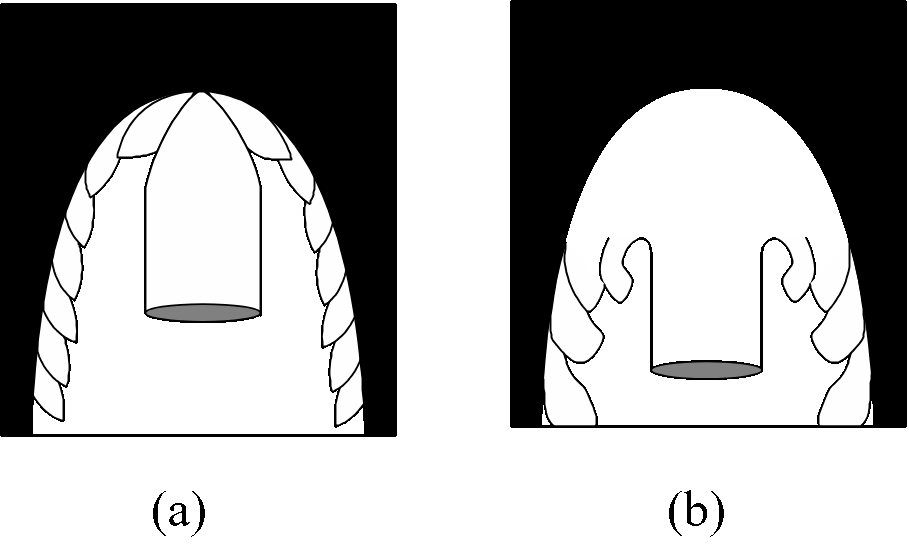
By comparison with tungsten, DU also has some processing challenges. It is sensitive to corrosion, trace element impurities, variations caused by heat treatment and hydrogen embrittlement and re-embrittlement. Also, finely divided DU particles are pyrophoric, so powder metallurgy is normally foregone in favour of casting and hot working (although special tooling is required). Also, like tungsten, DU is alloyed, usually with 0.75 weight percent titanium.
Like WHA, DU alloy penetrators will mushroom on impact as the material plastically flows radially away from the penetrator, resulting in an increase in flow stress due to work hardening and a competing decrease in flow stress due to thermal softening. Some 90-95% of the deformation energy appears as heat, with temperatures of about 1 800°C being reached locally [4]. In DU, unlike in WHA, the thermal softening overcomes the increase in flow stress, permitting adiabatic shearing to occur. This results in a “self-sharpening” of the penetrator, as the mushroom head is continually sheared from the penetrator body, as shown in Figure 2. The net result is less energy expended in expanding the penetration cavity radially, with a concomitant increase in energy available for axial penetration.
Another penetration mechanism which has been proposed is the formation of a low melting temperature Fe-U eutectic at the penetrator tip, which assists in removing both target and erosion products from the penetration cavity [4].
In general, then, against semi-infinite targets, DU penetrators can achieve penetrations of 10-15% in excess of comparable WHA penetrators. Of even more significance, however, is the fact that DU rounds can achieve the same penetration as WHA rounds at significantly lower velocities, meaning that the DU round remains effective against any given target to significantly greater ranges (up to about 50–70% greater).
Another particular advantage of DU over WHA is in its performance against oblique and/or spaced-plate targets, as well as explosive reactive armour (ERA). The greater ductility and toughness of DU penetrators seems to permit them to bend without fracturing, as opposed to the harder but more brittle WHA penetrators, which often shear after impact.
Battlefield expenditures
The two principal areas of DU ammunition expenditures in operations have been during the Gulf War in 1991 and the United Nations campaign in Kosovo in 1999. In both instances, the principal usage of DU ammunition was as kinetic energy rounds to defeat armoured targets. Some 300t of DU munitions were expended during the Gulf War by American and British forces, including rounds fired from both vehicles and aircraft [5]. In Kosovo, roughly 31 000 automatic cannon rounds with DU penetrators were fired from American aircraft at armoured targets, for a total mass of in excess of 9t [6].
Availability of DU
Natural uranium is composed of three isotopes, 238U, 235U and 234U. When processed for reactor fuel, particularly for light water reactors, the uranium is enriched in 235U and 234U, with the consequence that the tailings are depleted in these isotopes. Typical relative abundances and activities are provided in Table 1. It is interesting to note that DU, although slightly more dense than natural uranium, is about half as radioactive.
| Relative | Natural Uranium | Depleted Uranium | |||
|---|---|---|---|---|---|
| Isotope | Activity | Mass (%) | Activity (%) | Mass (%) | Activity (%) |
| 238U | 1.00 | 99.2739 | 48.9 | 99.7990 | 85.5 |
| 235U | 6.33 | 0.7204 | 2.2 | 0.2001 | 1.1 |
| 234U | 17 400 | 0.0057 | 48.9 | 0.0009 | 13.4 |
| Radioactivity (mBq/µg) | 25.3 | 14.5 |
Reactor fuel, though, does not come only from the enrichment of natural uranium. It can also be reclaimed from spent fuel. In fact, over 107,000 t of uranium were recycled in the USA from 1952 to 1977. This would result in the probable inclusion of the plutonium, neptunium and uranium isotopes (all radioactive) 239Pu, 237Np and 236U respectively, in the enrichment tailings of DU, and thus in any penetrators fabricated from these tailings. This is significant, in that it helps provide a means of differentiating between natural uranium and DU, particularly when in trace amounts in bioassays.
Another source of DU is tailings from uranium enriched for nuclear weapons. Current practice in the US is to only use DU from de-militarised or recycled rounds, as opposed to tailings from either reactor or weapons processing plants. Regardless the source, DU is essentially a waste by-product of enrichment processes, and as such is inexpensive, especially compared to WHA. Combined with the fact that DU alloyed with 0.75% Ti can be cast and rolled, rather than having to be sintered, the fabrication of DU penetrators is about the same cost as comparable WHA penetrators made in the US and less than half the cost of those made in Germany.
Coupled with the enhanced penetration characteristics, DU has become the armour penetrator material of choice for a number of countries, including the United States, Great Britain, France, Israel and Russia. Correspondingly, DU is not used, as a matter of policy, by a number of countries, including Germany, Switzerland and Canada.
Aerosolization of DU
Uranium can exist in three solid forms as well as in the liquid and vapour phases. Table 2 shows the transition points.
| Temperature (°C) | Phase | Structure |
|---|---|---|
| < 669 | solid | α - orthorhombic |
| 669- 776 | solid | β - tetragonal |
| 776 – 1132 | solid | γ - body-centred cubic |
| 1132 – 4134 | liquid | |
| > 4134 | vapour |
As was already noted, impacts against hard targets generate local temperatures as high as 1 800°C, which result in phase changes to liquid. At these elevated temperatures, the uranium is readily oxidized, principally to U3O7 (47%) U3O8 (44%) and UO2 (9%). These values are felt to have an uncertainty of 25%, and were determined using x-ray diffraction during the analysis of uranium dust generated by DU rounds striking hard targets [7]. The oxides subsequently condense to solid aerosol particles. Oxidation is the source of the pyrophoric nature of DU impacts and is not present with WHA impacts. This effect enhances the effectiveness of DU penetrators, particularly inside the target.
Much work has been conducted in the US on determining the extent to which penetrators are converted to aerosols and on characterizing the aerosol particle size distributions. Against thick hard targets, it is estimated that some 18% of the DU penetrator of 120 mm tank munitions is aerosolised, with virtually all these aerosols (91-96%) having sizes less than 10 μm, that is, readily respirable. Of these respirable particles, roughly two thirds have dissolution half-times greater than 100 days, while the other third have half-times less than 10 days [8]. (Dissolution refers to the rate at which particles are dissolved in body—principally lung—fluids.) These particles would remain suspended in air for a significant period of time (hours to days), with most remaining in the target vehicles, but some available for escape to the atmosphere either through open hatches or remaining outside the target. A further hazard of resuspension of settled particles would exist to personnel engaged in either entering or inspecting contaminated vehicles. At any distance from contaminated vehicles, it is felt that aerosol concentrations would be diluted to safe levels.
Potential health consequences
The human body’s natural (aqueous) solutions act as solvents for any uranium with which they may come into contact. The principal oxides generated on aerosolisation, UO2, U3O7 and U3O8, all dissolve slowly. Once dissolved, uranium may react as a uranyl ion with biological molecules to produce cellular necrosis (cell death) and/or atrophy in the tubular walls in the kidneys, resulting in a diminished ability to filter impurities from the blood.
Once dissolved in blood, some 90% of the uranium will be removed by the kidney and excreted in urine within 24–48h of entering solution. The 10% remaining in the blood can be deposited in bones, lungs, liver, kidney, fat and muscle. Inhaled insoluble uranium oxides can remain in the lungs for years, especially if they are less than 2 μm and are thus more likely to be deposited in the alveoli. Gradually, these particles too, however, will also enter the bloodstream and eventually be excreted in urine.
Like other stable heavy metals, the principal biological hazard of uranium is felt to be toxicological, rather than radiological, with the organ at most risk being the kidney. The radiological hazard itself, via either external or internal pathways, is felt to be negligible. The worst exposures to US Army troops during the Gulf War were less then 10 mSv, that is, less than one-fifth the formal annual occupational dose limit and well below the level known to cause any health effects.
To date, very few (25 of 20 000) US Army Gulf War veterans have been diagnosed with types of kidney damage for which DU would be a causative agent. None of these individuals, however, was among the 33 veterans with the highest exposures to DU who are undergoing medical monitoring, while the diagnosis rates are consistent with rates for similar kidney problems among the general American population [8–10].
Similar studies have been made of other veteran and civilian sub sets, with similar results, that is, most servicemen tested showed no evidence of elevated DU (or natural uranium, for that matter) in their bodies through urinalysis, or elevated levels could not be correlated with any specific illness, including renal. A study of veterans belonging to the Mississippi National Guard found no evidence of a general increase in birth defects and health problems among children born to these veterans, in spite of anecdotal claims to the contrary [11]. Urinalysis of 122 German peacekeepers deployed to Kosovo after the air campaign revealed that none had any “incorporated DU” [12]. Two cohorts of Swedish soldiers were examined, 200 who had spent six months in Kosovo and another 200 who were yet to deploy. The latter group had four times the average uranium levels in urine than the returnees from Kosovo had [13]. A broad summary is provided in Table 3. On the civilian side, 31 employees of the International Red Cross and Red Crescent Movement who were present in Kosovo during the air campaign had 24-h urine samples analysed. Uranium concentrations ranged from 3.5–26.9 ng/L, consistent with values found among non-exposed persons [14].
| Country | Subjects Tested | Comments |
|---|---|---|
| Belgium | 3 580 | U in normal range, fewer malignancies than expected |
| Bulgaria | 39 | No health problems |
| Estonia | 91 | No pathologies |
| Finland | 50 | U in normal range, no health effects |
| France | 54 | No elevated U, malignancies within expected range |
| Germany | 122 | No elevated U, no health effects |
| Greece | 1 800 | Normal findings |
| Italy | 40 | No contamination |
| Lithuania | 68 | No leukaemia detected |
| Luxembourg | 100 | Blood samples, no abnormalities |
| Netherlands | 6 | No sign of DU exposure |
| Portugal | 341 | No abnormally high levels |
| Slovakia | 63 | No DU-related diseases |
| Spain | 6 000 | Normal U levels, no malignancies |
| Sweden | 110 | Normal values |
All the cases listed above involve transients, in that the test subjects only spent limited amounts of time in-theatre potentially exposed to DU. For balance, the local populations of Bosnia and Kosovo have been sampled by Priest and Thirlwell for BBC Scotland. In examining 23 subjects from three different locations, they found DU present in all subjects. The measured body burdens, however, were less than the average burden of natural uranium in man, leading to the conclusion that the radiation dose to the skeleton is likely to be dominated by any natural uranium present, which in turn would be dominated by such alpha-emitters as radon-220 and polonium-210, which are more common in the body than uranium [15].
Monitoring Canadian veterans
Canadian Forces (CF) personnel have been serving in areas where DU munitions have been expended, particularly in the Persian Gulf and Kosovo. The principal danger from DU would be in the form of resuspended aerosols, which could have been ingested. Similar to servicemen from a number of countries, some Canadians have developed a variety of debilitating symptoms, for which causes have yet to be attributed. Some see the significant difference from previous experiences, including other off-shore missions, as being the presence of DU in the environment. In an effort to establish or eliminate DU as a causative agent for these symptoms, euphemistically named “Gulf War illness”, the CF, and militaries of other nations (as noted above), have embarked upon a program of urinalysis of such veterans. The aim is to determine the extent of uranium in the urine and, where possible, to identify the isotopic ratios of any uranium isotopes present. This latter determination would indicate whether uranium contamination was due to DU, or to natural uranium.
A number (103) of active and retired CF personnel participated in a uranium bioassay program, conducted in 2000. The total uranium concentration in 24 h urine collections was analysed by two separate laboratories for each of the personnel, with one laboratory using inductively coupled plasma mass spectroscopy (ICP-MS) and the other instrumental neutron activation analysis (INAA). The mean concentrations found were 4.5 ng/L and 17 ng/L, respectively [16,17]. These values were consistent with quoted literature values of 1-40 ng/L for non-occupationally exposed individuals [18,19]. The uranium concentration levels were too low in the urine to permit direct isotopic ratios to be determined, so hair assays were conducted with ratios of 238U/235U ranging from 120 to 145 +/-20, (+/-1σ). By comparison, natural uranium has a ratio of 137.8 (Table 1) versus a ratio of 498.7 for DU. Finally, a single bone sample was analysed from a deceased veteran, where the isotopic ratio was determined to be 138+/-4, again consistent with natural uranium [16].
It is felt that the ICP-MS results were more accurate than the INAA, considering the lower detection limit of 0.5 ng/L for the former and 40 ng/L for the latter. Further, the ICP-MS results are consistent with published data for non-occupationally exposed persons. However, INAA may well be an appropriate technique for the routine analysis of hair samples.
Environmental aspects
As mentioned above, on hitting hard targets, a significant portion of DU projectiles will aerosolise and oxidize. These projectiles, along with those which hit the ground and fail to fracture, will result in surface, or slightly subsurface, contamination. A post-conflict environmental assessment study of 11 sites in Kosovo (including the most heavily attacked) by the United Nations Environment Programme found that there was no detectable widespread contamination of the ground surface by DU. In other words, the contamination resulting from the use of DU is present in such low levels that it cannot be detected or differentiated from natural uranium. Consequently, it was concluded that the radiological and toxicological risks were “insignificant and even non-existent”. Any detectable contamination was localized to within 10–50m on the surface and 10–20 cm below the surface of actual munition impact points. Further, no DU contamination was found in water, milk or even any significant increased uptake in plants, with no risk anticipated in the future [6].
Conclusions
DU penetrators exhibit superior terminal ballistic performance over WHA penetrators, principally due to their tendency towards adiabatic shear failure at the penetrator tip during penetration. They are also more effective against spaced, oblique and explosive reactive armour targets, due to their increased ductility. In short, they can either penetrate a greater target thickness under the same impact conditions, or penetrate the same target at a considerably greater range. A consequence of penetrator impact on hard targets, however, is the generation of aerosols, most of which are respirable and thus could result in the ingestion of DU into the body. To date, no direct linkage has been established between uranium contamination of the body due to DU munitions and “Gulf War illness” symptoms observed among some veterans. In fact, virtually all veterans and comparably-exposed civilians tested for uranium content have been found to have levels consistent with the unexposed general public and were generally symptom-free.
Future work
In the US, it is felt that DU penetrator technology is at a mature stage and that there is little room for future exploitation. This, and the inherent distrust and environmental concerns among the general population, have led the US Army to try to develop tungsten alloys using innovative nanocrystals and tungsten “filaments” to mimic the performance of DU, although to date, none of these measures has been successful [20].
In Canada, work continues to improve measurement capabilities for bioassay. A round-robin comparison has been conducted among a number of university and private labs using blind synthetic urine (both blank and doped) samples, to be followed by real urine samples. Also, efforts are underway to investigate the appropriateness of including high resolution ICP-MS, or HR ICP-MS as a potential measuring instrument.
Acknowledgements
This work was supported by the Director General Nuclear Safety (DGNS) and the Director of Medical Policy (D Med Pol) of the Canadian Forces. The authors are particularly grateful for the assistance of Dr. R.G.V. Hancock at RMC, Dr. S. Kupca at DGNS, Dr. K. Scott at D Med Pol, and U.S. Army officials at Picatinny Arsenal NJ.
References
[1] J. Carleone (ed.), “Tactical Missile Warheads”, AIAA, Washington, 1993.
[2] G. Silsby, “Anti-armor Kinetic Energy Penetrators”, Course Notes for Terminal Ballistics, Baldini Resource Associates, 1995.
[3] R. Subramanian and S. Bless, “Reference Correlations for Tungsten Long Rods Striking Semi-Infinite Steel Targets”, Proceedings of 19th International. Symposium on Ballistics, Interlaken, Switzerland, 7-11 May 2001.
[4] S. Andrew, R. Caligiuri and L. Eiselstein, “Relationship Between Dynamic Properties and Penetration Mechanisms of Tungsten and Depleted Uranium Penetrators”, Proceedings of 13th International Symposium on Ballistics, Stockholm, Sweden, 1-3 June 1992.
[5] National Gulf War Resource Center web page: http://www.ngwrc.org/research/DU_Dan_Fahey_WedSep270000072000.asp.
[6] Depleted Uranium in Kosovo Post-Conflict Environmental Assessment, United Nations Environment Programme, Switzerland, 2001.
[7] R. Stodilka and R. Michel, “Analysis of Fired Depleted Uranium Dust”, Defence Research Establishment Ottawa Technical Report TR-2001-108, Ottawa, 2001.
[8] US Government Office of the Secretary of Defense Gulf War Illness web page: www.gulflink.osd.mil/du/du_tabm.htm.
[9] F. Hooper, K. Squibb, E. Siegel, K. McPhaul, and J. Keogh, “Elevated Urine Uranium Excretion by Soldiers with Retained Depleted Uranium Shrapnel”, Health Physics, Vol. 77, No. 5, pp. 512-518, 1999.
[10] M. McDiarmid, J. Keogh, F. Hooper, K. McPhaul, K. Squibb, R. Kane, R. DiPino, M. Kabat, B. Kaup, L. Anderson, D. Hoover, L. Brown, M. Hamilton, D. Jacobson-Kram, B. Burrows and M. Walsh, “Health Effects of Depleted Uranium on Exposed Gulf War Veterans”, Environmental Research, Vol. 82, No. 2, pp. 168-180, 2000.
[11] A. Penman and R. Tarver, “No Evidence of Increase in Birth Defects and Health Problems among Children Born to Persian Gulf War Veterans in Mississippi”, Military Medicine, Vol. 161, No. 1, pp. 1-6, 1996.
[12] P. Roth, E. Werner and H. Paretzke, “A Study of Uranium Excreted in Urine, an Assessment of Protective Measures Taken by the German Army for KFOR Contingent”, GSF—National Research Centre for Environment and Health, Institute of Radiation Protection, Nurnberg, 2001.
[13] Office of the Secretary of Defense web site: www. deploymentlink.osd.mil/du_balkans/du_balkans_s04.htm
[14] D. Meddings and M. Haldimann, “Depleted Uranium in Kosovo: An Assessment of Potential Exposure for Aid Workers”, Health Physics, Vol. 82, No. 4, pp. 467-472, 2002.
[15] N. Priest and M. Thirlwell, “Depleted Uranium in Balkan Residents (Progress Report)”, First International Conference on the Environmental Recovery of Yugoslavia (ENRY2001), Belgrade, 27-30 September 2001.
[16] E. Ough, B. Lewis, W. Andrews, L. Bennett, R. Hancock and K. Scott, “An Examination of Uranium Levels in Canadian Forces Personnel Who Served in the Gulf War and Kosovo”, Health Physics, Vol. 82, No. 4., pp. 527-532, 2002.
[17] E. Ough, R. Stodilka, B. Lewis, W. Andrews, L. Bennett, R. Hancock, T. Cousins and D. Haslip, “Uranium: Detection of Contamination and Assessment of Biological Hazards—A Literature Survey”, Royal Military College of Canada Report, Kingston, Ontario, 9 January 2002.
[18] A. Lorber, Z Karpas and L. Halicz, “Flow Injection Method for Determination of Uranium in Urine and Serum by Inductively Coupled Plasma Mass Spectroscopy”, Analytica Chimica Acta, Vol. 334, pp. 295-301, 1996.
[19] H. Dang, V. Pullat and K. Pillai, “Determining the Normal Concentration of Uranium in Urine and Application of the Data to Its Biokinetics,” Health Physics, Vol. 62, pp. 562-556, 1992.
[20] L. Magness, L. Kecskes, M. Chung, D. Kapoor, F. Biancianello and S. Ridder, “Behavior and Performance of Amorphous and Nanocrystalline Metals in Ballistic Impacts”, Proceedings of 19th International Symposium on Ballistics, Interlaken, Switzerland, 7-11 May 2001.