
Volume 5, Number 1, March 2002
Dynamic Modelling to Aid Management of Military Capability
- 1 School of Civil Engineering, Australian Defence Force Academy, Northcott Drive, Canberra, ACT, 2600, Australia.
Abstract
Managing military capability is a complex and challenging task. Circumstances can change rapidly and forces must be prepared. Insuring excessively against short-term threats by raising levels of preparedness has the effect of stifling long-term force structure development: preparedness and force structure development activities compete for the same limited funding. Preparedness work-up activities and weapon systems acquisitions can have incommensurable lead times. This exacerbates the task of delivering military capability in the form of prepared forces with effective weapons systems, at the precise point in time they are needed. This article suggests how system dynamics modelling can help military capability managers better understand the complex dynamics they confront and the consequences of managerial actions taken in this environment, short-term and long-term, intended and unintended, so that they may make informed decisions and choose most cost-effective military capability management strategies.
DYNAMIC MODELLING TO AID MANAGEMENT OF MILITARY CAPABILITY
“The challenge for achieving optimum military capability for a given budget, is striking the right balance between preparedness (consumption) and force structure (investment), over many years. However, getting the balance right is tricky because of the dynamic tension between preparedness and force structure [and the various elements of each]… if we buy more of one ingredient, we get less of the other [1].”
Introduction
While how we might measure preparedness and force structure (and thence military capability overall) is surely a major challenge, how we might know when we have achieved ‘optimum’ military capability would be exceedingly difficult indeed. Managing military capability must start with Government guidance; followed by establishment of objective measures of each of the key elements of capability, preparedness and force structure; and then using these to gauge performance against the overall objectives. These tasks are the remit of the Senior Executive, who must be informed by an understanding of how changes in military capability can occur over time and what are the real, underlying drivers or inhibitors of change in levels of capability. In the preparedness context, for example, it is one thing to set defined, measurable, levels of operational capability that Force Elements (FEs) or Force Element Groups (FEGs) are to maintain; it is quite another to appreciate the resource implications of changing the level of readiness. The Senior Executive needs to know …
What factors affect cost of achieving extant levels of preparedness? What factors affect cost of achieving future desired levels of preparedness? What are the elements of cost involved in having a Brigade group prepared 28 days from today’s date to undertake an amphibious lodgement 500 km from its home base? What is involved in raising this force from its present level of readiness to a fully operational level in, say, three months? What factors might preclude achieving a specified level of preparedness [2]? If readiness levels are raised and remain high for a protracted period, what are the likely effects on funding for force structure development?
That preparedness and force structure development are strongly coupled, indeed inextricably linked, should be intuitively obvious. As noted above, if we demand high levels of preparedness, there will be less to spend on developing force structure, such as acquiring modern weapons platforms and forming new FEs or FEGs to use them. Less obvious are the cross-impacts between schedules in acquisition programs and the need for refit or refurbishment of materiel, a need that might be produced by higher than anticipated levels of activity on operations. In such cases, making adjustments in the management of military capability can be tricky. Making major changes in any area takes time. Lead-times associated with obtaining funding for major capital acquisitions, or recruiting and training personnel are typically years, rarely months. Those lead-times can be incommensurable.
Decisions taken now can, and will, impact future military capability management for many years to come, but decisions and choices must be made. It would be a great advantage for decision-makers to be able to preview the likely downstream impacts of decisions before those decisions are made, not in a way that involves supposition and unsupported assertion, but in a way that can be tested with some confidence. In the management of military capability, system dynamics modelling offers opportunities for developing unprecedented insights regarding changes over time, and significantly improving the quality of capability management decisions.
Elements of military capability
The relationship between force structure, preparedness and military capability is shown in Figure 1 [3,4].
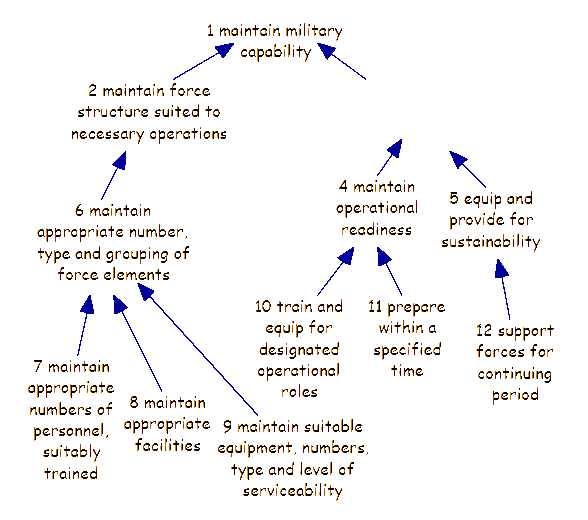
In this most basic model of force structure and preparedness in military capability, elements are described as action statements or ‘calls to action’—things that capability managers must do continually. Here ‘maintain’ means more than the dictionary definitions of ‘continuing one’s action in…’, or, ‘retaining in being…’; it requires a form of management able to cope effectively with continuous change, uncertainty, and, often, situations not previously encountered. It is difficult to gain real experience leading to in-depth understanding of the dynamics, the effects of uncertain or incommensurable lead-times and the manifestations for dynamic feedback. Feedback occurs when part or all of a system re-enters as the input. Feedback is also used to describe the return of information to influence the next stage in the system. Because today’s decisions may not produce outcomes for years, opportunities for learning from experience can be few. Further, there can be manifold, and often unintended, implications of every decision taken. Judgement and intuition can be inappropriate [4–14].
To maintain, or more correctly manage, operational readiness involves training and re-training, equipping and re-equipping for changing and often uncertain operational roles. In the preparedness planning process [15], a finite number of Military Response Options (MROs) can be considered; many cannot be satisfied, simply because resources are always limited. FEs and FEGs are given designated roles in the delivery of MROs, noting that the same or very similar battlefield effects might be delivered by alternate means. However, the types of effect to be delivered, and the FEs or FEGs that might deliver them, need to be balanced according to a range of competing demands.
Perhaps the most difficult of these results when an FE or FEG might be required in two places at the same time or nearly so, which creates the ‘concurrency problem’. Creation of a duplicate FE or FEG, the obvious answer to this problem, simply is not possible in the short term. Further, sustained high rates of effort may mean that, whilst a FE or FEG may not be in demand for concurrent deployments, there could be little time for personnel to rest or equipment to be refurbished, with the result that the FE or FEG becomes ineffective long-term. These and many similar issues must be appreciated in advance for capability to be managed effectively. Being able to ask ‘what if’ and test the answers to ‘what if’ questions about such issues is most important.
The points made at the beginning of this article by the then Director of Australian Defence Studies Centre, Alan Hinge are highly relevant and the real challenge comes in understanding and managing the complex dynamics involved. While Hinge suggests having a repertoire of plans directed at preparing for specific missions, such an approach involves conventional management techniques, which are not up to the task. As outlined in this article, a new approach is required.
In the Defence Efficiency Review of 1997, the Australian National Audit Office (ANAO) was highly critical of the Australian Defence Organisation’s management of the preparedness aspects, noting:
‘…Defence’s comprehension of the time and resources required to generate forces is deficient, and its understanding of the relationship between activity levels, associated with resource requirements and the achievement of preparedness objectives [3].
The purpose of this article is to describe (to map out) selected elements of military capability management and the relationships between them with the aim of highlighting how the dynamics (the continual changes over time) play out, and subsequently how they might be better managed with the aid of system dynamics modelling.
System dynamics modelling—basics
More than four decades ago system dynamics was founded on some simple, prevailing, and strong premises that are valid and valuable today even more than before. A few of them are:
‘The world is dynamic and everything is changing over time. Changes are the result of the interaction between elements that constitute systems. To understand changes we should understand the related systems. Elements of systems interact through feedback loops as the building blocks of all dynamic systems. Feedback loops consist of accumulation [stocks], or level variables, rate variables [flows] that change levels, and information connecting levels to rates. Simultaneous active feedback loops create the dynamics of our concern. The human mind is not capable of perceiving the dynamic consequences of a number of simultaneously active feedback loops. Misconceptions of feedback loops prevail. As a result, decisions [made under such conditions] usually do not lead to the desired results and have unintended consequences. Mathematical models and simulation are necessary to determine the dynamic consequences of multi-feedback loop systems [16]”.
System dynamics modelling is a rigorous method for qualitative description, exploration and analysis of complex systems in terms of their processes, information, organisational boundaries and strategies; which facilitates quantitative simulation modelling and analysis for the design of system structure and control [17].
In system dynamics modelling, stock-and-flow (level-and-rate) diagrams are commonly used to depict elements of a complex system and how they are connected. In this article, the algebraic computer code, which runs in the background and enables the models to work, is omitted in order to keep the discussion and reasoning presented as intuitive as possible.
Icons and working definitions
Stock (level)—this is a conceptual device, which may simply be envisaged as a bathtub containing a quantity, or stock, filled to a level, with those items or that stuff which we wish to analyse or which we are tasked with managing.
Flow (rate)—flow through a pipe, in the direction of the arrowhead is controlled by a valve in the same way as turning on the tap and fill the bath or pulling the plug to empty it.
Auxiliary—a policy input, or ‘business rule’—normally used to control a flow or to provide input to another auxiliary.
Information line—information used in control is input via an information line. Where a separate initial value is input one only, the line is shown as dotted.
Flow with auxiliary—here the information line joining the auxiliary to the flow (rate) is not shown, instead the auxiliary is placed over that part of the icon representing the flow (rate—the two depictions in Figure 6 are equivalent.




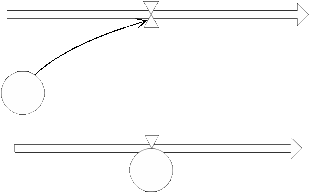
Boundary—defines the beginning, end, or edge of the problem space, beyond which current problem definition, or our consideration of the problem, does not extend.
Now that we are equipped with a few of the basic tools, it is possible to build conceptual models of various aspects of military capability.
Example—materiel management
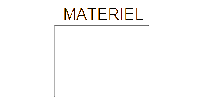
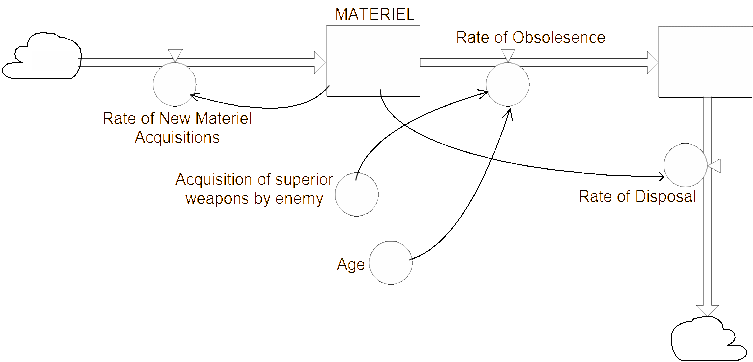
In part, extant military capability is made up of materiel, the equipment in numbers by type and level of serviceability. For the sake of the displaying this graphically, we will describe this in Figure 8 as a stock named ‘MATERIEL’.

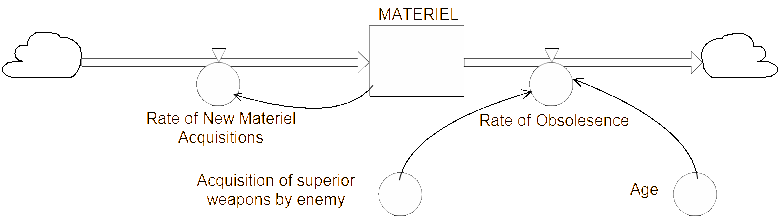
New materiel is acquired and if not used, lost, destroyed or modified to a different form, it remains stored until it becomes obsolete and is disposed of—as shown in Figure 9.

To indicate that we do not acquire new materiel, such as replacement vehicles or weapons, until they need to be replaced, we need an information arrow from the stock ‘MATERIEL’ to ‘Rate of New Materiel Acquisitions’. This shows that a choice to acquire new materiel is informed by extant quantity of (serviceable) materiel.
The ‘Rate of Obsolescence’ will be driven by other factors such as age or time in storage. It may also be controlled by development of new weapons by an enemy; weapons which have decidedly superior performance. A more complete diagram, or our conceptualisation of materiel management might be as shown in Figure 10.
If we move the boundary of our problem space to consider the amount of ‘OBSOLETE MATERIEL’ we hold, and the ‘Rate of Disposal’ that subsequently takes place, noting that we would not make a final choice to dispose of obsolete materiel until there is sufficient stock of replacement materiel, the stock-and-flow diagram would be as shown in Figure 11.
With these elementary building blocks we can construct models of the highly complex dynamic interactions in the military capability management problem.
Array notation
Before proceeding further, it is necessary to introduce a new set of icons to accommodate the notion that, for example, military capability is made up of many component parts. Those component parts are treated as array elements.
The stock (level) icon in Figure 12, with its double line around, signifies an array (or matrix) of various stocks within which elements can be moved according to some clearly enunciated scheme.
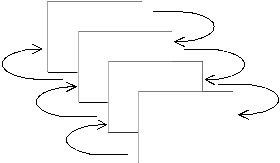
An example of the use of an array, in a single dimension, would be to depict the ‘stock’ of fighter pilots, where individuals move up or down between identified levels of competence, depending upon how current they are to fly various types of mission. To move to a higher level, training and flying hours are needed. Without refresher training, competence will decline, with the result that the pilot enters a stock lower in the array.
Without the use of arrays, computational hurdles are encountered. In retrospect we find this in our earlier examples, by lumping ‘MATERIEL’ into a single stock. This can be overcome by using arrays having any required number of dimensions.
Because FEs may be interchangeable to varying degrees, very specific schemes have to be introduced into the model to control the movements of elements between various positions in the array. This is not a difficult problem, but it is one demanding a clear understanding of how interchanges might occur. For example a special forces FE and one comprised of F-111 aircraft may deliver the same effect on the battlefield [18], and may be considered as interchangeable array elements under certain conditions. Of course, each will require flows of quite different logistic support and have significantly different deployment lead-times. Models can be readily designed to accommodate those differences.
Nucleus of a generic capability model—materiel aspects
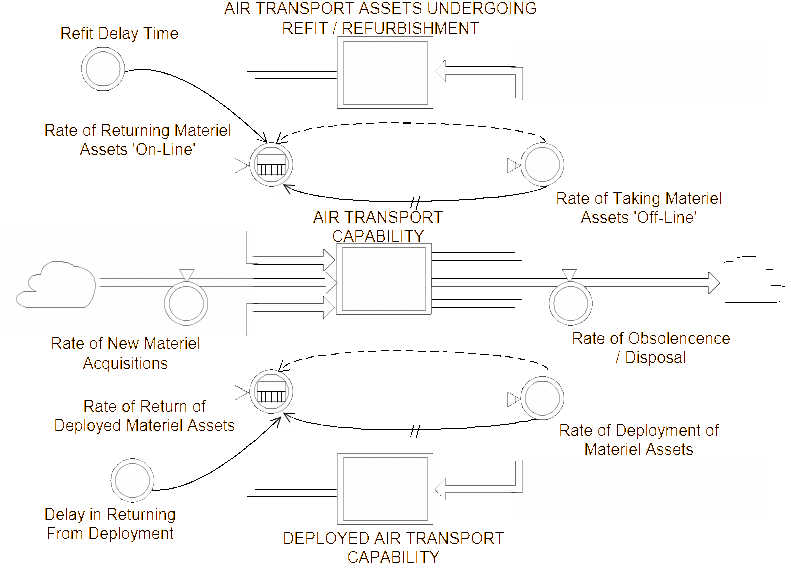
In the following example, we focus on materiel aspects of capability, say, several types of transport aircraft needed for an operational deployment. There is a total number of each type in the fleet at any time. Some will be available ‘on line’, available for tasking or deployment. Others will be undergoing refit or refurbishment, effectively taking them ‘off-line’ for an extended period.
In this case there are two physical feedback loops where materiel is deployed on operations and in the other, when returned from operations and, after a number of operating hours, undergoes major servicing, refit or refurbishment. In this model we have to introduce, below, a new icon that depicts a delay. Scalar and array forms of delay, respectively, are shown.
Delay icons are connected to an upstream flow (rate), which controls input to the adjacent, intervening, stock (level). We might view the flows (rates) concerned, as the beginning and end of a conveyor belt, and the intervening stock (level) as containing the items on a conveyor belt. Information lines between the flow (rate) icons indicate that they are connected, in effect by the conveyor belt itself. The delay time auxiliary tells us how fast the conceptual conveyor belt moves.
In this ‘AIR TRANSPORT CAPABILITY’ model we see one inflow ‘Rate of New Materiel Acquisitions’, and one outflow ‘Rate of Obsolesence / Disposal’ from which capability is gained by and lost from the system. There are also two circular conveyor belts. These might be envisaged as airport luggage carousels. Using the luggage carousel analogy—there are two carousels feeding out, and feeding back into, a central stock of suitcases (capability). From this central stock, we also transfer suitcases from one carousel to the other. If the speeds of the carousels are mismatched, or the carousels very short, or exceedingly long, we can either end up with a logjam of suitcases, or all suitcases circulating on the carousels. Although this model is still relatively simple compared to the whole problem of managing military capability, it is easy to see how such systems can become difficult to control. Models, such as the one above are intended to show how our system of stocks and flows can change over time. We need to know how changes occur if we are to avoid logjams or shortages.
System dynamics models can also be constructed in a way that facilitates tracking of individual aircraft tail numbers, or in our analogy—individual suitcases. Whilst such an approach is valuable for fleet management purposes, or within the context of planning a refit or refurbishment programme, managing individual aircraft is not our primary purpose in capability management. We are more interested in making the system run smoothly or preparing it to run in a particular way at a future time. Instantaneously making carousels shorter or longer, or faster or slower are not viable management strategies.
We need to add at least one more feedback loop, or luggage carousel, involving in-theatre deployment and servicing of our transport aircraft. See Figure 15.

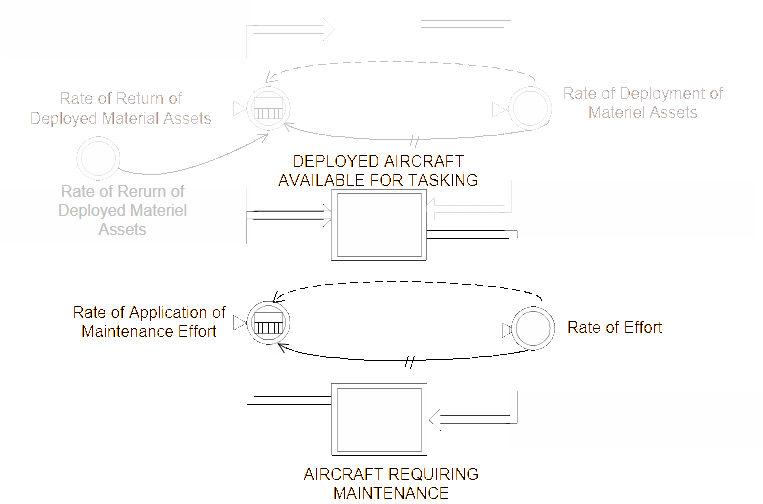
The ‘Rate of Effort’, determined by the tasking of aircraft and hours flown, impacts upon ‘AIRCRAFT REQUIRING MAINTENANCE’. Outflow from this stock (level), is controlled by ‘Rate of Application of Maintenance Effort’. This additional ‘module’ can be added to the previous model. To make this addition requires renaming the stock ‘DEPLOYED AIR TRANSPORT CAPABILITY’ to become ‘DEPLOYED AIRCRAFT AVAILABLE FOR TASKING’.
This example is used to demonstrate that with three physical feedback loops, each involving different delays; managing ‘AIR TRANSPORT CAPABILITY’ is a substantial management problem. The reader should be convinced that human intuition and judgement are no match for the dynamic complexity involved. The point made by Mashayekhi [6] and repeatedly in the system dynamics modelling literature is that computer simulation is essential if the dynamics are to be fully appreciated. Further, managing capability, in reality, is far more involved than this relatively simple example suggests. Yet, surprisingly little dynamic modelling is undertaken in aid of military capability management.
Personnel issues
This section focuses on the subject of personnel, to demonstrate the variety of issues that must be considered in capability management. To train aircrew, maintainers, ground support staff, and logistics personnel, takes years. Not only are there lead-times in the acquisition of aircraft, there are innumerable queues in recruiting, training and maintaining skills of personnel. All of these queues must be managed in a highly coordinated way to produce, at a future and unknown time, FEs or FEGs, ready to perform a range of tasks.
Trained personnel do not achieve maximum productivity upon completion of their basic, initial employment, or trade training. Personnel productivity changes with length of service, and because of hierarchical structures in military organisations, the time on task, that is, contribution to the completion of physical tasks, decreases with advancement through the ranks [19]. See Figure 16.
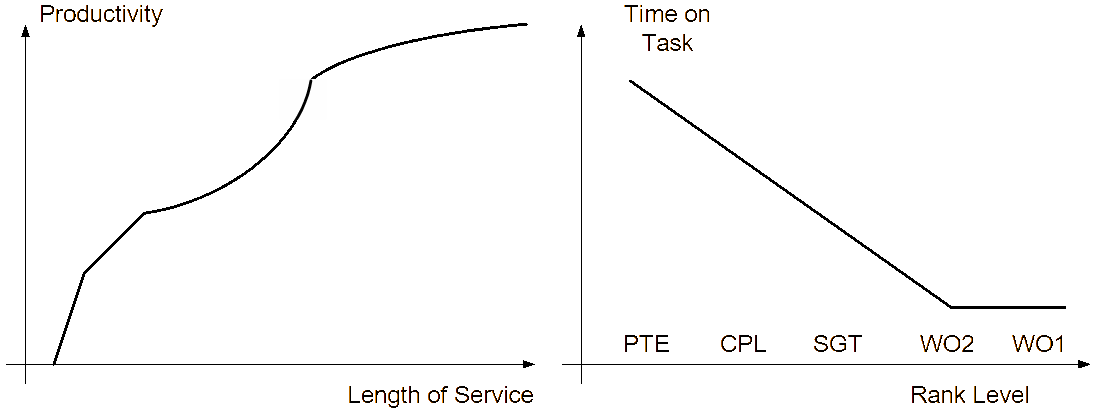
Across the different trades, musterings, or employment categories, the shape of these graphs varies. Whilst these graphs are typical of personnel employed in a technical trade area, graphs for infantry soldiers, for example, would be quite different. It would be expected that an infantry soldier would reach maximum proficiency (productivity) in a very short time after being recruited. Also, there would be higher numbers of lower ranks available to be employed on tasks.
These issues must be taken into account both in the design of force structures and in recruiting to fill those structures. Such issues transgress the somewhat arbitrary boundaries of force structure development and preparedness, and in-service personnel management.
Preparedness fundamentals
The fundamental problem for preparedness is depicted diagrammatically, below [2,4,15] at Figure 17. At any point in time FEs and FEGs are at different levels of operational capability; present (PLOC)—the extant level, maintenance (MLOC)—the target level to be maintained, and operational (OLOC)—needed for operational deployment.
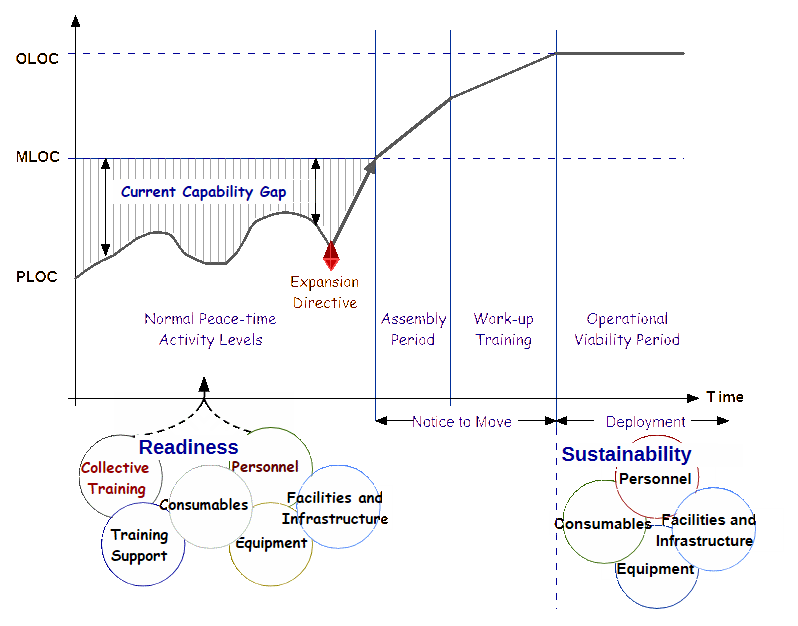
During peacetime, readiness activities are directed toward building individual skills then bringing together personnel with those individual skills to build collective skills. Building skills takes time and those skills, individual and collective, decay over time. It is an unfortunate reality that skill building and maintenance are managed according to imposed budgets, where those budgets are not necessarily formulated on the basis of knowledge about the way skills deteriorate, and how quickly that deterioration occurs.
When an Expansion Directive is issued, all efforts are directed to bringing the FE / FEG up from PLOC to OLOC in time for operational deployment.
Preparedness cannot be achieved without training support, facilities and infrastructure and consumption of stores such as ammunition, food, rations and fuel. Once deployed, forces must be sustained in accordance with the prevailing intensity of operations.
To be prepared involves much more than bringing the necessary resources together just once. Collective training builds on individual skills and these can only be maintained through regular training cycles culminating in exercises during which complete FEs and FEGs practice in a coordinated way. The aim during peacetime is to train and exercise sufficiently frequently and at levels of intensity that competing goals are balanced—achieving requisite levels of preparedness without excessive consumption of resources. There are three main aspects to consider here. They are personnel, training and equipment factors. For convenience only, we have set the boundaries of our problem space to exclude political, industrial and demographic forces, though they are powerful and important considerations in practice.
Personnel, training and equipment
We have seen in the air transport example some of the dynamics that affect equipment availability. This example was chosen because equipment (materiel) aspects of capability are easiest of all to model [19] and, hence, to demonstrate.
Models of personnel and training factors can be built in a similar way. In those models recruiting, individual and collective training and competency level (current skills), and the decay in skills come into play. The ‘business rules’ involved are somewhat more difficult to build into the models. For example, training to build proficiency, and the subsequent decay in skill level over time, are typified by the graph in Figure 18 [19]. However, the precise shape of this curve, particularly the mechanisms for decay in skills, requires further research.
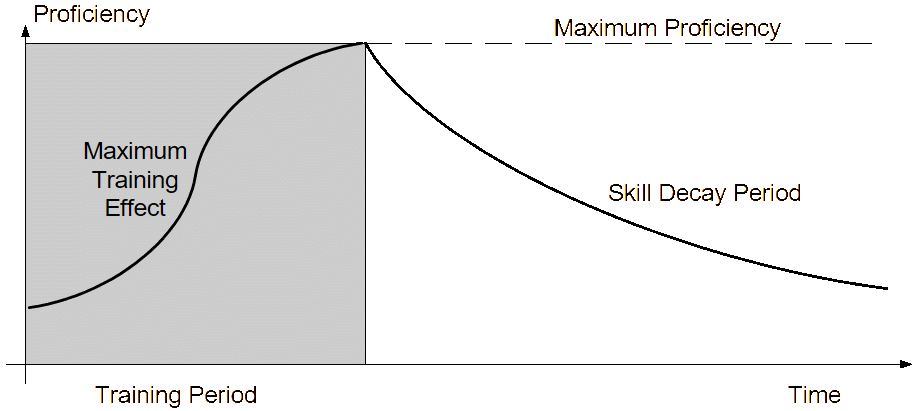
As training rates of effort increase, it is reasonable to expect that individual and collective skills will be enhanced. But, this comes at a cost, and not simply a financial cost due to the additional consumption of resources such as ammunition, fuel and rations.
Along the way personnel will be injured, and equipment will be damaged or will wear out more quickly. Rehabilitation of personnel and refurbishment of equipment takes time, each set of activities involving their own queues, delays and material feedback loops. In turn, this will affect the availability of personnel and equipment. This characteristic ‘vicious circle’ is the nature of feedback.
Concurrently, costs will also be increased. High costs are an inevitable by-product of maintaining high levels of preparedness. To emphasise the point made earlier about strong coupling of the various aspects of capability, whilst separate models of equipment, personnel and training aspects may be developed, simulations cannot be run in isolation: these models must be linked. The same applies to preparedness and force structure issues if for no other reason than incurring costs in achieving higher levels of preparedness means less funding will be available for specific force structure development initiatives.
A more complete view of force structure development
Earlier, we developed a model of materiel acquisition and management in force structure development. This basic model can be expanded to demonstrate how a more complete and useful model can be developed through a ‘building block approach.’ Such a model is shown in Figure 19.
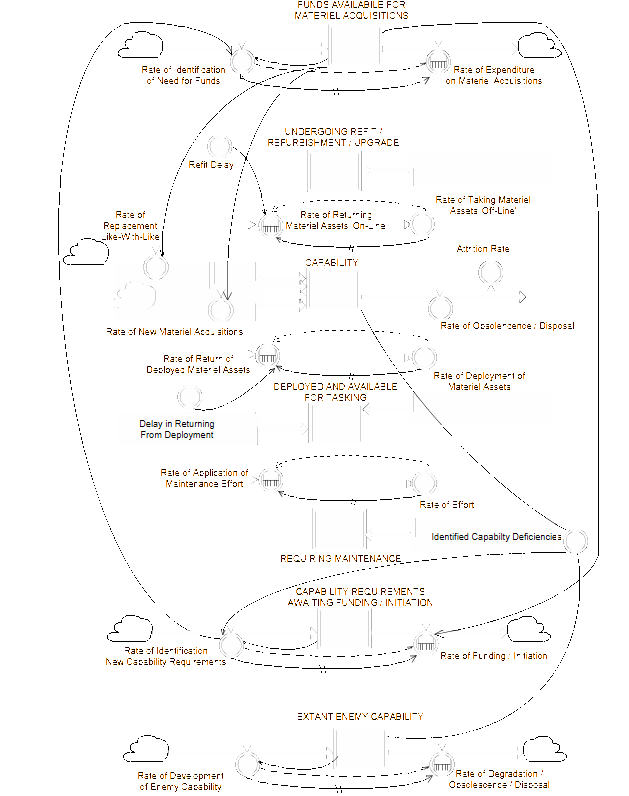
Here, materiel elements of ‘CAPABILITY’ are added through the ‘Rate of Replacement of Like-With-Like’ and ‘Rate of New Materiel Acquisitions’. As explained earlier, ‘CAPABILITY’ may be deployed on operational service and whilst deployed, will be REQUIRING MAINTENANCE at a frequency determined by the ‘Rate of Effort’, and returned to ‘DEPLOYED AND AVAILABLE FOR TASKING’ according to the ‘Rate of Application of Maintenance Effort.’ The various loops with their integral delays all act to increase or decrease extant ‘CAPABILITY’. ‘CAPABILITY’ is also depleted according to ‘Rate of Obsolesence / Disposal’ and the rate at which materiel is lost destroyed or captured, that is, ‘Attrition Rate’.
Other parts of the model introduce ‘FUNDS AVAILABLE FOR MATERIEL ACQUISITIONS’, ‘CAPABILITY REQUIREMENTS AWAITING FUNDING / INITIATION’ and ‘EXTANT ENEMY CAPABILITY’. Continual monitoring of enemy and own capabilities leads to ‘Identified Capability Deficiencies’, which need to be corrected at the ‘Rate of Identification of New Capability Requirements’. In turn, this leads to the ‘Rate of Identification of Need for Funds’. Generally funds can neither be made immediately available nor expended without significant delays. See ‘FUNDS AVAILABLE FOR MATERIEL ACQUISITIONS’ and ‘Rate of Expenditure on Materiel Acquisitions’.
This model is neither logically complete nor fully developed, but serves to demonstrate a number of important points. In addition to the material feedback loops already described, parts of the model are linked by information lines, which provide inputs from other parts or control the behaviour of a rate (flow) within the model. Whilst not shown, there will be other models linked in a similar way.
What should be obvious is that various parts of the models, and other models within the problem space, are inextricably linked. The consequence is that, a policy change or decision in one area can have significant impact elsewhere. Deliberately ignoring, or inadvertently overlooking, those links can result in seriously flawed management decisions. These may take the form of detrimental impacts on other related and important areas. Those impacts may not manifest themselves for some time, often well after the decision-maker has moved on.
Towards a complete picture of military capability
In several places in this article, the argument is developed that preparedness and force structure elements of military capability are inextricably linked. While attempts are made, through the design of management programs or portfolios, to keep funding for these activities separate, such an approach must be questioned because of the strong coupling between force structure and preparedness.
Maintaining a submarine squadron as an operationally viable entity involves more than materiel management-acquisition, maintenance, refurbishment, and disposal: personnel need to be recruited, trained and rotated between sea and shore postings. The number of new submarines to be procured and brought into service is arguably a force structure management issue, but the number of submarines that can be made available at any time, is a key determinant of preparedness.
Whilst the totality of force structure and preparedness issues contributes to the level of military capability achieved, building one large, very sophisticated model of capability is not considered practical, despite system dynamics modelling being very useful in providing insights into how dynamic systems behave.
Advantages of a system dynamics approach
Dynamic feedback loops, especially where delays are involved, are difficult to manage without the aid of tools such as system dynamics modelling and simulation. The system dynamics modelling discipline recognises, largely from its control theory roots, that systems with multiple feedbacks have a strong tendency to be self-organising. Self-organisation manifests itself in counter-intuitive ways [6,8–14,20].
Managing such systems is only possible when we understand and can anticipate how these self-organising mechanisms actually work [20,21]. System dynamics modelling and simulation at least gives us opportunities to view changes over time and relate those changes back to root causes.
In the introduction to this article it was argued that there would be great advantage in being able to preview the likely downstream, future impacts of decisions before those decisions are actually taken. The aspect of system dynamics modelling practice that addresses this, has recently become labelled ‘modelling as learning’ [7,8]. ‘Modelling as learning’ offers unprecedented opportunities for developing, through virtual world simulations, experiential learning about complex dynamics, such as those which confound military capability management.
System dynamics models can be sophisticated media for capturing, storing and re-presenting knowledge about complex dynamic systems. They can be valuable in knowledge management as aids to capturing intellectual capital that individuals have about military capability management, but would otherwise be lost.
One of the advantages of computer simulation is that unpredictable and counter-intuitive conditions can be readily taken into account [4,20,21,23]. System dynamics modelling provides valuable confirmation to the providers of the elemental data. The system dynamics process, and the modelling tools, can facilitate experiential learning and this helps build confidence [4,19,22,23].
As a tool to aid in management of preparedness, an advantage of the system dynamics approach is that predictions on current data and prepared procedures, for example, can be examined [and comparisons made] from one year to the next [22]. Comparisons of status from one year [of the year-long cycles of preparedness planing] to another, are facilitated. System dynamics modelling is particularly strong in this regard allowing for future events, such as known exercise schedules, to be incorporated so that the variation of preparedness levels could be calculated [22].
In preparedness, the transition from peacetime to wartime can be simulated and examined in detail. The methodology allows all steps required to transition a force from peacetime to wartime to be addressed, including often hard to quantify factors such as collective training activities [22]. System dynamics not only handles the transition from peacetime to wartime in a logical manner, but also allows consideration of flow-on effects. If, during a work-up, a particular piece of equipment is used extensively, then the demand for spare parts and maintenance correspondingly increases [22].
Status of the use of system dynamics modelling
To date, the application of system dynamics modelling to military problems has been limited to a relatively small number of instances, although system dynamics modelling advocates are highly committed to its efficacy. NATO’s Supreme Headquarters Allied Powers Europe arguably has the longest history of using system dynamics modelling and simulation to inform strategy development and capability management. The US Defense Department uses system dynamics to aid investigations of a variety of defence strategy issues. Norwegian and Australian defence departments have used system dynamics modelling for analysis of manpower management for as long as 10 years with notable successes. Recently the Australian Defence Organisation conduced an investigation of the use of system dynamics modelling to aid the management of resources for Australian Defence Force preparedness. The results of this particular investigation were somewhat disappointing for reasons outlined below.
The use of system dynamics modelling for analysis of systemic problems in general contexts, and in military contexts, particularly, is becoming much more widespread. The author estimates that system dynamics researchers, teachers, and full-time practitioners, worldwide, now number over 1,000. Universities in more than a dozen countries offer courses in system dynamics modelling. A small but growing number of the courses offered are directed at military applications. In addition to those mentioned, known military users include UK, Turkey, and New Zealand (though a specific survey of military system dynamics modelling users has not been conducted by the author).
Factors militating against use of system dynamics modelling
Despite the advantages of system dynamics modelling expounded in this article, there are a number of factors, which militate against its use. Whilst system dynamics modelling is capable of developing objective and verifiable models, the more complicated the model, the harder it is to verify. Some initiatives to use system dynamics modelling have been misdirected; incorrectly attempting to use it as a predictive tool or for calculating detailed costs associated with possible future operational activities.
There is always a temptation to create comprehensive models because detailed data to support such (high resolution) models is often easier to find than aggregated data, where the latter may incorporate some degree of subjectivity [4,22]. But, perhaps the most significant factor militating against the effective use of system dynamics modelling comes from the way organisations are designed and operate; how they implement data gathering systems, in particular databases and accounting systems. These are rarely designed to provide highly aggregated data sets as are frequently required in system dynamics modelling interventions [4].
Traditional information systems do not support the gathering and processing of information in ways that acknowledges the characteristic behaviour of the systems we are trying to manage [4,21]. A recent report on modelling military preparedness [22] noted that information needed for the development of preparedness strategies is rarely available at the appropriate levels of aggregation. Rather, data collected for accounting (and accountability) purposes can have marginal utility for strategy management of complex, dynamic systems. Yet, these ‘traditional’ information systems abound.
The alternative to sourcing data from available databases is to estimate parametric values needed to populate the models. Indeed, where new systems or future activities are involved, data will not be available and estimation will be necessary. Evidence [4] suggests that decision-makers become concerned that processes of estimating will reveal that they have flawed or inappropriate mental models of dynamic behaviour and root causes of that behaviour.
Suggested way ahead
It seems that the best way to demonstrate the value of system dynamics modelling is to first alleviate concerns that some have about its efficacy. Paradoxically, concerns about parametric estimating, and fears some individuals have about having their individual mental models about complex dynamic behaviour revealed and challenged, are best alleviated by closely involving key decision-makers in modelling and simulation activities in an interactive ‘modelling as learning’ environment [4,8,20]. Recent research into ‘modelling as learning’ [7,8], ‘group model building’ [24], and ‘Iterative and Interactive Strategy Development’ [4,25] has produced very promising results.
System dynamics modelling in capability management
In this article, it was argued that intuition and judgement in management of complex, dynamic systems is inappropriate. The systemic complexity of military capability management was demonstrated through the use of a number of models that might also be used, with some further development, to help analyse its systemic nature and its dynamics. The efficacy of system dynamics modelling as an aid to management of military capability was expounded. The advantages in using system dynamics modelling and simulation as aids to managing military capability were outlined.
It was argued that mathematical models provide part of the answer to management of dynamic complex systems, such as military capability. Their strength lies in being able to compensate for human cognitive limitations in dealing with complex systems where feedback loops and strong coupling are involved. While there are a number of factors militating against the use of system dynamics modelling, these are far less significant than the clear advantages. Identified disadvantages can be overcome through the use of an iterative and interactive modelling as learning approach. This approach must involve decision-makers and military capability managers as closely as their busy schedules allow [2,4].
References
A. Hinge, “ROMINS—Repertoire of Missions: A Mission oriented Path to Managing Military Capability”, Australian Defence Force Journal, No. 128, January / February 1998.
A. McLucas, and K. Linard, “System Dynamics Practice in a Non-ideal World: Modelling Defence Preparedness”, Proceedings of System Dynamics 2000, International System Dynamics Conference, The System Dynamics Society, Bergen, Norway, August 2000.
ANAO, Management of Australian Defence Force Preparedness, Audit Report No. 17, Australian Government Publishment Service, 1995-1996.
A. McLucas, An Investigation into the Integration of Qualitative and Quantitative Techniques for Addressing Systemic Complexity in the Context of Organisational Strategic Decision-Making, PhD Dissertation, University of New South Wales, July 2001.
D. Dörner, “On the Difficulties People Have in Dealing With Complexity”, Simulation and Games, 11, 1980.
J. Forrester, “Counter Intuitive Behaviour of Social Systems”, Technology Review, No. 73, January 1971.
J. Sterman, “Learning in and About Complex Systems”, System Dynamics Review, Vol. 10, No. 2-3, Summer-Fall, 1994.
D. Lane, “Modelling as Learning: A Consultancy Method for Enhancing Learning in Management Teams”, European Journal of Operations Research, 59, pp. 64-84, 1992.
J. Sterman, “Misconceptions of Feedback in Dynamic Decision Making”, Organisational and Human Decision Processes, No. 43, 1989.
G. Richardson, Feedback Thought in Social Science and Systems Theory, University of Pennsylvania Press, Philadelphia, 1991.
J. Sterman, “Modeling Managerial Behavior: Misperceptions of Feedback in a Dynamic Decision Making Experiment”, Management Science, Vol. 35, No. 3, 1989.
J. Sterman, “Misperceptions of Feedback in Dynamic Decision Making”, P. Milling and E. Zahn (eds), International System Dynamics Conference: Computer-Based Management of Complex Systems, International System Dynamics Society, Stuttgart, 1989.
D. Kleinmuntz, “Information Processing and Misperceptions of the Implications of Feedback on Dynamic Decision Making”, System Dynamics Review, Vol. 9, No. 3, Fall 1993.
E. Diehl, and J. Sterman, “Effects of Feedback Complexity on Dynamic Decision Making”, Organisational Behaviour and Human Decision Processes, 1995.
Australian Department of Defence, Australian Defence Force Publication No 4. Preparedness, 1999.
A. Mashayekhi, “A Vision for the Field of System Dynamics”, System Dynamics Newsletter, Vol. 14, No. 2, December 2001.
E. Wolstenholme, System Enquiry: A System Dynamics Approach, John Wiley and Sons, Chichester, UK, 1990.
A. McLucas, “Effects Based Planning”, Proceedings of 2001 Defence Information Environment Seminar, Chief Knowledge Office, Department of Defence, Canberra, Australia, April 2001.
D. Paterson, “Modelling Defence Capability”, Proceedings of UNSW Research Seminar, School of Civil Engineering, UNSW @ ADFA, 5 December 2001.
J. Morecroft and J. Sterman, Modeling for Learning Organizations, Productivity Press, Portland, Oregon, 1994.
E. de Bono, I am Right You are Wrong, Penguin, London, 1990.
Brunskill, I. and D. Cox, The Utility of Modelling to Address Preparedness, Report No. DSTO-CR-0140, Theatre Operations Branch, Defence Science and Technology Organisation, Department of Defence, Australia, 1999.
R. Coyle, System Dynamics Modelling: A Practical Approach, Chapman and Hall, London, 1996.
J. Vennix, Group Model Building: Facilitating Team Learning Using System Dynamics, John Wiley and Sons, Chichester, UK, 1996.
A. McLucas, “Integrating Soft and Hard Systems Analysis: Seeking a Practical Framework for Addressing Strategic Problems”, Proceedings of SE’98: Systems Engineering Pragmatic Solutions in Today’s Real World Problems, Systems Engineering Society of Australia, October 1998.